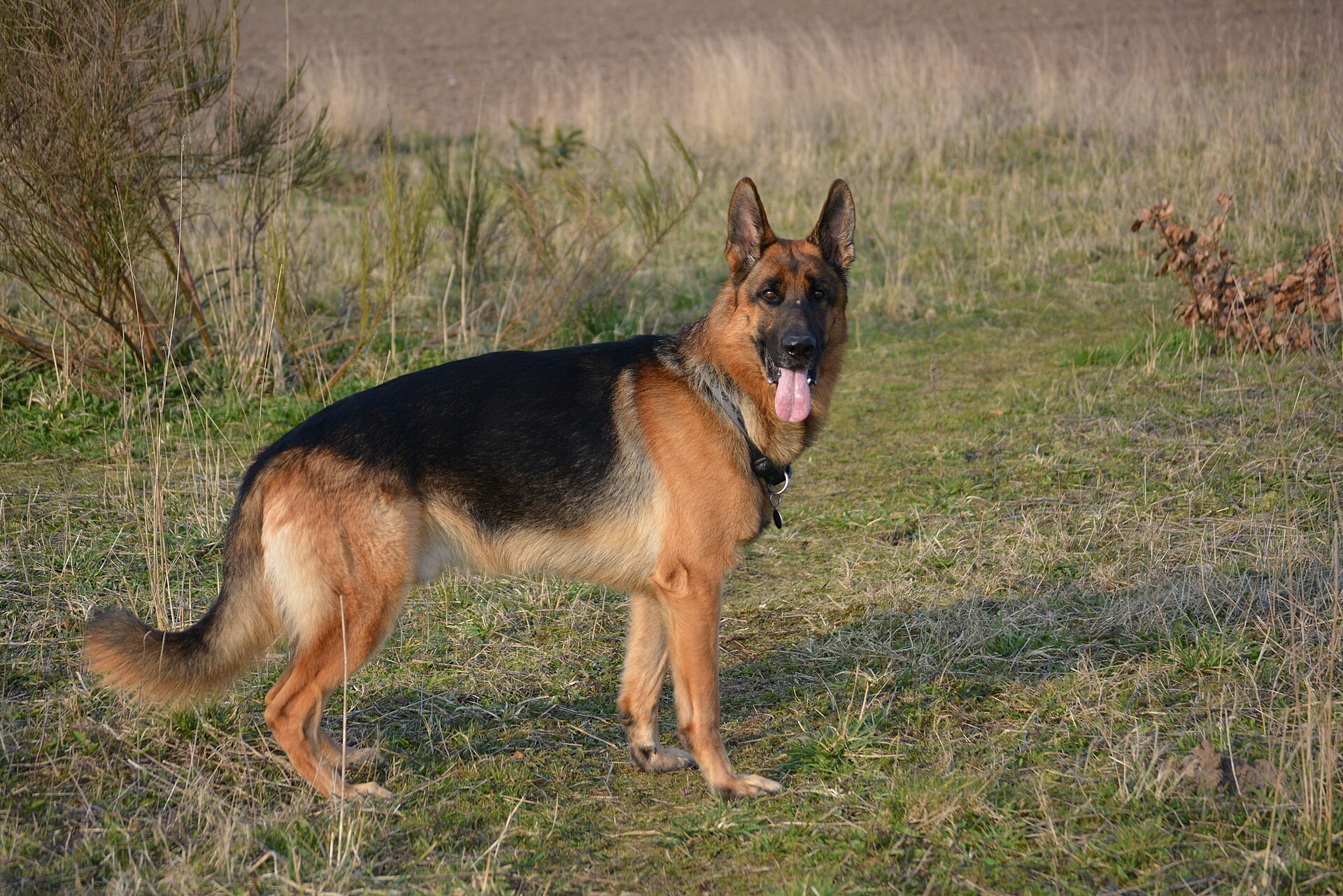
The German Shepherd Dog is a versatile working breed developed in Germany to cooperate with a handler. Individual dogs differ in temperament, experience and breeding line. Size and motivation do not mean automatic control. They need thoughtful training, suitable activity and periods of rest.
Temperament
Many German Shepherd Dogs are alert to their surroundings and willing to learn. These tendencies do not describe every individual and do not justify assuming aggression or automatic protection. Early experiences, health and daily handling shape responses. A dog that seems confident in one setting may need support in another.
Clear rules and rewards help build reliable behaviour. Teach settling, recall and loose-leash walking before adding difficulty. Introductions need space and a safe way to move away. Our guide to dog socialisation offers general ideas. Seek a qualified professional if intense fear or persistent reactions appear.
Appearance
The FCI standard describes a medium-to-large dog, slightly elongated, strong and muscular. Its structure should support an enduring trot without exaggeration. The stated height at the withers is 60–65 cm for males and 55–60 cm for females. Weight alone cannot assess structure or body condition.
The standard recognises a double coat and a long double coat; both must have an undercoat. The short coat has dense, close-fitting guard hair. The long coat is softer and does not lie as close. Several colours are accepted, while solid white is not recognised by the FCI standard.
Regular brushing helps manage the undercoat and lets you inspect the skin and ears. Shedding may increase seasonally. Make handling calm and gradual. Do not shave a double coat to reduce shedding unless a veterinarian gives a specific reason.
Brief history
The modern breed developed in Germany in the late nineteenth century, aiming to bring together qualities of local herding dogs. The FCI standard notes the development of the German breed club and Max von Stephanitz’s role. Early work involved managing and guarding flocks.
Over time, learning and adaptability supported a wider range of service and working roles. A working history does not mean every German Shepherd needs a professional job. Aptitude varies, and any training path should be built with patience, respect and qualified guidance.
Lifestyle
A useful routine balances walks, exploration, short exercises and quiet time. Mental activity should not become constant stimulation. Offer simple search games and stop before the dog becomes exhausted. For gradual learning ideas, read our guide to dog training.
- Plan regular, varied outings.
- Reward calm behaviour, not only intense activity.
- Use suitable equipment and check the fit.
- Include rest and age-appropriate exercise.
For puppies and adolescents, ask a veterinarian how to manage growth and movement. For adults, notice recovery, appetite and body condition. Food portions depend on age, activity and health. Our guide to feeding large dogs gives general information, not an individual prescription.
Health conditions
Breed-health guidance does not describe every dog’s future. The UK Royal Kennel Club recommends formal hip and elbow dysplasia testing for breeding dogs. These preventive assessments help inform breeding decisions. They are not a diagnosis in an individual pet and cannot guarantee that problems will never arise.
If you are choosing a puppy, ask for the parents’ original test results and how they were interpreted. A dog may need different assessments depending on signs and history. Stiffness, pain or difficulty moving calls for veterinary examination. Do not begin rehabilitation exercises without professional advice.
Wellbeing also depends on suitable body condition, proportionate movement and routine veterinary care. If a change persists, note when it began and which activities came before it. That information helps a veterinarian but does not replace an examination.
Interesting facts
The FCI places the German Shepherd Dog among sheepdogs and cattle dogs, with a working trial. The standard describes it as versatile in herding and service work. Versatility means possible roles, not a requirement for every household. Many dogs have balanced lives with everyday tasks and non-specialist learning.
The body is described in relation to an efficient, far-reaching trot. Show characteristics do not measure a companion dog’s value. Choices should prioritise health, temperament and the individual dog’s needs.
Gait
The FCI standard describes the German Shepherd Dog as a trotter. Hindquarter drive and body reach should support a far-reaching, ground-covering stride. The expected movement is economical and enduring. This description is not an orthopaedic or neurological examination.
Observe the dog walking and trotting freely on safe ground. Do not force it to run to assess health. If limping, hesitation or difficulty persists, stop activity and contact a veterinarian. A short video may help if the professional requests one.
Ideal owner
This breed may suit people willing to build a daily relationship and learn to read their dog. It needs time, consistent boundaries and suitable activities. The breed is not automatically suited to guarding or to someone who only assumes they are experienced. Puppy choice should consider the parents and the individual temperament.
Before adoption, consider space, schedule, veterinary costs and access to qualified help. Ask a rescue or breeder about the particular dog. An adult may have known needs; a puppy requires time for learning and socialisation. Compatibility depends on the real circumstances of both household and dog.