The Border Terrier is a small, sturdy British terrier developed for work. The FCI lists it as breed number 10 in Group 3. Its history, build and temperament reflect a clear purpose: keeping pace with horses and working across demanding ground. Today, it can share family life when exercise, exploration and terrier instincts receive thoughtful management.
Temperament
The FCI standard describes the Border Terrier as an active, game working terrier. The Royal Kennel Club calls the breed intelligent, affectionate and good-natured. These are general tendencies, not guarantees about every individual dog.
Its working selection left a strong interest in scent, wildlife and movement. Some dogs enjoy digging and may chase small animals. An interesting trail can distract even a well-trained terrier. Recall should be taught gradually and tested in safe environments.
Early socialisation helps a dog become familiar with people, places and other animals. Introductions to smaller pets need care, especially when prey drive is triggered. Positive experiences build confidence, but they do not necessarily remove inherited motivations.
A Border Terrier can be lively without being constantly restless. It benefits from sharing daily routines and having clear tasks. Consistent boundaries and reward-based training encourage cooperation and self-control.
Appearance
The body is compact, deep and relatively narrow, with functional limbs and moderate bone. The head is described as otter-like, with a moderately broad skull and short, strong muzzle. The eyes are dark. Small, V-shaped ears drop forward close to the cheeks.
The coat is harsh and dense, with a close undercoat. Accepted colours are red, wheaten, grizzle and tan, or blue and tan. The skin should be thick. This coat supported work outdoors, but it does not replace shelter or routine care.
The British standard gives ideal weight ranges. Dogs are usually listed at about 6–7 kg, and bitches at 5–6.5 kg. These are reference figures, not compulsory targets for each dog. The FCI standard gives no withers height. Assessment should consider proportions, health and body condition, not weight alone.
The tail is moderately short, fairly thick at the base and tapering toward the tip. It is set high and carried gaily, but not curled over the back. Overall, the dog should look sound and suited to work, without exaggerated features.
Historical notes
The breed developed in the countryside along the border between England and Scotland. The Border Terrier Club records the older names Coquetdale Terrier and Redesdale Terrier. These names refer to areas of Northumberland where the breed took shape.
By the late nineteenth century, the name Border Terrier was linked to the Border Hunt. The dogs worked with hounds and riders. When a fox went to ground, a terrier could enter the earth and drive it out. Alternatively, it could stay near the fox and bark to show its location.
Selection favoured courage, stamina and a size suited to that task. The chest needed to remain narrow enough for restricted passages. This working purpose explains the dog’s practical build better than appearance alone.
The UK Kennel Club recognised the breed in 1920. The Border Terrier Club was founded in the same year. The FCI standard lists Great Britain as its country of origin and retains its working-terrier description.
Lifestyle
An adult benefits from regular daily activity. The Royal Kennel Club suggests about an hour a day. This is general guidance. The breed club describes two daily walks as common. Actual needs vary with age, health, temperament and breeding line.
Walks should also provide time to sniff and observe. Search games, short exercises and practical cues engage the mind. Alternating activity with calm periods helps a dog settle rather than simply increasing excitement.
A leash and secure enclosure matter near wildlife or unfamiliar animals. A Border Terrier may follow a scent before responding to recall. Secure fencing and controlled doors reduce escape risks. Living with rodents or other small pets requires particular consideration.
This is a dog suited to sharing the home, not spending most of the day isolated. Its dense coat needs regular checks and consistent care. Owners unfamiliar with harsh coats can ask a groomer who knows the breed for guidance.
Documented health conditions
Veterinary sources and breed-health groups describe several conditions worth knowing. A statistical predisposition is not an individual diagnosis. Persistent symptoms call for a veterinary assessment, not a conclusion based on breed alone.
Canine epileptoid cramping syndrome, or CECS, has been described in Border Terriers. It is a paroxysmal movement disorder. Episodes may include involuntary movements and difficulty moving. The breed health group reports that a dog may remain conscious during an episode. Signs vary and can resemble other disorders, so professional diagnosis matters.
Spongiform leucoencephalomyelopathy, or SLEM, is a documented inherited neurological disorder affecting puppies. Genetic tests and breeding-screening programmes are available. This concerns responsible breeding and cannot determine an individual dog’s health without appropriate testing.
Gallbladder mucocele has also been studied in this breed. A multicentre study of referral hospitals found much higher odds in Border Terriers than in other breeds. That hospital sample does not estimate prevalence in the general dog population or predict an individual outcome.
The 2024 UK breed-health report also continues to monitor Cushing’s syndrome and late-onset hereditary cataract. A surveillance list does not mean that every Border Terrier will develop these conditions. Discuss screening, examinations and breeding decisions with a veterinarian and responsible breeder.
Curiosities
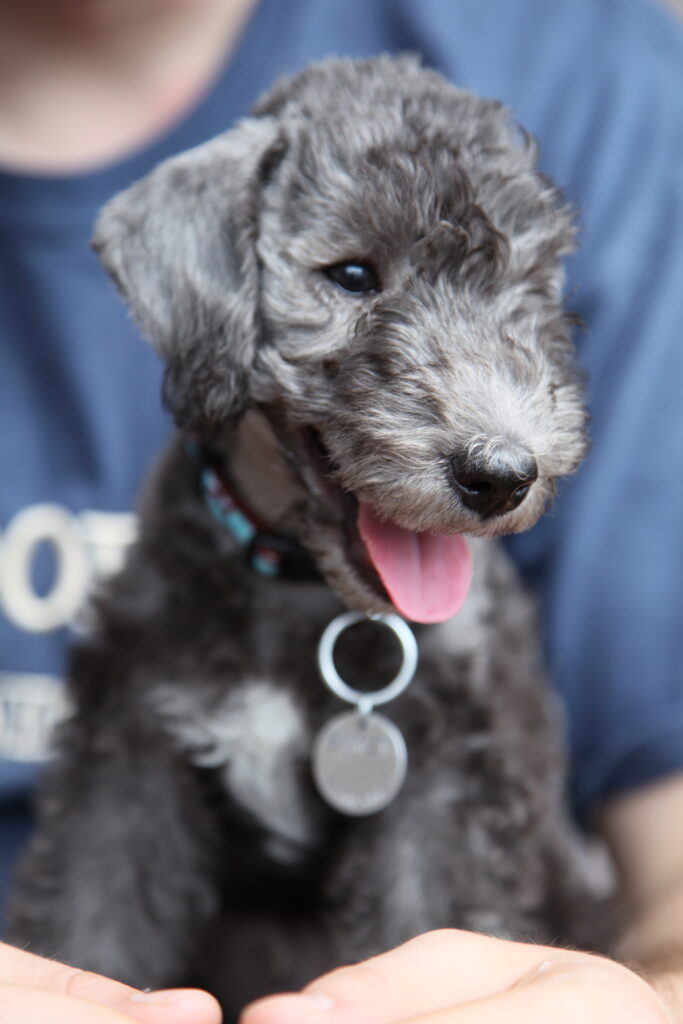
The Border Terrier’s older names changed as organised hunting spread through the border region. Coquetdale and Redesdale preserve its local history. The breed club also records connections with the Bedlington Terrier and Dandie Dinmont Terrier.
The standard gives an unusual chest description. It should be possible to span the chest with both hands behind the shoulders. This is not a home measurement or a health test. It is a functional description connecting the build with work in narrow passages.
The otter-like head is another distinctive phrase in the standard. It compares the shape of the skull and muzzle, not the dog’s personality. Accepted colours also use descriptive terms such as wheaten and grizzle and tan.
Gait
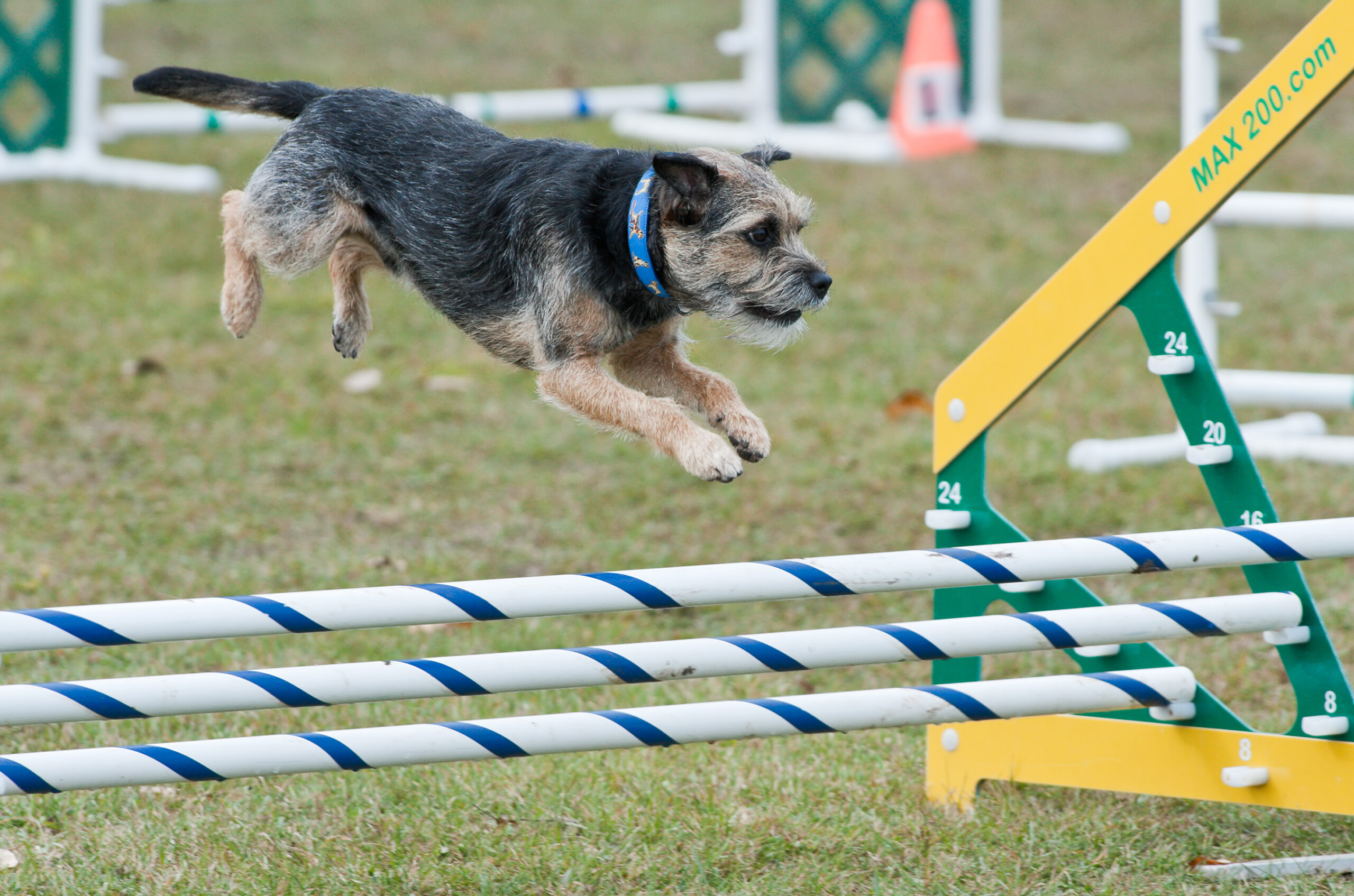
The FCI standard requires soundness sufficient to follow a horse. It does not prescribe a spectacular stride or a particular speed. The aim is functional movement without obvious restriction and in keeping with the dog’s build.
A photograph of a jump cannot describe everyday gait by itself. In a show ring, movement should be assessed as a whole, not from one step. Pain, lameness or sudden changes need veterinary attention.
Fitness is maintained through progressive activity suited to age. Puppies and older dogs have different needs from healthy adults. Recovery, ground conditions and weather matter as much as distance.
The ideal owner
A good match can provide daily movement, exploration and patient training. A rural home is not essential, but safe spaces and terrier-friendly activities are important. Reliable recall is built gradually; instinct should never be assumed to disappear.
The breed can suit different family settings when it receives attention and a routine. It is less suited to someone seeking a sedentary dog or one left alone for many hours. Before adoption, meet the parents when possible and ask about health checks.
Readers comparing terriers of different sizes can also explore our guides to the Cairn Terrier and the Airedale Terrier. Each breed has its own motivations and needs. The final choice should follow meeting the dog and setting realistic expectations.