
Thanks to the widespread popularity of television programs and online video courses about dog education, more and more owners are choosing to rely on educators and trainers to teach their dogs the rules of living together. But how can we understand which training method is right for us? Let’s find out together.
Education and training
First of all, we need to clarify a fundamental concept. Although the opposite may seem more logical, education is not a synonym for training.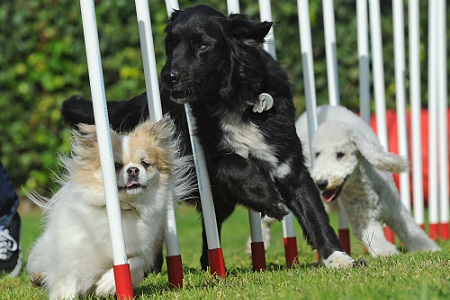
Education is carried out by the owner, with or without the support of a canine educator, and aims to teach the dog the rules for living with other dogs and people. The educator must show owners the right techniques for guiding the dog toward correct behavior, eliminating mistaken beliefs instead. First, therefore, the educator explains how to communicate with the dog by interpreting its nonverbal language. At the same time, they teach the dog the basic commands (sit, down, stay) and other important skills, such as walking properly on a leash.
Training, on the other hand, is more similar to the work carried out by a canine instructor. It consists of teaching specific skills. For example, instructors work to encourage some dogs to become guides for people with disabilities, lifeguards, or athletes. There are also trainers who specialize in teaching dogs commands or advanced techniques, such as agility.
In simpler terms, the educator brings out the dog’s natural behaviors, simply guiding it in the right direction. Conversely, the trainer and instructor encourage the dog to display behaviors for which it is predisposed, but which it would usually not perform spontaneously.
Another important difference is that while the educator works with the owners, showing them how to act, the instructor works directly with the dog.
The gentle method
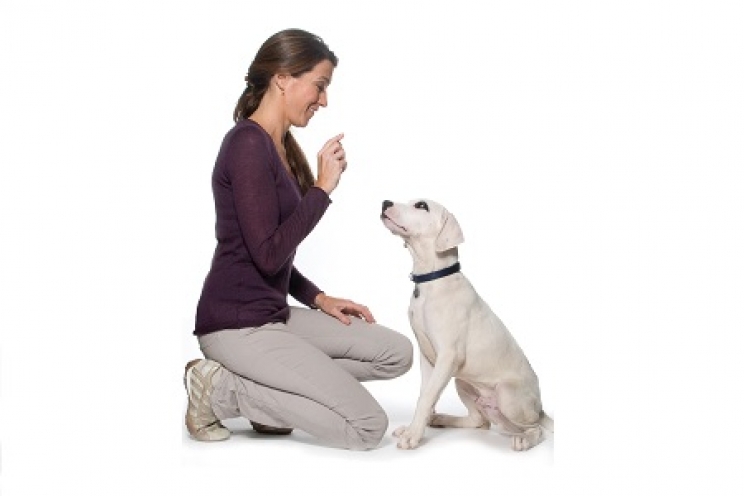
The gentle method is currently the most widely used. It involves using treats, games, affection, and praise to reinforce the dog’s positive behaviors.
This mechanism follows the principle of positive reinforcement, aimed at stimulating and encouraging the dog’s correct behaviors by associating them with a positive event, which may be represented by the elements listed above.
If we want to teach the dog to give us its paw, we must make sure it associates this command with something pleasant.
Even if we do not realize it, we use positive reinforcement every day, although sometimes not in the right way.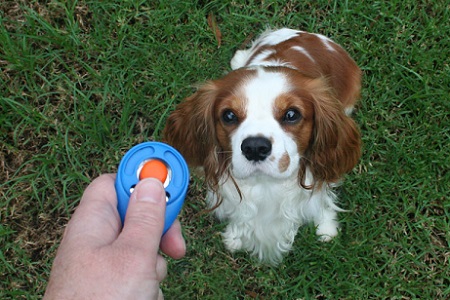
If our dog “pulls” during walks and we let ourselves be dragged along like handkerchiefs tied to the leash, we are doing nothing but positively reinforcing the dog’s pulling behavior. In its mind, this translates into a clear message: “I pull, they let me do it, I like it, I’ll keep doing it.” If, instead of letting our dog drag us along, we stopped walking, the dog would realize that something was wrong with its behavior and would immediately relax. The message would then become: “I pull, the walk ends, I don’t like it, I stop doing it.”
According to supporters of the gentle method, punishment should never be a solution. The dog must trust us, and it is our responsibility to convince it to do something that works for both of us.
By scolding it or, even worse, using physical violence, the dog will begin to fear us, and we will produce two counterproductive consequences.
On the one hand, the dog might respond to our command only under compulsion, without truly understanding what we are asking. On the other hand, it would feel lost and confused, so it might understand that it had done something wrong but would not understand what the corresponding positive behavior was.
For example, if our puppy has urinated indoors in front of us, scolding it immediately would have two effects. The dog would associate the punishment with the act of urinating, regardless of where or how, and could therefore develop serious emotional distress during urination. Moreover, if no one showed it where it should have urinated, it would never understand what to do next time and would repeat the same behavior, perhaps in another room of the house.
A variation of the gentle method involves using a clicker. This small tool produces a quick click whenever we want. The trainer presses the clicker button every time they reward the dog with a treat, until they can stop using food as a reward and rely only on the clicker.
The traditional method
This educational method is essentially based on the introduction of negative reinforcement.
According to supporters of this school of thought, the dog should always be educated by showing it the correct behavior, but at the same time emphasizing the wrong action.
In essence, therefore, the educator who follows the traditional method adds reprimands to the principles of the gentle method when the dog does not listen or does not do what we ask.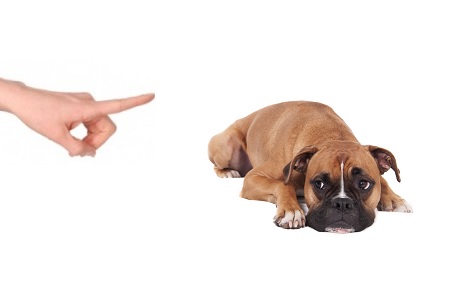
For example, to teach the “sit” command, supporters of the traditional method believe that we should not simply keep asking until the dog sits, but should try to gently “force” the dog, showing it what to do. Only after it has understood what we are asking can we reward it.
In this way, the dog associates a particular action with something negative, while being encouraged when it performs the correct one. This is a mechanism of psychological inhibition that prompts the dog to avoid repeating the mistake.
In reality, there are many urban legends and half-truths concerning the traditional method. One of the most widespread beliefs is that punishment often leads to methods that are disrespectful toward the dog.
It is true that some educators abuse their role, often resorting to physical force to “speed up” results, but it is equally true that none of this is provided for by the principles of the traditional method.
We often hear about choke collars, shock collars, dogs being jerked or beaten to force them to obey a command, but it is clear that an owner who witnesses this will think twice before completing the training with that pseudo-educator.
In most cases, in fact, punishment consists of a loud “no!” in a clear and firm tone and NEVER of slaps or violence toward the dog.
For this reason, when you decide to entrust your dog to the help of an expert, regardless of the school of thought they belong to, always make sure that they are a genuine professional who consistently operates with respect for animals.