
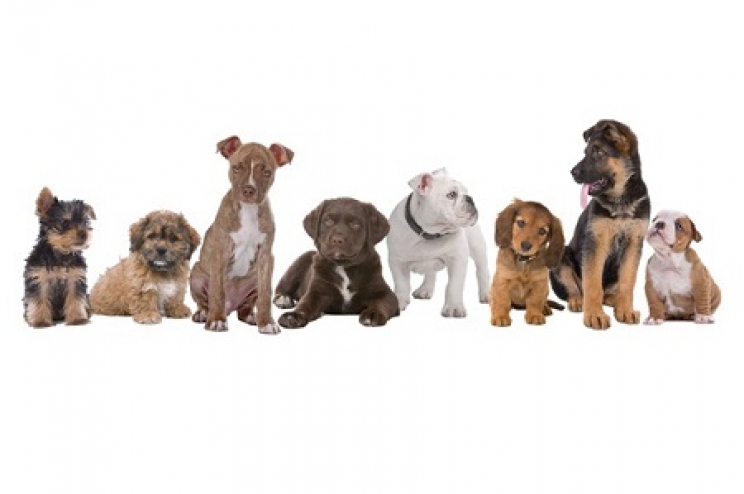
Socialization is a fundamental aspect of our lives and those of animals. It is only by being among others, observing and interacting with them, that we can understand many things about ourselves and how the world works. The same applies to our animals, which from the first days of life begin to discover how they should behave simply by staying beside their mother and their own kind. Recently there has been a boom in so-called “Socialization Classes,” gatherings that allow dogs to study and understand one another in complete freedom.
Why socialization is important
Socialization is simply another word for getting to know others. Through this important process, all of us—men, women, dogs, and cats—learn to understand the world and everything in it, learning to communicate and behave appropriately.
The best way for a child to begin socializing is to attend preschool, learning about other children like them or of the opposite sex, understanding that the adult world also includes other positive figures, such as teachers, and discovering how wonderful and fun it is to be together. A child confined to the home for many years, unable to see anyone except their parents, will end up lacking sufficient stimulation and being afraid of everything unfamiliar—and that list will be very long.
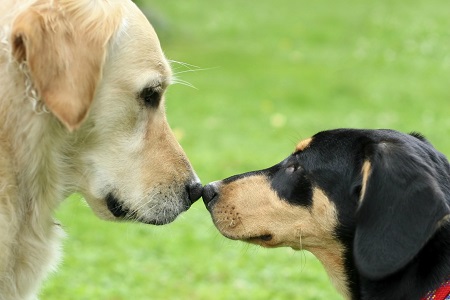 The same thing happens with our animals. A dog that lives in the countryside and has no opportunity to interact with other animals or people outside its owner will most likely react inappropriately when seeing something unfamiliar.
We must also add another very important element. Dogs do not have speech, as we know, but they can communicate in countless alternative ways, foremost among them body language. It is only by growing up for the first two months with their mother and siblings and spending time with other dogs throughout their development that they learn how to use all these absolutely essential behaviors.
When a peaceful dog meets another animal that is defending its territory or approaching threateningly, for example, if it knows what to do, it will display the so-called “calming signals” used to wave the white flag. They are simply a way of saying, “I come in peace, friend.” It may do this by turning its head or body away, lying on its back, licking its muzzle, or even yawning.
If a dog has not had the opportunity to study its own kind, it will almost never be able to understand the meaning of these gestures. It might therefore get into serious trouble by happily running toward the first dog it sees in the distance, which could react aggressively if taken by surprise, or by attacking a strange dog that is desperately trying to communicate its peaceful intentions through calming signals.
Furthermore, dogs that have not socialized at the right time often tend to fear certain limited categories of people. For example, if they have never seen men with beards, they may bark or run away when they see them. The same applies to children, often creating very dangerous situations.
The best age to socialize a dog, helping it discover the world and become self-confident, is precisely from 2 to 5–6 months of age, when it is highly receptive to education.
During this period, however, the critical issue of vaccinations arises. Many veterinarians advise owners not to take their puppy outside before the first vaccination course has been completed.
The reason is simple. Since its immune defenses are not yet fully developed, the puppy needs to build them through vaccination. But it takes some time before the vaccine can become fully effective. Therefore, if the puppy encounters a “sick” animal, it would not be adequately protected against that virus or bacterium.
According to other theories, it is not necessary to keep our puppy indoors. The important thing is to visit clean places with little contamination and ensure that it socializes with properly vaccinated dogs that are clearly not ill.
For all these reasons, it is very important that all dogs, from puppyhood onward, spend time with their own kind, at the park, in dog areas, or with our neighbor’s four-legged friend, so that they can temporarily leave the small “human” world in which they live all day and return to what they really are: dogs.
Socialization Classes
An excellent way to begin proper socialization is to have our dogs participate in Socialization Classes, in the presence of an experienced educator, especially when dealing with adult dogs that have behavioral problems.
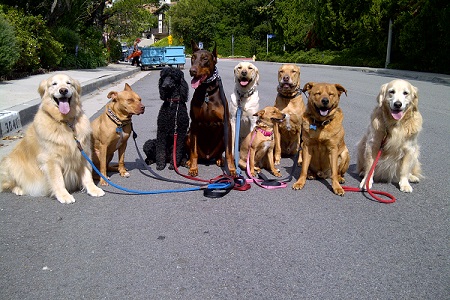
The Class takes place inside a fenced area, allowing the dogs to move freely, study one another, and communicate. Naturally, puppy Classes will be specifically organized without potential dangers and, if possible, only among dogs under one year old.
This way, our dog can begin to discover how to behave with its own kind, learning canine “etiquette”, which will help it avoid getting into trouble in the future.
At the same time, we owners can learn more about our dog’s behavior, learning to understand the meaning of every individual attitude it displays when it is with us and with other dogs.
Socialization Classes are not a simple, risk-free experience—in fact, quite the opposite. If the group is not selected appropriately or if participants are not guided by a qualified person, the worst could happen. Therefore, always avoid doing it yourself and turn to someone who knows what they are doing.