The Labrador Retriever was developed to retrieve game alongside people. It is robust and active, but its friendly reputation does not describe every individual. Living well together requires suitable movement, learning and pauses. Consider the dog’s age, temperament and physical condition before choosing activities or a daily routine.
Temperament
Many Labradors show curiosity and an interest in cooperation. Energy levels and responses to new situations differ between dogs. A young dog may jump, chew objects or struggle to focus. Teaching calm behaviour and self-control takes consistency, appropriate rewards and realistic expectations.
Set simple, consistent household rules. Teach recall and loose-leash walking in quiet places, then add distractions gradually. Introductions to people and animals should respect everyone’s signals. For practical ideas, read our guide to dog training and education. No single method replaces professional assessment when difficulties persist.
Appearance
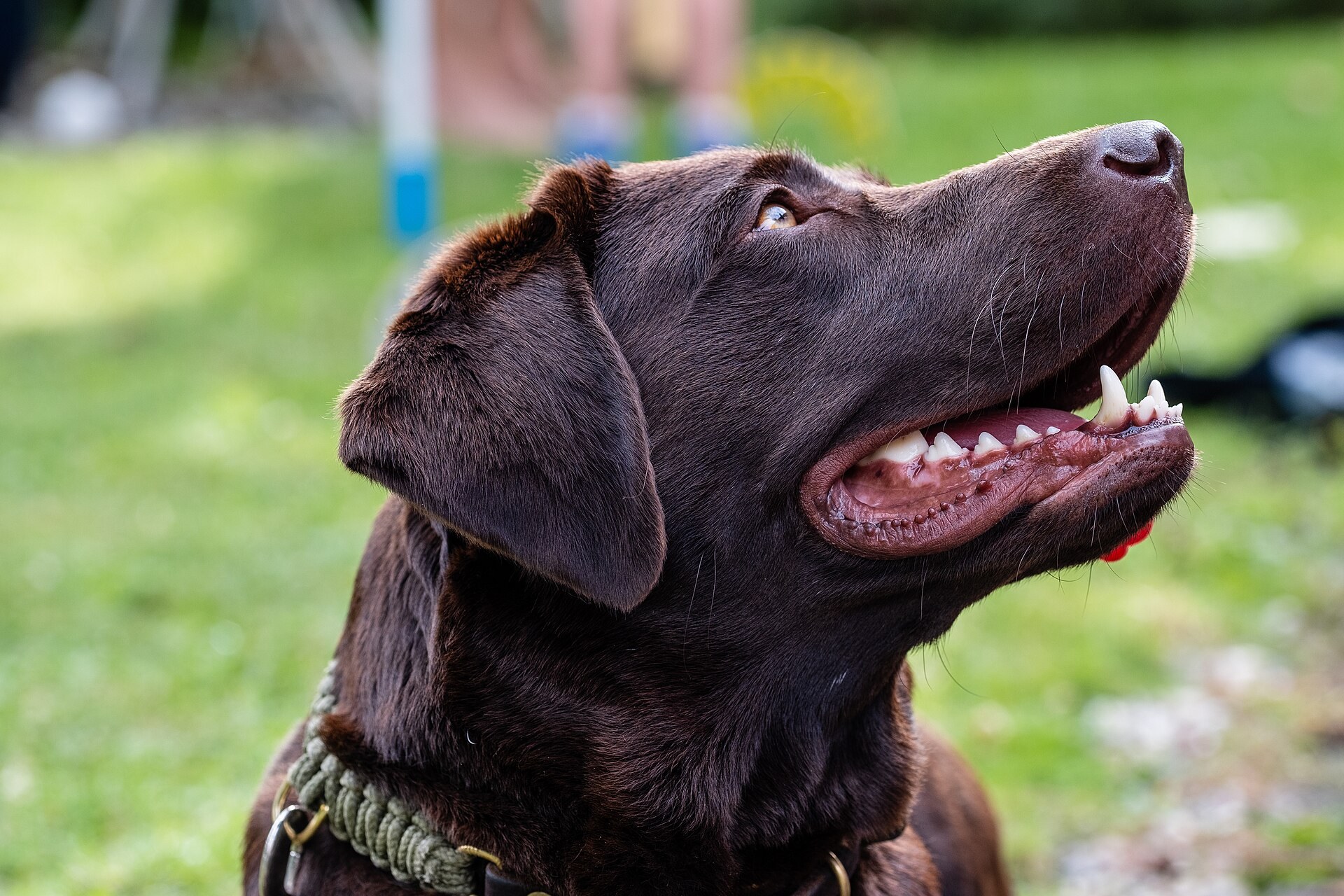
The FCI standard describes a compact, strongly built dog. It has a broad skull, deep chest and powerful loin and hindquarters. The coat is short and dense, without waves or feathering, with a weather-resistant undercoat. Recognised colours are black, yellow and liver or chocolate.
The FCI gives ideal height at the withers as 56–57 cm for males and 54–56 cm for females. These are standard measurements, not targets to apply without considering structure and welfare. The tail is thick at the base, tapering towards the tip, and described as an “otter tail”. Short hair still sheds and needs routine checks.
Regular brushing removes loose hair and lets you inspect skin and paws. After walks, check for debris between the pads. Make handling comfortable through short sessions and rewards. If the coat changes markedly or the skin develops lesions, ask a veterinarian for advice.
Brief history
The Labrador developed in Britain as a retrieving dog. The FCI standard notes its historical connection with dogs used by fishermen in Newfoundland. Breeding valued cooperation and retrieving game. The history is more complex than a single family tree, so avoid oversimplified origin stories.
The working background helps explain why some Labradors enjoy carrying objects or playing in water. It cannot predict an individual dog’s interests or skills. Introduce retrieving and swimming only in safe conditions. Never force a hesitant or frightened dog into the water.
Lifestyle
Balance walks with scent exploration, short training sessions and rest. Mental variety may matter as much as adding distance or speed. Searching games should end simply and positively. Our guide to mental enrichment games offers ideas to adapt.
- Introduce activities gradually and watch recovery.
- Provide fresh water and a quiet resting place.
- Measure treats and include them in the daily allowance.
- Adapt outings to age, health and weather.
A strong build does not mean unlimited intense exercise is suitable. For puppies, ask a veterinarian how to manage growth and activity. For adults, monitor body condition and adjust portions gradually. Our guide to feeding large dogs offers general information, not an individual diet.
Health conditions
A condition associated with a breed is not a diagnosis for an individual dog. The Labrador Retriever Club refers breeders to orthopaedic and eye databases and to tests for specific inherited variants. Examples include EIC and CNM1. The value of each test depends on the line, context and veterinary advice.
When choosing a puppy, ask which checks were performed on both parents and review the actual records. A DNA test covers a particular variant; it does not rule out every possible cause. A favourable result also does not replace clinical care throughout life. Persistent pain, unusual fatigue or recurring difficulty calls for veterinary assessment.
For an adult dog, keep test results and tell the veterinarian about changes. Do not interpret tests or symptoms on your own. A breed guide cannot provide a diagnosis, prognosis or treatment plan.
Interesting facts
The “otter tail” is a feature in the breed standard: thick, rounded and covered in short hair. The phrase describes its shape, not a guaranteed swimming ability. The weather-resistant undercoat relates to working function, but does not make a dog immune to cold or water hazards.
The range of historical tasks helps explain why some Labradors enjoy searching, retrieving or following a scent. Notice which activities your dog chooses. Varying games can prevent excessive repetition. A break is part of an activity, not a reward the dog must earn.
Gait
The FCI standard calls for free movement that covers adequate ground and is straight in front and behind. This is a conformation description of the expected movement. It is not a medical test and cannot assess joints remotely. Surface, speed and excitement can all alter a dog’s stride.
If limping persists or activity drops suddenly, stop exercise and contact a veterinarian. Do not make the dog continue to see whether the sign disappears. If requested, record a short video of the dog walking normally. A professional can decide which examinations are appropriate.
Ideal owner
A Labrador may suit someone able to provide companionship, consistent training and varied activity. They must also be ready to manage a strong dog and care for its coat. A garden does not replace walks or interaction. Consider household routines and the individual dog’s actual temperament.
Before adoption or purchase, talk to people who know the dog. Ask how it responds to noise, handling and time alone. For a puppy, review health records and rearing conditions. For an adult, consider its history, preferences and known needs. A good match grows from realistic expectations, not the label “dog for everyone”.