Temperament
The Kerry Blue Terrier is a compact, muscular and alert Irish terrier. The FCI describes an unmistakable terrier character, keen expression and determination. The UK standard adds disciplined gameness, reflecting the breed’s working background.
Official descriptions define a breed ideal, not every individual dog. Experience, socialisation and daily handling also matter. The United States breed club describes the Kerry as intelligent, playful and strongly people-oriented.
Some individuals may be assertive around other dogs. This is not inevitable and should be assessed dog by dog. Gradual introductions, supervision and consistent boundaries help prevent conflict and build social skills.
Appearance
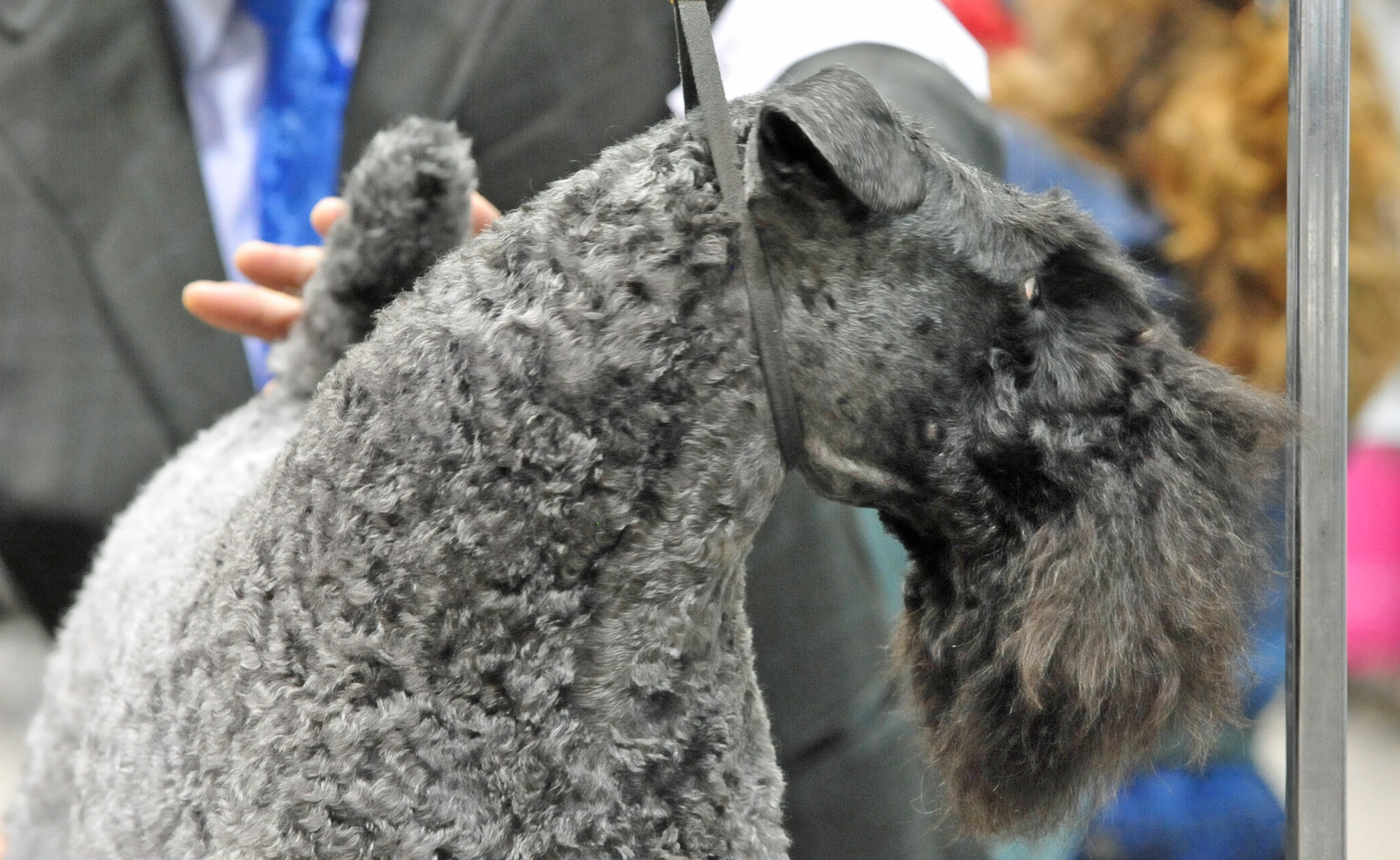
This is a medium-sized, sturdy and well-proportioned dog. Its head is long, with strong jaws and dark eyes showing an alert expression. The muscular body has a compact outline, while the tail is set high and carried upright.
The FCI standard gives a height of 45.5–49.5 centimetres for males and 44.5–48 for females. The UK Royal Kennel Club lists slightly different ideal ranges. These measurements belong to separate standards and cannot alone determine health or quality.
The coat is soft, plentiful, silky and wavy. Adult dogs may have different shades of blue, with or without black points. Puppies may be black or tan-shaded up to eighteen months while their colour changes.
Historical background
The FCI lists Ireland as the country of origin. The precise ancestry is uncertain because the Kerry Blue developed as a working country dog. Historical sources associate it with otter and badger hunting, vermin control and guarding.
A literary description of a blue Irish dog dates to 1847. The Kerry Blue appeared at Irish shows in 1913. The breed name was first used at a Killarney show in 1916, according to the Royal Kennel Club.
The Dublin Blue Terrier Club was formed in 1920. The breed also gained prominence as a symbol of Irish patriotism. The FCI definitively recognised its standard on 2 April 1963. Today, it remains a versatile terrier and lively companion.
Lifestyle
A Kerry Blue benefits from daily walks, play and activities that engage attention and scent. Training, food searches and dog sports can provide varied stimulation. Extreme exercise is not essential, but prolonged inactivity is a poor fit.
A secure area allows safe movement and play. Recall should be practised consistently, especially around other dogs or animals. The coat needs regular brushing, combing and trimming; plan breed-specific grooming before adoption.
To compare terrier temperaments and care, read about the Australian Terrier and the American Staffordshire Terrier. They share an FCI group, but differ in size, history and needs.
Documented health concerns
Health guidance differs between countries. The UK Royal Kennel Club lists prioritising genetic diversity as Good Practice. It does not name a Kerry-specific screening scheme or offer a breed-specific DNA package.
The American Kennel Club reports that the US breed club recommends hip evaluation and an ophthalmologist eye examination before breeding. These are screening recommendations, not proof that an individual dog is ill. Results should be interpreted by professionals.
A 1999 US breed-club survey recorded owner reports of skin problems. Examples included sebaceous cysts, spiculosis, warts, skin tumours and localised dermatitis. The survey was retrospective and based on volunteer respondents. It cannot estimate current prevalence across the breed.
Ask about available health records and discuss concerns with a veterinarian. Lumps, persistent itching, eye changes or pain deserve clinical assessment. Historical reports do not mean every Kerry Blue will develop a condition.
Interesting facts
Kerry Blue puppies are born black, and their coats tend to clear toward blue as they mature. The colour transition can continue until around eighteen months. Adult shades range from silvery blue to slate blue.
The name links the characteristic colour with County Kerry in Ireland, associated with the breed’s history. Some people once called it the Irish Blue Terrier. Legends about its ancestry exist, but they are not documented facts.
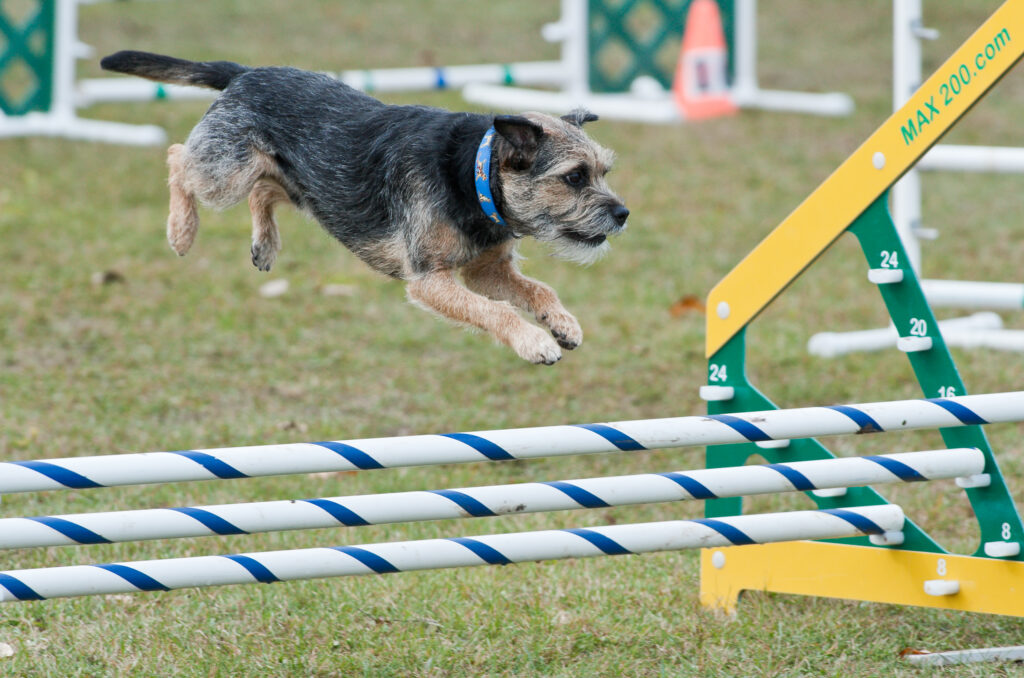
The FCI classification does not require a working trial. This does not erase the breed’s history as a farm dog, hunter and guard. Modern Kerries also take part in activities such as agility and herding.
Gait
The FCI standard describes movement as coordinated, free and powerful. The legs move parallel, with good reach in front and strong drive behind. The topline remains level while the dog is moving.
The head and tail are carried high in action. These details describe the breed ideal, not a diagnosis. Surface, age, fitness and speed can all affect an individual dog’s stride.
New stiffness, lameness or reluctance to walk warrants veterinary advice. Do not train a dog through pain. Movement should be assessed in context, not from one photograph or a single step.
Ideal owner
This breed suits people who are present, interested in training and ready to maintain the coat. Hunting is not required. The dog still needs daily movement, play and interaction with its family.
A Kerry can live indoors and join family life when given clear boundaries and quiet rest. Relationships with children and other animals need supervision and respect. Early socialisation and carefully managed introductions are especially useful.
People seeking a low-maintenance or very independent dog may prefer another breed. Before choosing, assess the individual dog, its parents’ temperaments and grooming needs. A responsible breeder should share relevant health information and results.