The Smooth Fox Terrier is a British terrier classified under Standard No. 12 in Group 3. It is compact, active and quick to notice what happens around it. The standard describes the breed as friendly, outgoing and fearless. These are breed guidelines, not guarantees about an individual dog. Breeding, education and environment all shape behaviour.
Smooth Fox Terrier temperament
The breed ideal is alert, quick in movement and attentive to its surroundings. Its expression is lively and keen. The ideal temperament is friendly, forthcoming and fearless. A breed standard cannot replace observation of an individual dog.
A Fox Terrier may show interest in scents, small animals and family activities. Curiosity makes varied walks and guided games useful. Quiet periods also belong in the routine. Teaching the dog to pause and settle helps manage enthusiasm.
A strong interest in movement can come with close attention to the environment. Recall and lead manners should be taught gradually. Consistent rewards and short sessions support learning. Harsh punishment does not make cues clearer.
Positive socialisation introduces the dog to different people, places and situations. Meetings with other animals should respect distance and individual pace. Close contact need not be forced. Reading body language helps end an experience that feels uncomfortable.
Appearance
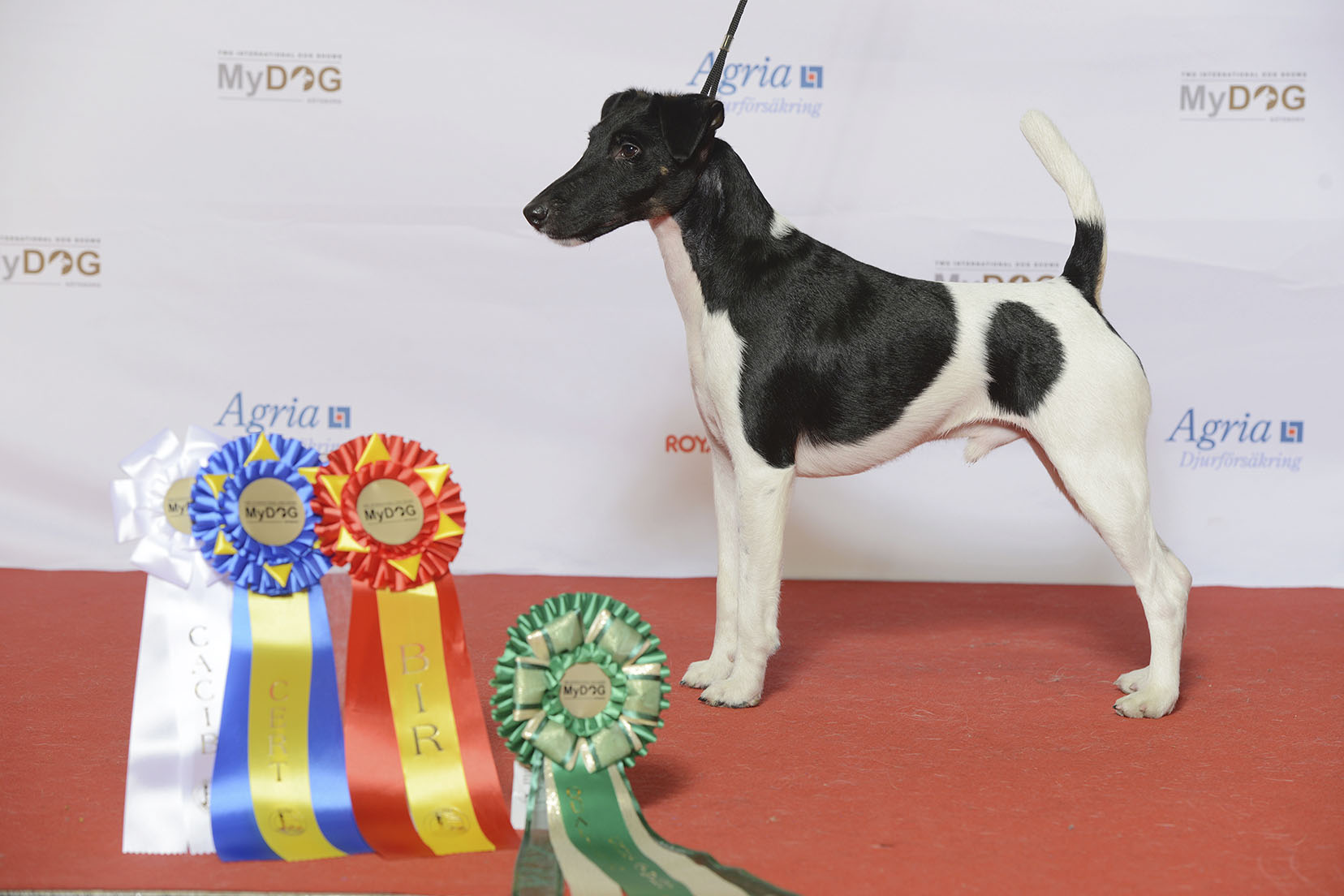
The Smooth Fox Terrier is active and well built, with strength and bone in a compact frame. It should look neither coarse nor frail. The back is short and strong. The chest is deep but not broad, and the legs are straight.
The head is flat and moderately narrow. It gradually tapers towards the eyes. The muzzle is strong and muscular, with powerful jaws and a scissor bite. Dark eyes are small, round and not prominent. The V-shaped ears fold forward close to the cheeks.
The coat is straight, smooth, dense and hard to the touch. White should predominate. Accepted patterns include all white, white and tan, black and tan, or black markings. Brindle, red and liver markings are highly undesirable.
The standard sets a maximum height of 39 centimetres for dogs. Bitches should be slightly shorter. Reference weights are about 7.5–8 kilograms for dogs and 7–7.5 for bitches. These are standard guidelines, not clinical targets for every dog.
Historical background
Great Britain is the breed’s country of origin. Smooth and Wire Fox Terriers share British origins and part of their history. Their development is linked with types of dog also associated with the Bull Terrier and Manchester Terrier.
Type became more uniform towards the end of the nineteenth century. The first Fox Terrier standard was drawn up in 1876. The breed was valued for following fox hunts and dealing with small animals in burrows. The smooth coat is one of the two historical varieties.
The work called for stamina, quick reactions and the ability to move over varied ground. The standard preserves the image of a dog capable of considerable exercise. Its working role helps explain the athletic build and attentive expression.
Today, the Smooth Fox Terrier can be a companion and a partner in shared activities. History alone does not determine every dog’s habits. Breeding line, health, experience and daily management all matter.
Lifestyle
The Fox Terrier needs regular movement and opportunities to explore. Walks, scent games and shared activities can enrich the day. Intensity should suit age, fitness and veterinary advice.
Alternating exercise with rest helps build a balanced routine. Short attention exercises are easy to repeat. Owners can teach cues for waiting, returning on recall and walking without pulling. Calm behaviour deserves reinforcement as much as activity.
Exploratory instincts make leads and secure fences important. A scent or moving animal can attract attention. Introductions to dogs and household animals need care. An adult should always supervise interactions between children and dogs.
The short coat is simple to maintain with brushing and regular checks. Skin, ears, teeth and nails still need attention. Shade and fresh water matter during outdoor activity. To meet other British terriers, read our guides to the Airedale Terrier and the Border Terrier.
Documented health concerns
For Smooth Fox Terriers, the CHIC programme calls for patella checks and cardiac clearance in breeding dogs. These tests are primarily relevant to dogs intended for breeding. They do not prove that an individual dog is ill or will develop a condition.
- A patella examination assesses kneecap stability and possible luxation.
- Cardiac clearance checks for abnormalities, including murmurs heard during examination.
Patellar luxation can cause lameness, but assessment belongs to a veterinarian. A heart murmur also requires clinical interpretation. Breeders should document screening results and discuss their meaning with a veterinarian.
Anyone choosing a puppy can ask for parental test records and clarify which examinations were completed. For an adult dog, discuss checks and symptoms with a veterinarian. Breeding recommendations do not replace individual preventive care.
Curiosities
The smooth coat distinguishes this variety from the Wire Fox Terrier. The two varieties appear under separate standards: Smooth is No. 12, while Wire is No. 169. This is more than a coat-length distinction; each has a separate catalogue identity.
The name reflects the breed’s historical association with fox hunting. The standard also mentions rats and rabbits among the animals a terrier was ready to deal with. This background helps explain the alertness and energy described in the breed standard.
White should predominate, although black and tan markings are allowed. Coat-colour preferences are conformation criteria. They do not determine personality, health or the quality of a family relationship.
Show-ring refinement should not compromise functional soundness. A healthy example should move naturally. Movement, construction and wellbeing all contribute to a sound dog.
Gait
The ideal gait has the front and rear legs moving straight forward and parallel. Elbows work perpendicular to the body and should not cling to the sides. The stifles should not turn in or out.
Drive comes from well-flexing hindquarters. Hocks should not be too close together. Movement should look free and coordinated, without stiffness. The short, athletic outline supports confident ground-covering strides.
One observation cannot establish locomotor health. Age, surface and fatigue can affect gait. Persistent limping or signs of pain call for veterinary advice. The standard describes an ideal, not a diagnosis.
During growth, activity should increase gradually. Jumps and intense effort should suit the dog’s maturity. Regular movement, together with good body condition, helps preserve function over time.
Ideal owner
The Smooth Fox Terrier suits active people who can share time with a dog every day. Its elegant appearance should not be the only reason for choosing it. Consider exercise, training, veterinary costs and safe surroundings.
An attentive owner uses consistent rules and activities suited to the dog. They make time for recall, lead manners, socialisation and rest. They do not assume every dog has identical motivations. They observe their own dog and adapt accordingly.
The home should be secure and offer opportunities for interaction. Fences, doors and meetings with small animals need thoughtful management. Children’s interactions require supervision, even when the dog seems calm.
Before adoption or purchase, speak with veterinarians and responsible breeders. Asking about CHIC checks helps put risks in context without turning them into certainties. The right companion respects the dog’s individuality and supports daily wellbeing.