Temperament
The English Cocker Spaniel is lively, affectionate and attentive to its surroundings. The FCI standard describes a merry, gentle dog, full of life and exuberance. Its tail is often active during work and exploration. This describes the breed ideal, not every individual dog.
As a flushing spaniel, it uses its nose and works with interest through cover. It can shift from energetic activity to quiet time with its family. Health, socialisation, experience and breeding all shape behaviour. Working and show lines may differ, but no single temperament applies to every Cocker.
Cooperation grows through clear routines and respectful handling. Training should be consistent, gradual and reward-based. Recall, self-control and calm behaviour develop through short, repeated sessions. Harsh corrections or excessive demands can confuse a dog and weaken trust.
Appearance
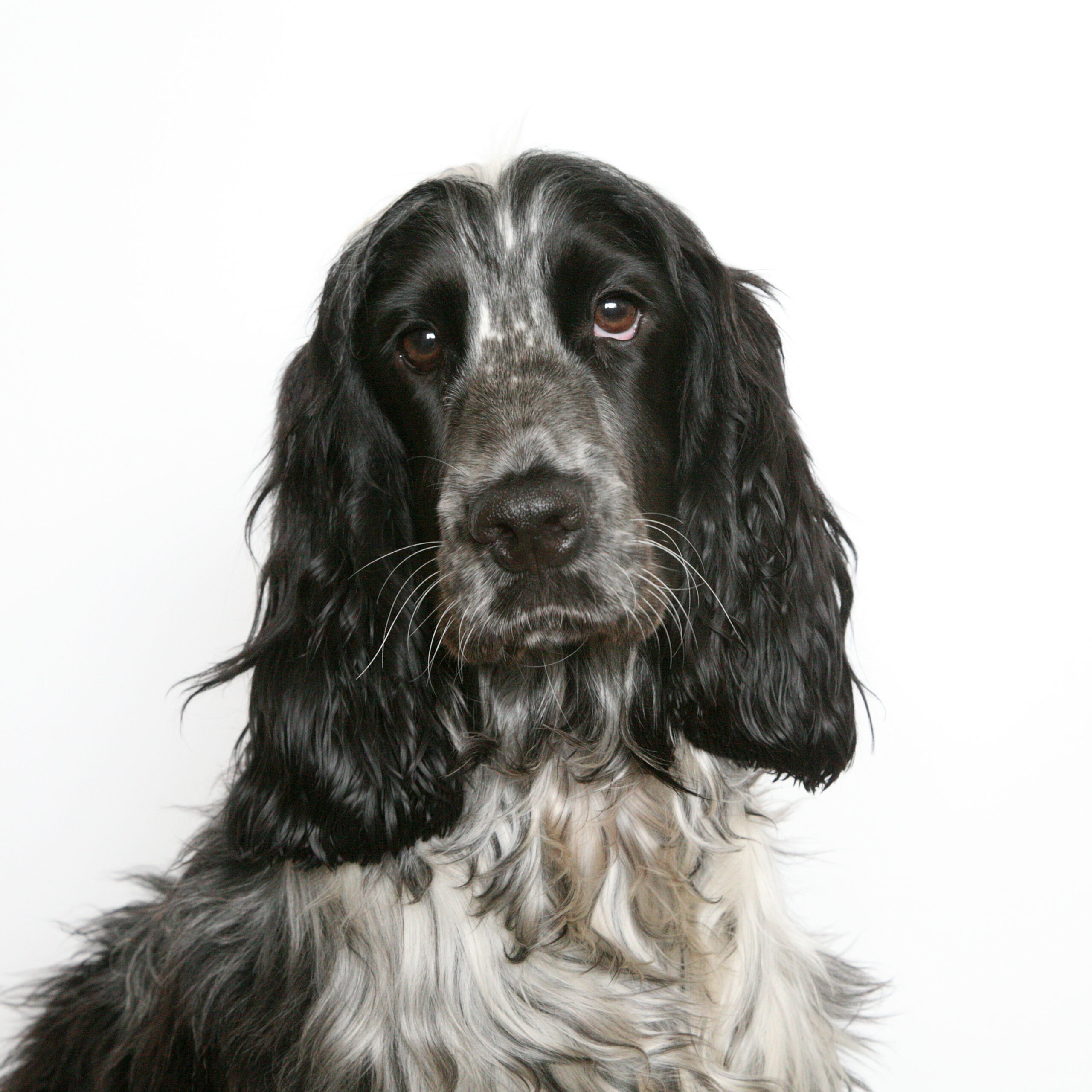
This is a medium-sized, compact and sturdy dog with balanced proportions. The head has a developed skull and square muzzle. The eyes are full, but not prominent, with an alert expression. Long, low-set, lobular ears carry straight, silky hair.
The FCI standard gives approximate heights of 39–41 centimetres for males and 38–39 centimetres for females. Its approximate weight range is 13–14.5 kilograms. These are standard references, not universal health targets. Body condition should be assessed for each dog.
The coat is flat and silky, with feathering on the legs, body and hindquarters. It should not be woolly, curly or excessively profuse. Accepted patterns include solid, parti-coloured, tricoloured and roan. Colours include black, red, golden, liver, black and tan, and combinations with white.
The build reflects the breed’s working origins. Its chest is deep, its back compact and its hindquarters muscular. Long ears and feathered coat are defining features, but they need regular care. Breed type does not replace an individual assessment of health and movement.
Historical background
The English Cocker Spaniel originated in Great Britain. Its ancestors belonged to land spaniels selected to search for and flush game. The name “Cocker” recalls the woodcock, a bird the dogs were bred to flush from cover.
Sources do not give precisely the same date for separate recognition. The FCI standard places separation from Field and Springer Spaniels soon after the Kennel Club formed in 1873. The Royal Kennel Club breed page gives 1893. Both accounts place the distinct breed in the second half of the nineteenth century.
Selection also followed different working needs. The FCI historical summary describes the show type as sturdier and heavier than its working counterpart. Today, the FCI lists the breed as No. 5 in Group 8, Section 2, for flushing dogs. Its classification includes a working trial.
Lifestyle
A balanced routine includes regular walks, play and safe opportunities to use the nose. Short scent searches or retrieving games can be rewarding without making every outing strenuous. Activity should suit the dog’s age, health and fitness.
Its hunting history makes recall and environmental management important. Near wildlife or open ground, a lead and supervision help prevent chasing. At home, quiet breaks and suitable enrichment support rest. Gradual socialisation can make encounters with people and animals easier.
Check the coat and ears regularly, especially after wet walks or time in undergrowth. Dry the ears gently and ask a veterinarian about safe cleaning. For humane training ideas, read this guide to choosing training for your dog. Practical advice is also available in this guide to cleaning a pet’s ears.
Documented health conditions
Clinical statistics describe groups, not an individual dog’s future. A UK veterinary cohort was studied using records from 2016. Researchers randomly reviewed 2,318 records from a population of 10,313 English Cocker Spaniels. The recorded prevalence was 20.97% for periodontal disease. Otitis externa stood at 10.09%, and obesity at 9.88%. These figures describe that sample and year. They are not personal probabilities or lifetime estimates.
Routine prevention should include dental, ear and weight care. Tooth brushing, ear checks and a healthy body condition are useful measures. Odour, pain, discharge, difficulty eating or weight changes merit veterinary advice. A symptom alone cannot identify its cause.
Breeding programmes can use DNA tests for acral mutilation syndrome (AMS), prcd-PRA and familial nephropathy (FN). Adult-onset neuropathy (AON), eye examinations with gonioscopy and hip assessments are also included in screening recommendations. These tools support breeding decisions. They do not diagnose illness in an individual dog.
Recommendations differ between countries and health programmes. Before breeding, check test results, family history and each test’s meaning with a veterinarian or knowledgeable breeder. A genetic result does not replace clinical examinations. No single panel rules out every possible condition.
Interesting facts
The breed’s name preserves a trace of its original task. “Cocker” refers to woodcock, while “spaniel” identifies a family of hunting dogs. The English Cocker was expected to search through vegetation and flush game towards the hunter.
Coat patterns vary widely. Black, red, golden and liver appear alongside roans and combinations with white. Colour alone cannot predict health or temperament. Nor does a working or show background determine every dog’s behaviour.
The FCI standard describes the tail as lively in action. It is a familiar image, but wagging alone does not prove a dog is comfortable. Posture, context and the whole body help us read behaviour more accurately.
Gait
The FCI standard calls for true movement with strong drive and good ground coverage. The front legs reach forward while the hindquarters provide propulsion. Movement should stay coordinated and fluid, matching a sporting working dog.
This is a breed ideal, not a clinical test. Age, surface, speed and fitness affect how a dog moves. New limping, persistent stiffness or reluctance to walk deserve veterinary assessment. Do not push activity when the dog appears painful.
Ideal owner
The English Cocker suits people seeking an affectionate companion who can join everyday life. It needs time for walks, play, training and shared rest. Activities should be varied and appropriate, but do not need to be competitive.
An ideal owner enjoys scent-based games and patiently builds a reliable recall. They should manage the dog’s interest in scents and wildlife, especially outside secure areas. Children and dogs need respectful interactions, with an adult supervising.
Owners should also expect regular coat and ear care. Brushing, combing and routine checks help prevent tangles and neglect. Gradually teach puppies to accept handling and grooming. Choose for the individual dog’s needs and temperament, not appearance alone.