Temperament
The English Setter is a British pointing dog, developed to locate game and show its position to the handler. The FCI describes it as very active, with a keen interest in game. Its standard calls it intensely friendly and good-natured.
These descriptions define the breed ideal, not a guarantee about every dog. Temperament and needs are also shaped by genetics, experience, socialisation and handling. A Setter can be affectionate at home while retaining motivations linked to field work.
Scents and moving animals may capture its attention. Recall and self-control therefore need patient teaching and consistent rewards. Positive experiences help an individual dog feel secure and work cooperatively with its family.
Appearance
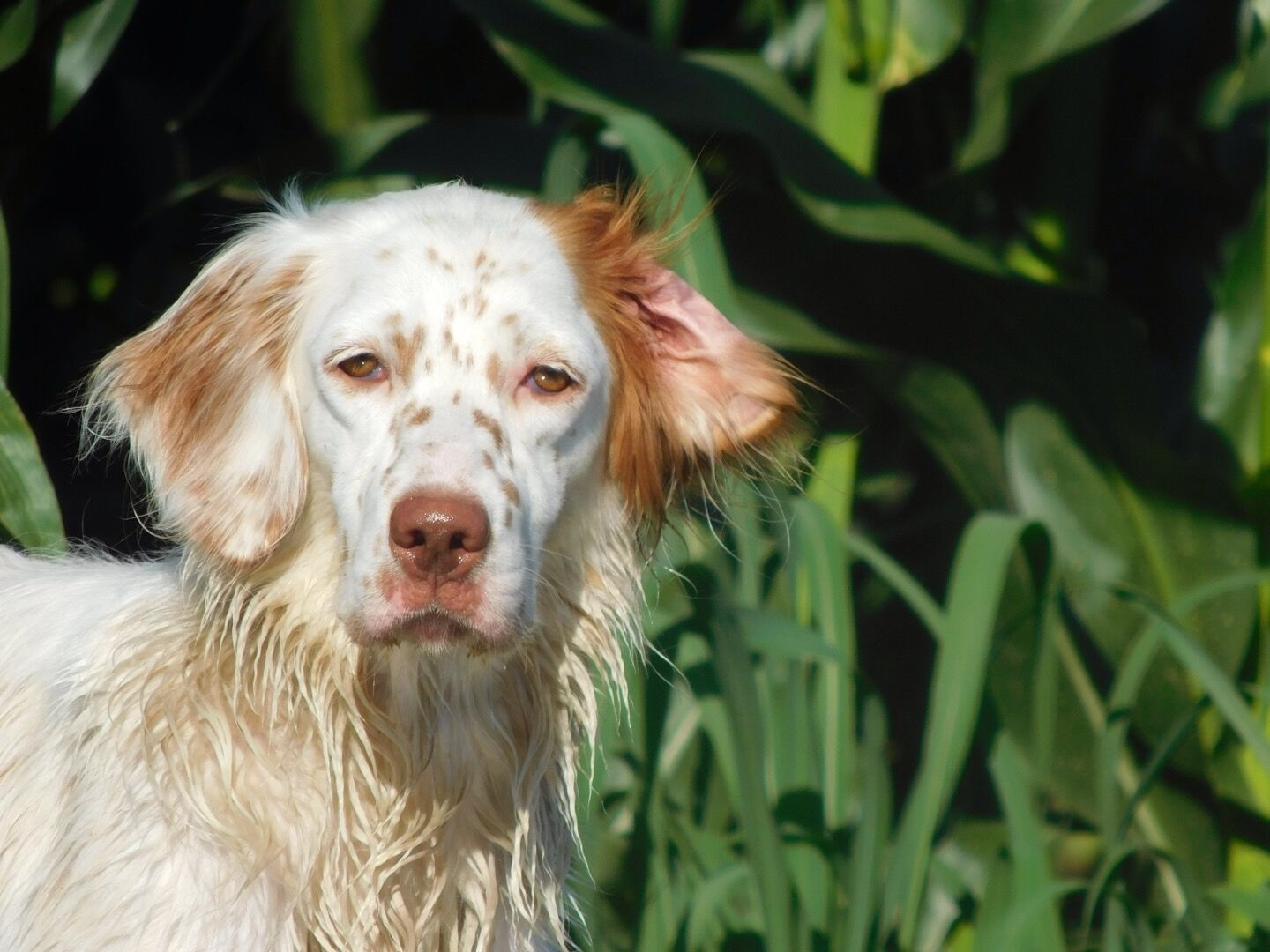
The English Setter is medium-sized, elegant in outline and movement. Its head is long and reasonably lean, with drop ears close to the cheeks. A deep chest and strong muscles support a wide, enduring stride.
The FCI standard gives a height at the withers of 65–68 centimetres for males and 61–65 for females. These are reference measurements, not a stand-alone test of health or quality. The coat is long and silky, slightly wavy but not curly. Longer feathering appears on the legs and tail.
Accepted colours are black and white, orange and white, lemon and white, liver and white, or certain tricolour combinations. The flecked pattern is called belton. The standard prefers an even ticking without large solid patches on the body.
Historical background
The FCI gives Great Britain as the country of origin and lists the English Setter as Standard No. 2 in Group 7. Section 2.2 covers British and Irish Setters. The original function was to find game birds and indicate their presence to the hunter.
Early descriptions of the crouching point come from periods when hunters used nets. The dog lowered itself near the birds, allowing hunters to cover the area with a net. As firearms became common, the dog’s posture and working style adapted to new methods.
In the nineteenth century, Edward Laverack developed an influential line of modern Setters. Richard Purcell Llewellin later helped develop dogs focused on field work. Show and field lines may differ in appearance, but both belong to the same recognised breed.
Lifestyle
This is an active dog that benefits from daily outings, scent work and shared activities. Exploratory walks, nose games and short training sessions can be varied. Exercise should suit age, health and fitness, with workloads increased gradually.
Off-lead running is safest in secure, enclosed places, especially until recall is reliable. Birds and interesting scents can temporarily outweigh attention to the owner. Encounters with wildlife require control and respect for local rules.
The long coat needs regular brushing to reduce tangles and remove debris. After outings, check the feathering, ears, paws and skin. People comparing working breeds can also read about the Golden Retriever and Labrador Retriever, which have different roles and coats.
Documented health concerns
The Royal Kennel Club recommends hip assessment before breeding. Its guidance lists hip screening as Good Practice, with elbow and hearing screening as further Best Practice. BAER testing can be used to assess hearing, including at litter level.
These checks help breeders assess risk and make informed decisions. They do not prove that an individual Setter is ill or free from every condition. Radiographs and hearing results should be interpreted by qualified professionals under the relevant scheme.
The English Setter Association’s health plan has addressed topics including atopic dermatitis, hypothyroidism, fertility and hip dysplasia. The plan does not diagnose the breed as a whole. These are monitoring priorities, not conditions that every Setter will develop.
Before choosing a puppy, ask for documented results for both parents and consult a veterinarian. Persistent itching, possible hearing difficulty, pain or lameness deserve clinical assessment. Prevention and screening should be tailored to the individual dog’s age and history.
Interesting facts
The name Setter recalls the old behaviour of lowering the body and stopping after locating birds. The current standard describes a pointing dog, but posture can vary between individuals and lines. The point is a functional behaviour, not just a show exercise.
The word belton describes the breed’s distinctive coat ticking. The FCI standard links the term to Belton, a village in Northumberland. Several colour combinations are accepted, but each must fit the breed’s official descriptions.
Long feathering contributes to the breed’s outline, but it can collect leaves and small twigs. Checking the coat after outings helps remove debris before it forms mats or irritates the skin. Grooming needs depend on coat length and texture.
Gait
The FCI describes movement as free and graceful, suggesting speed and stamina. The hocks move freely and the hindquarters provide powerful drive. Viewed from behind, hip, stifle and hock should remain aligned.
The head is carried naturally high. This describes the breed standard; it does not replace veterinary assessment of movement. Surface, age, fitness and fatigue can all change an individual dog’s stride.
At work, a Setter searches the ground while attending to its handler and the scent. A wide-ranging action should be developed through suitable conditioning, not imposed. New stiffness, lameness or reluctance to move warrants professional advice.
Ideal owner
The English Setter is best suited to active people who can make time for walks, training and coat care. You do not have to hunt, but should provide activities that engage curiosity and scent. A garden alone will not meet these needs.
It can be an affectionate family companion when given consistent boundaries and a quiet place to rest. Introductions to other animals should be gradual. Children and dogs need supervision and respectful interactions.
Someone with little free time or a sedentary routine may struggle to meet its needs. A patient owner willing to practise recall and self-control can offer a rewarding life. Before adoption, assess the individual dog, grooming needs and health results for its parents.