Temperament
The Pointer is a British pointing dog developed to search for game and indicate its location to the hunter. Searching instinct is an important part of its behaviour. The breed tends to be alert, athletic and ready to move, but every dog has an individual personality.
The FCI standard describes a kind, even disposition, together with endurance, alertness and speed. These points define the breed ideal; they do not guarantee an individual dog’s temperament. Experience, genetics, socialisation and daily handling all influence behaviour.
A well-supported Pointer can be affectionate and cooperative at home. It needs positive relationships, consistent boundaries and shared activities. Hunting motivation may draw its attention towards scents and moving animals. A reliable recall therefore requires gradual training and appropriate rewards.
Appearance
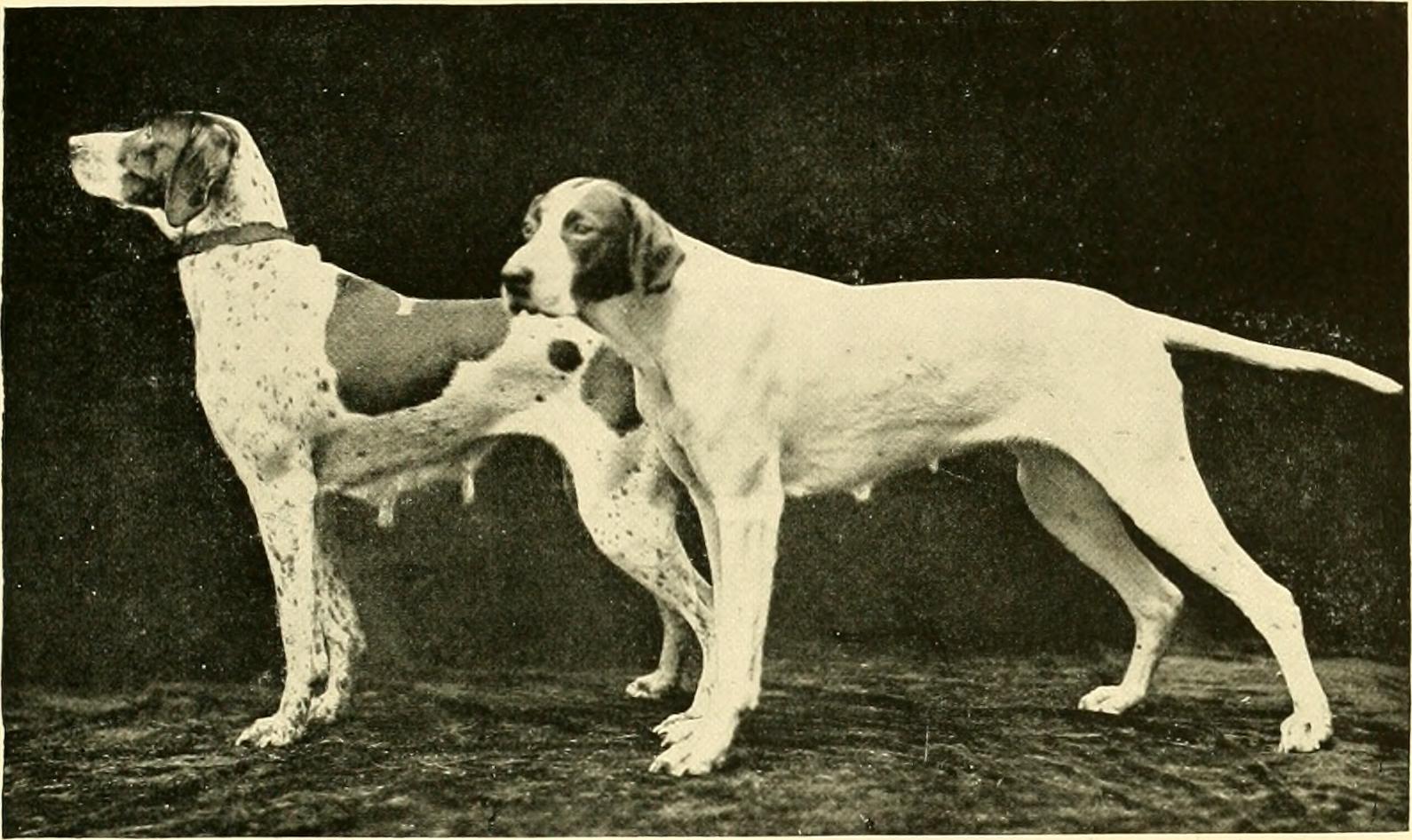
The Pointer has a harmonious build that is strong yet agile. Its outline is formed by smooth curves and functional proportions. The chest provides room for the heart and lungs, while the muscles support a ground-covering stride. The head is clean, with a slightly concave muzzle, drop ears and an alert expression.
The FCI standard sets males at 63–69 centimetres at the withers. For females, the range is 61–66 centimetres. These are breed reference ranges, not an individual assessment of health or quality. The coat is short, fine, smooth and glossy, with hair evenly distributed.
Common colours are lemon and white, orange and white, liver and white, or black and white. Self-coloured and tricolour dogs are also accepted. The tail is thick at the root and tapers towards its tip. In movement, it follows the backline without curling upwards.
Historical background
The FCI identifies Great Britain as the country of origin and lists the Pointer under Standard No. 1, Group 7, for pointing dogs. Its traditional role is to search for game and show the handler where it is. The English name refers to this pointing ability.
Breed histories connect the Pointer’s development with British field sports and continental pointing dogs. Accounts do not always agree about its earliest ancestry. It is therefore sensible to distinguish theories about remote origins from the documented modern breed standard.
As shooting over dogs became more widespread, the Pointer became a field companion for searching open ground. Selection valued scenting ability, stamina and the ability to hold a point. Pointers also compete in conformation shows and dog sports. Their needs still reflect the work for which the breed was developed.
Lifestyle
The Pointer is energetic and benefits from daily movement, scent exploration and activities that engage its mind. Calm walks, search games and short training sessions can be varied through the week. Exercise should match the dog’s age, health and fitness, with workloads increased gradually.
Off-lead running belongs in secure, enclosed areas, especially until recall is dependable. Scents, birds and small animals may temporarily outweigh attention to the handler. Wildlife, roads and cyclists call for safe distances and responsible handling. Puppies and older dogs should not be pushed into prolonged exertion without veterinary guidance.
At home, a Pointer can settle after suitable activity and a predictable routine. Its short coat is straightforward to care for: occasional brushing and checks of skin, ears and paws after outings. Explore the Labrador Retriever and Golden Retriever profiles for two sporting breeds with different roles and needs.
Documented health concerns
A survey run by the British Pointer Club between 2021 and 2022 collected responses relating to 1,178 dogs. Reports included skin and coat, musculoskeletal and eye conditions. These were owner-reported observations, not independently confirmed diagnoses or a precise estimate of risk for every Pointer.
The categories included different issues, such as environmental allergies, dermatitis, arthritis, lameness and conjunctivitis. A report does not prove that the breed caused a condition. Age, environment, activity, breeding and the way data were collected can also affect results. Survey figures should be read in the context of the sample, not treated as an individual forecast.
The Pointer Club says the Royal Kennel Club does not currently recommend breed-specific health tests. Some breeders nevertheless choose radiographic hip scoring. A screening score can inform breeding decisions, but it is not the same as a clinical diagnosis.
Before choosing a puppy, ask which checks have been carried out on its parents and speak with a veterinarian. Persistent signs such as itching, pain, lameness or eye discharge deserve professional assessment. An individual prevention plan depends on veterinary care, lifestyle and the dog’s medical history.
Interesting facts
The Pointer’s best-known feature is its pointing behaviour. After locating a scent, a dog may stop and orient its body towards the game. This posture helps the handler understand where to focus attention. It is not merely a show pose, but an expression of the work for which the breed was selected.
Pointing does not mean a dog is automatically safe off lead. Control depends on training, surroundings and the individual animal. Even an experienced Pointer may react to nearby wildlife or a particularly interesting scent. The person handling the dog remains responsible for safety.
The standard accepts several coat colour combinations, as well as self-coloured and tricolour dogs. A short coat does not remove the need to check the skin after runs through long grass or scrub. Small foreign objects can go unnoticed until a dog shows discomfort.
Gait
The FCI standard describes movement as smooth and covering plenty of ground. The hindquarters drive forward, while the elbows remain straight rather than turning in or out. The gait should not resemble an artificially high-stepping hackney action.
This description refers to the movement expected in the breed standard. It cannot, by itself, assess an individual dog’s health. Age, fitness, surface and fatigue all change how a dog moves. New lameness, stiffness or reluctance to exercise calls for veterinary advice.
In the field, the Pointer is known for a wide-ranging search coordinated with its handler. A long stride is not a target to impose on every dog. Activity should respect the individual’s ability, conditioning and welfare.
Ideal owner
The Pointer is best suited to people who want to share regular activities and consistent training with their dog. You do not have to hunt, but you should understand scent-driven behaviour and a desire to explore. A garden alone cannot replace walks, companionship and enrichment.
A Pointer can live as a family dog when it receives considerate handling, quiet resting places and appropriate exercise. Introduce it to other animals carefully and supervise interactions; do not assume every dog has the same hunting drive. Adults should guide children and teach them safe ways to interact with dogs.
Someone with little free time or a sedentary routine may struggle to meet its needs. An active owner willing to practise recall, self-control and scent games can offer a rewarding daily life. Before adoption, speak with responsible breeders, assess the individual dog and plan suitable veterinary care and activities.