The Golden Retriever was developed to retrieve game alongside people. Its golden coat is distinctive, but appearance alone does not explain its needs. This dog benefits from time, movement, rest and a steady daily relationship. A reputation for being easy does not replace training or learning about the individual.
Temperament
Many Golden Retrievers seek human company and enjoy shared activities. This is a breed tendency, not a promise about every dog. Age, experience and surroundings affect behaviour. A puppy may be exuberant and need help learning to settle. An adopted adult may need a different pace before feeling safe.
Reward behaviours you want to encourage and introduce people and animals gradually. Respect signs of discomfort; forcing contact does not create sociability. Even a friendly dog needs undisturbed rest. An attentive adult should always supervise children and dogs. Home life is easier when everyone has clear spaces and boundaries.
For planning first experiences, read our guide to dog socialisation. Treat it as a starting point, not a fixed programme for every dog.
Appearance
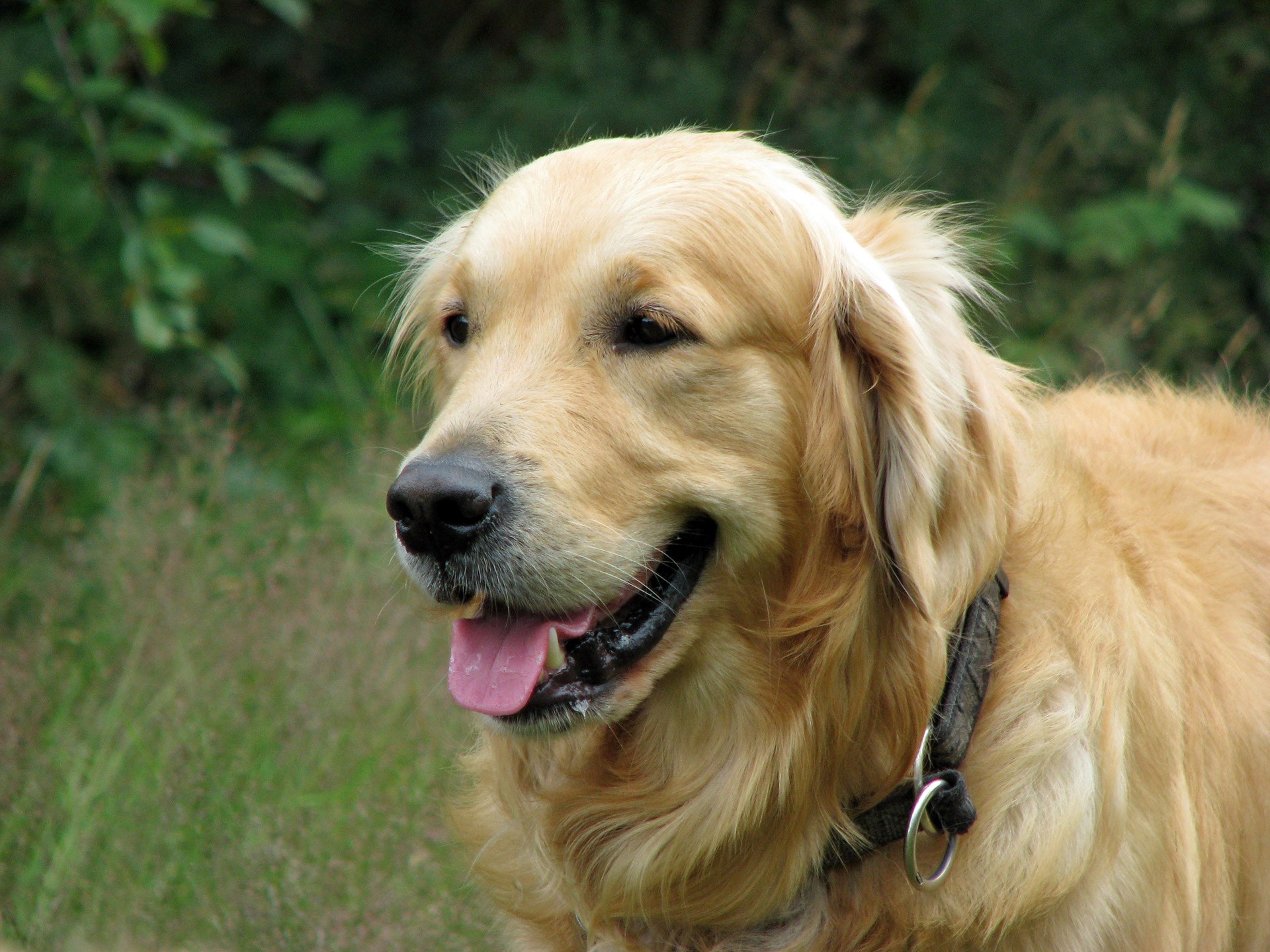
The FCI standard describes a balanced dog with a gentle expression and solid build. The coat is dense, flat or wavy, and feathered. Its undercoat helps protect it from weather. Accepted shades range from cream to gold; colour does not determine temperament.
Under the FCI standard, height at the withers is 56–61 cm for males and 51–56 cm for females. These are reference measurements, not a health assessment of an individual dog. Build and condition should be considered in context. A veterinarian can assess body condition without relying on weight alone.
Brush the coat regularly, especially where feathering may tangle. Check it gently after walks. Help your dog accept handling through short, pleasant sessions. More brushing may be needed during seasonal shedding. Avoid intensive coat treatments without professional advice.
Brief history
The breed developed in Great Britain as a gundog used for retrieving. This work required a dog able to cooperate with a handler. Documented breeding history is more useful than dramatic origin legends. The name refers to retrieving work as well as the coat’s general colour.
Many Golden Retrievers now live as companions. Their working background may explain why some enjoy searching for and carrying objects. It does not mean that every dog likes the same games. Choose activities by observing motivation, age, experience and physical condition.
Lifestyle
A balanced day combines outings, exploration, learning and sleep. A garden offers space but does not replace walks. Changing routes and allowing time to sniff can make walks more engaging. Exercise should suit the individual. Do not impose intense workloads on a puppy simply because it seems energetic.
Scent games can engage a dog without turning every activity into a race. Offer safe objects and stop if your dog appears tired. For gradual ideas, read our guide to mental enrichment games. Excitement should not replace calm time.
- Plan regular outings with time to explore.
- Balance shared activities with quiet rest.
- Choose treats that fit the daily food allowance.
- Notice your dog’s response to people and new places.
Food and treats affect daily routine, especially when activity changes. Ask a veterinarian to assess portions for your dog. Do not choose a diet based only on breed reputation. Our guide to overweight pets provides general information.
Health conditions
A predisposition is not a diagnosis. For Golden Retriever breeding dogs, the United States breed club recommends screening. Its guidance includes hips, elbows, eyes and heart. Subaortic stenosis is among the cardiac conditions considered. These checks help inform breeding; they cannot guarantee future health.
If you are choosing a puppy, ask for documented results for both parents. Find out which examinations were performed and when. A favourable test does not rule out every possible illness. It also does not replace veterinary care throughout a dog’s life. Consult a veterinarian about persistent limping, unusual fatigue or other lasting changes.
Daily observation matters alongside family health records. Notice appetite, mobility and responses to familiar activity. Early assessment helps address the individual dog’s needs. Avoid diagnosing a condition based on online anecdotes or breed membership alone.
Interesting facts
The FCI places the Golden Retriever in Group 8, with retrievers, flushing dogs and water dogs. Its name reflects both its historical work and general coat colour. There is no single way to express that working heritage. Some dogs like carrying objects; others prefer exploring scents and routes.
Retrieving should not become endless repetition without breaks. Offer quieter alternatives and let the dog stop. Observing individual preferences is more useful than chasing a stereotype. A relationship grows through shared experiences, not a checklist of compulsory skills.
Gait
The FCI standard describes powerful movement, good drive and long, free strides. The description concerns typical conformation; it is not a remote clinical assessment. Speed and surface can affect how a dog moves. A tired or sore dog may avoid certain movements.
If limping persists, stop the activity and ask a veterinarian for advice. Do not try to correct the gait with improvised exercises. A professional can assess posture, pain and possible causes. Short videos of the movement may help during an appointment if requested.
Ideal owner
A good match has time for activity, training and companionship. They accept that the coat needs care and that a dog’s needs change over time. They can introduce new experiences without expecting automatic sociability. They also provide quiet time and veterinary care when needed.
Before choosing, consider the family’s schedule, space and real capacity. Ask about the temperament of the particular dog. In an adoption, speak with people who know its history. With a breeder, review health documents and rearing conditions. A Golden Retriever may be a wonderful companion, but compatibility is built with the individual.