

Stomatitis is a general term for inflammation affecting a dog’s or cat’s mouth. It may occur with few symptoms or be clearly visible, but it is generally problematic because, just as happens to us, the animal feels pain when trying to eat and, if the pain is severe, will not eat, potentially leading to malnutrition. It is important to realize that the problem is present, also because animals often do not complain and we must be the ones to notice the situation so that a veterinarian can intervene as soon as possible.
Types and causes of stomatitis
As we said earlier, “stomatitis” is a general term indicating inflammation of the mouth. Depending on the location, the terms glossitis are used when the inner part of the cheek is inflamed, gingivitis when the gums are affected, and periodontitis when the dental cavities are involved.
As for the causes, they can be very varied, but it is important for an owner to know their animal’s habits because, by knowing the cause, we can prevent the problem from returning even after veterinary treatment.
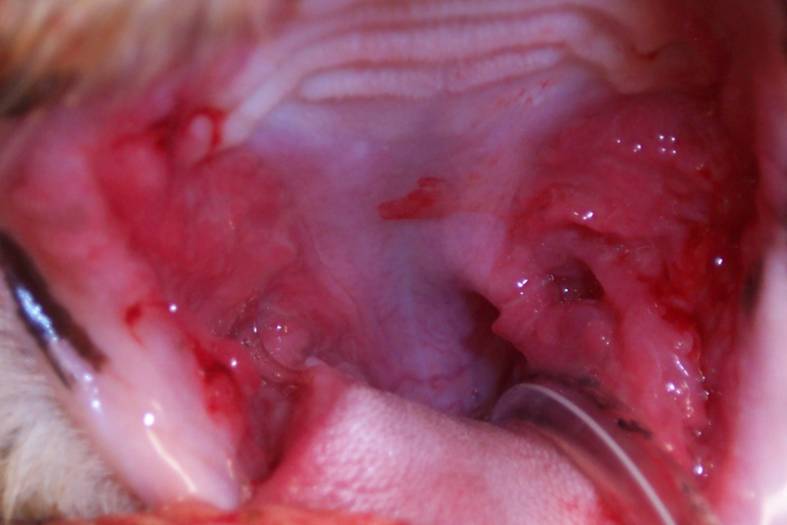
Causes may include infections caused by bacteria, which can be treated with antibiotics (if tartar remains for a long time, it can lead to bacterial periodontitis because dirt accumulates around the teeth and is never removed); some viral diseases can also cause these conditions, which may become serious. One is calicivirus infection, which affects cats and against which kittens should be vaccinated while they are still young.
If there have been cases of candida in the home, a fungus that can affect mucous membranes, be aware that it can also affect your animals’ mouths, especially if they have a habit of licking surfaces where they might ingest the fungus’s “sprouts,” called hyphae.
Inflammation can be caused by the ingestion of foreign substances. Processionary caterpillars, in particular, are among the most dangerous and can lead to anaphylactic shock, so it is important to act promptly.
But irritating substances such as nettles can also cause inflammation, or our animal may simply be allergic to something. It is important to monitor dogs especially closely, as they tend to eat anything, in order to try to understand what the problem may be.
As for cats, there is also a particular condition caused by hypersensitivity to certain substances, called eosinophilic granuloma. It is not a tumor, but behaves similarly because it is a mass that grows and must be treated with specific cortisone-based medicines. It is usually located at the back of the mouth and is very painful for the cat, but it is difficult to see because the cat refuses to open its mouth.
There are also true neoplasms that can affect the mouth. Here too, it is important to examine our animal regularly, because a tumor takes a long time to grow. It is therefore advisable to inspect a dog’s or cat’s mouth carefully, especially when it yawns, and contact the veterinarian if we see anything unusual. Tumors also cause stomatitis because they exert pressure, cause pain, and exposed tissue in contact with food can also cause ulceration.
The main symptoms
As we have just said, it is important to examine our animals’ mouths regularly and contact the veterinarian if we realize that something is wrong.
The first symptom of stomatitis is that the animal does not eatdoes not eat, or at least does not eat as usual. If we give it the classic treat, it may refuse it because only true hunger will drive it to tolerate the pain caused by food passing through the mouth. This alone should make us suspicious: the animal approaches the food bowl, sniffs it, then walks away; five minutes later it returns, eats two bites, then stops again, and so on. It tries to eat while enduring the pain.
If the problems concern swallowing, there may also be drooling: the salivary glands produce saliva normally, but if it is not swallowed, it flows out of the mouth. This is called pseudoptyalism and is a symptom of oral pain. In more serious cases, blood may be mixed with the saliva.
It is, of course, always necessary to contact the veterinarian, who, with our help—especially if the problem is caused by irritating or allergenic substances—can implement medical treatment (or surgical treatment, but only in the most serious cases) to resolve the problem definitively, possibly combining it with products applied directly in the mouth to protect and relieve inflammation.