
<v:shapetype id="_x0000_t75"
coordsize="21600,21600" o:spt="75" o:preferrelative="t" path="m@4@5l@4@11@9@11@9@5xe"
filled="f" stroked="f">
<v:shapetype id="_x0000_t75"
coordsize="21600,21600" o:spt="75" o:preferrelative="t" path="m@4@5l@4@11@9@11@9@5xe"
filled="f" stroked="f">
Among infectious diseases that can affect both humans and animals, rabies is one of the best known. In recent years, legislation has worked extensively to prevent the spread of this disease, which is widespread in underdeveloped countries such as those in Africa and Asia, infects humans (often fatally), and is transmitted by various animals.
Rabies is also dangerous for our dogs and cats, and is one of the diseases every owner should know about, both for the safety of their animal and that of their family.
What it is and how it is transmitted
Rabies is a disease caused by a virus belonging to the genus Lyssavirus. When viewed under an electron microscope, it has the typical shape of a “rifle bullet” and is found mainly in the saliva of animals.
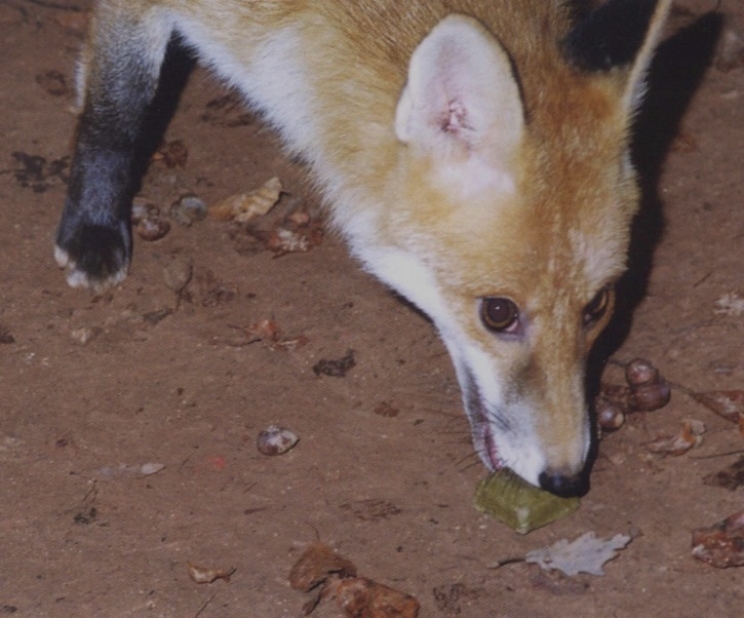
This is how it is transmitted: the virus can infect practically any warm-blooded animal, but carnivores play an important role in passing the disease from one animal to another: wild dogs, foxes, bats, and some animals not found in Italy, such as coyotes and jackals.
The virus alters the behavior of the affected animal, causing it to behave differently from its usual manner.
A fox, for example, is naturally suspicious and rarely approaches other animals such as dogs, even just to play; if affected by the disease, however, it will be aggressive and tend to approach any animal, biting it but not killing it: in this way, through the saliva in the bite, the infection is transmitted to the other animal.
Bats also play an important role in transmission: as mammals, the disease works in the same way as in other animals, but because they can fly and have been “rehabilitated” to help solve the mosquito problem (through small houses installed in gardens), there is a risk of abnormal behavior that could lead them to bite an animal or a human.
If a dog or cat is infected, it can transmit the disease to other animals in the same way.
What it does
Once it enters the body, generally through the muscles (the bite can occur anywhere on the body), it remains confined there, where it was inoculated, even for several days; it is a very slow virus and therefore may not be identified immediately, precisely because the typical symptoms appear only after some time.
As the days pass, the pathogen moves from the muscles to the nerves and travels along them (it never passes through the blood) until it slowly reaches the salivary glands so that it is present in the saliva.
Transmission, however, does not stop there but continues to the brain, where it acts on certain areas that change the subject’s behavior, making it more inclined to approach humans and other animals, while also making it more aggressive and stimulating salivary secretion.
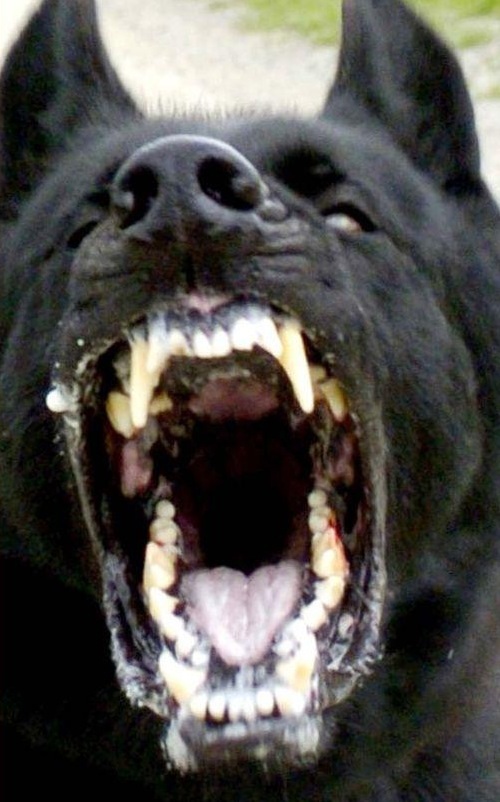
A dog or cat with rabies is easily recognizable because it does not behave normally, is aggressive, tries to bite its owner and other animals, and drools heavily from the mouth. After this phase, approximately 10 days after the bite, the animal moves less and less, loses coordination, and becomes paralyzed, eventually dying. Unlike in humans, the typical symptom of pain when drinking is not present.
The law nevertheless requires euthanasia to be performed on a dog showing symptoms of rabies, to prevent the disease from spreading.
How to prevent it
Rabies prevention is not carried out by the owner, but by the health authorities. Each European country establishes a vaccination plan for wild animals, and the vaccine is distributed through meatballs containing it, which are left in forests or in areas where wild animals are present by authorities such as forest rangers.
As for domestic animals, when rabies is known to be present in an area, the competent ASL immediately implements an animal vaccination plan; in disease-free areas, a prevention system remains active to prevent transmission from wild animals to domestic ones.
If a dog bites a person or another animal, hospitals and veterinarians are required to report the bite, and the biting dog is subjected to a mandatory veterinary examination at the competent local ASL.
In Italy, apart from two cases in the northeast in 2011, there have been no cases of rabies since the 1970s.