
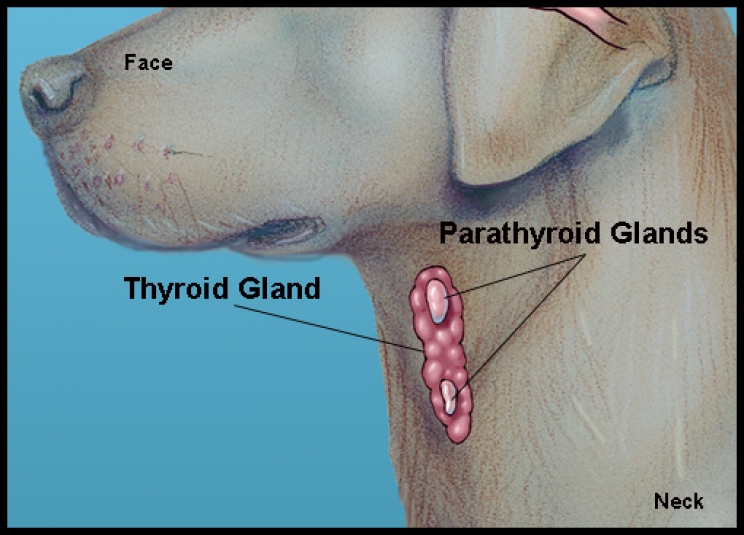
Did you know that your body contains the so-called “parathyroid glands”? Many people do not know this, and if they do not know it about their own bodies, imagine whether they know it about their dog or cat.
Yet these glands are present in them too, and in everyone they are located in the neck, near the much better-known thyroid gland. They are tiny glands, almost invisible to the naked eye, but they are there, and their function is very important because they regulate the body’s calcium balance.
Calcium metabolism
Before discussing the disease itself, we need to understand how calcium moves through the body, what it is used for (it does not simply “do you good,” as advertisements say, but there are specific reasons why it is beneficial), and what happens when the system regulating it malfunctions.
Suppose our dog drinks a glass of milk (it does not digest it particularly well, but this is just an example), which contains a good amount of calcium. The calcium reaches the intestine, where it is absorbed into the bloodstream. Some calcium is always circulating in the blood, and if there is too much, the body puts it into its calcium “warehouse”: the bones.
The parathyroid glands act as “sensors” of calcium in the body: they constantly monitor it, and when it drops too low they release parathyroid hormone, or PTH, a messenger that goes to the bones and says, “Hey, release some calcium—we’re running low here!”
The bones release calcium and the normal situation is restored in the blood. But what is all this calcium needed for? It is needed by the muscles, because muscle contraction is basically a chemical reaction that requires calcium. A body without calcium dies because the muscles, including the respiratory muscles, cannot function. Being without calcium is a bit like being without air, which is why it is so important.
And that is why the parathyroid glands are so important.
Hyperparathyroidism
The glands produce parathyroid hormone when the amount of calcium in the blood drops too low. From this we understand that if they stopped working, one would die, but since there are several glands (four), it can happen that one stops functioning, whereas it is impossible for all of them to stop at once.
It is more likely, instead, that one of them starts working “independently” and producing more parathyroid hormone than normal, and this is when we have hyperparathyroidism. Generally, this situation is caused by a tumor in one of the glands, which enlarges and produces more hormone than it should. The result is that a great deal of calcium is removed from the bones and begins to cause problems.
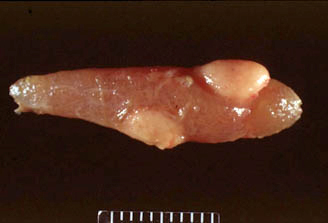
There is also another cause: an imbalance between calcium and phosphorus in the blood (that is, too much phosphorus and too little calcium), which causes all the glands to produce more hormone, because phosphorus is calcium’s bitter enemy and the parathyroids hate it (joking aside, too much phosphorus is dangerous for the body).
What exactly happens? You will probably think of osteoporosis, a condition in which bones become fragile because there is no longer enough calcium to act as their “cement,” but in reality things are worse. If the problem were only osteoporosis, it would mean that the damage to the parathyroid glands was mild, because removing all the calcium from the bones takes years.
The situation is more serious because the excess calcium removed from the bones and circulating in the blood causes kidney problems.
In practice, these organs become almost walled up; this is called calcification, and they can no longer do their job. The result is seen especially in the urine: the animal, dog or cat, begins to drink more and urinate more, but also develops urinary infections and stones (remember that calcium also makes up limescale in faucets, to give you an idea of what it is like when a lot of it accumulates at once). It will also have muscle problems such as tremors, because calcium is necessary for muscles but must not be excessive (a car flooded with gasoline will not start, even though gasoline is its fuel).
If we notice this situation, which is also very similar to kidney failure, we must take the animal to the vet, who will perform blood tests, particularly biochemical tests. The results state how much calcium, phosphorus, sugar and so on are present in the blood. In this case, calcium is extremely high. If we add to this the fact that the animal is of a certain age (hyperparathyroidism occurs in animals at least six years old), the diagnosis is fairly clear.
Treatment is medical when there are major calcium and phosphorus imbalances but the parathyroid glands are healthy, whereas it is surgical—meaning that the “responsible” gland is removed—when a neoplasm is present.
However, the fact that hyperparathyroidism is rare and that the glands are extremely small means that not every facility performs this type of surgery, so we may have to be prepared to travel. The operation must also be performed in the calmest environment possible to prevent the excess calcium, combined with the animal’s fear, from causing very intense muscle tremors.