
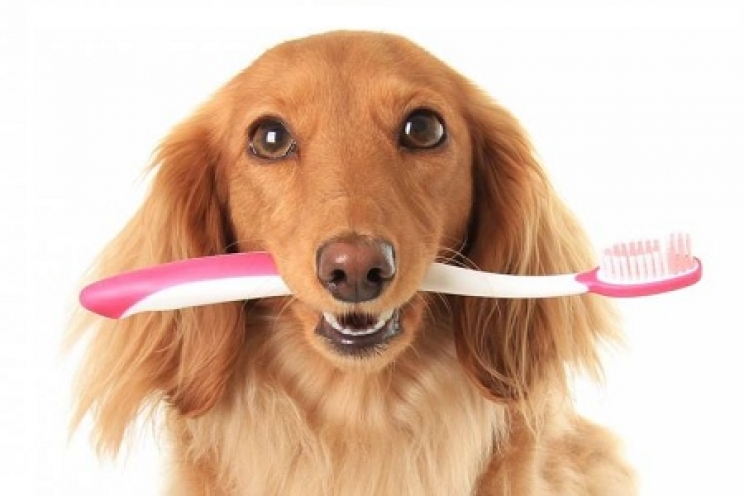
Dental hygiene is very important for us, as it is for our four-legged friends. Yet, although we are always so careful to brush our teeth and have regular check-ups with the dentist, we are not equally diligent about our animals’ dental hygiene. This is how, over time, dogs and cats begin to suffer from problems related to the accumulation of plaque and tartar, making dental cleaning necessary. But what does this procedure involve? How and when should it be performed, and what are the associated risks?
Tartar: the enemy of our teeth
We often hear about plaque and tartar, but not everyone actually knows exactly what they are. Essentially, every time we eat, the surface of our teeth and gums becomes covered with a layer of “dirt” that we often cannot even see. By brushing our teeth several times during the day, especially after eating, we manage to remove much of this residue.
However, this “dirt” can remain in the spaces between one tooth and another—where it is difficult to clean without dental floss—or below the gum margins. Thus, day after day, food residue, sugary drinks, coffee and any other substance introduced from outside accumulate, providing excellent nourishment for the bacteria normally present in the mouth. 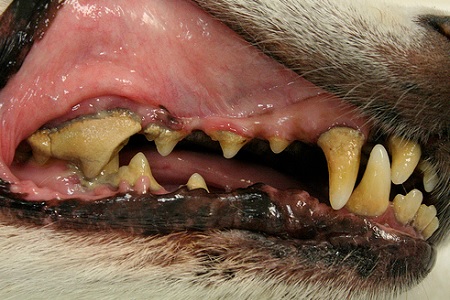
The accumulation of bacteria and various residues forms plaque, a whitish deposit that becomes increasingly hard and thick as time passes. If no thorough dental hygiene treatment is performed by the dentist, calcium normally present in saliva combines with the plaque, forming tartar, which is yellowish, hard and very difficult to remove.
The exact same thing happens to our four-legged friends, who cannot always boast adequate oral hygiene, either because they are not accustomed to having their mouths handled or simply because of their owners’ laziness.
The consequences of plaque and tartar are mainly:
-
Cavities
-
Tooth loss
-
Inflamed gums
-
Abscesses, collections of pus in the gum
Finally, a very serious problem, especially for elderly or debilitated animals, is that bacteria can travel as far as the heart, causing serious infections.
Dental cleaning
Although caring for our animals’ oral hygiene is actually very simple, too few owners are able to get them used from puppyhood to having their teeth brushed. Thus, at a certain point Fuffi and Fido stop eating as before, seem to refuse to touch their food and their breath begins to become unbearable. What happens in these cases? The veterinarian proposes a procedure known as dental cleaning or tartar removal.
To remove tartar, in fact, simply brushing the teeth is not enough; it must be mechanically removed through an actual procedure. There is nothing to worry about, however, when we consider that in people it is generally performed without anesthesia or with a mild local anesthetic. 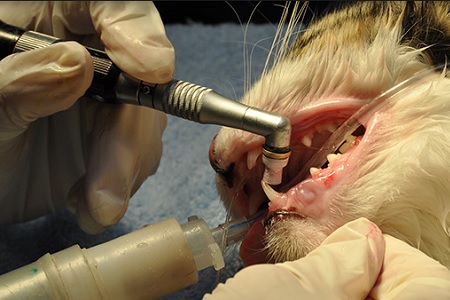
For our four-legged friends, the procedure requires general anesthesia only because otherwise the veterinarian would have little room to work. The anxiety caused by the procedure, the sounds of the equipment and some gum discomfort could lead Fuffi and Fido to attack the veterinarian or, worse still, injure themselves. These risks can be easily avoided with proper anesthesia.
But let us see what dental cleaning involves.
The veterinarian uses what is known as a “curette”, a manual instrument equipped with a sort of steel hook that can grasp and remove even the deepest tartar. Alternatively, there is also an ultrasonic scaler that makes the metal tip of the device vibrate.
The entire procedure lasts a few minutes, depending on the severity of the tartar buildup, but the animal feels no discomfort thanks to the effect of the anesthesia.
During the procedure, the veterinarian may find loose teeth that have been too badly damaged by tartar and will eventually fall out. In these cases, it is preferable to remove these teeth directly, because they are certainly no longer functional for chewing and the animal could otherwise experience considerable pain.
A very important point to clarify is that dental cleaning acts on tartar that has already formed, but does not in any way prevent the accumulation of new deposits. For this reason, it is important to try to start brushing our four-legged friends’ teeth. There are many products specifically designed for animals’ dental hygiene on the market. For more information on choosing and using them, read this interesting practical guide.
The cost of dental cleaning is similar to that charged by “human” dentists, but it should be considered that the veterinarian will clearly include a slight increase related to the cost of anesthesia. In general, the price does not fall below 100 euros.