
Distemper is one of the most common infectious diseases in dogs, known for many years and still vaccinated against today. It can affect both domestic and wild animals, especially canids (domestic dogs, foxes, jackals) and mustelids (including ferrets, which are increasingly common as pets). It does not affect cats.
What it is and how it spreads
Distemper is a disease very similar to human influenza in the way it is transmitted and spreads within the animal’s body, with the difference that the symptoms are much more severe.
It belongs to the Morbillivirus genus, so it is closely related, at least in terms of classification, to the virus that causes measles in humans.
It can be transmitted in various ways, generally from dog to dog, given how difficult it is for a dog to come into contact with a susceptible animal of another species. Since in some cases the disease is extremely severe while in others it appears as a simple fever, we may be dealing with a dog suffering from distemper without realizing it; for this reason, it is important to vaccinate our dogs.
The disease is transmitted through contact with other dogs, both through the face and through anal secretions. Dogs tend to lick one another, especially while playing, and if a healthy dog licks the saliva, small nasal discharges, or genitals of an infected dog, it may contract distemper.
In theory, infection can also occur through the air, that is, by breathing air (rich in viruses) expelled from another dog’s mouth, but the virus is not very resistant in the external environment, so the dogs must still be very close.
What it does
When the virus enters the body, through breathing or licking, it replicates in the oral and nasal mucous membranes and reaches the tonsils. Here it multiplies abundantly, then begins to descend through the digestive system to reach the spleen and intestines on the third or fourth day after infection; it is thus absorbed by these organs and reaches the blood, where it persists because it infects white blood cells (especially monocytes and lymphocytes), which distribute it throughout the body as they move through the bloodstream, so that it can be found in every organ approximately one week after infection.
After about two weeks, the virus has reached the brain and may cause neurological problems.
The first phase of the infection stimulates the immune response and may cause fever, which may initially go unnoticed; the dog’s body may manage to “defeat” the virus at this stage, in which case there will be no further problems, but it may not succeed.
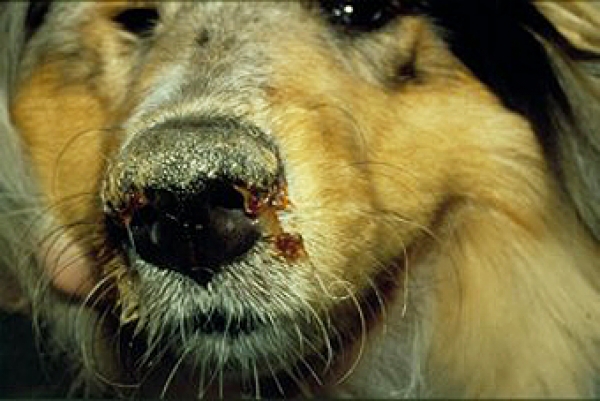
In the worst case, as the virus spreads through the body, in addition to fever and loss of appetite the dog will develop diarrhea, sometimes with blood in the stool, as well as respiratory problems with coughing and heavy mucus production; the nasal mucous membrane will be thicker than normal, as will the paw pads.
The dog is visibly ill and must be taken to a veterinarian as soon as possible.
If the disease progresses and the virus reaches the brain, neurological symptoms may develop that can even lead to the dog’s death: in some cases there is paralysis, while in others there are seizure-like episodes; at this point, treating distemper is very difficult.

How it is treated and prevented
Veterinarians recommend vaccination against distemper as one of the first vaccinations to be administered as soon as the immunity transmitted by the mother through nursing disappears in the puppy.
You can check the dog’s health record to verify its vaccination status, and if you have a dog whose vaccination status is uncertain (a stray, for example), you can still have it vaccinated at any age. The vaccine injects a low-risk distemper virus into the dog’s body so that, if the dog contracts the “real” virus, its body recognizes it as dangerous and immediately begins fighting it, avoiding the most serious consequences.
If a dog contracts the infection and has not been vaccinated, it must be taken to a veterinarian immediately; since there is no medicine capable of defeating distemper, the doctor will treat the various symptoms (coughing, diarrhea, and secondary infections resulting from the animal’s ill health) in order to put the dog’s body in optimal condition to fight the disease on its own through the immune system.