
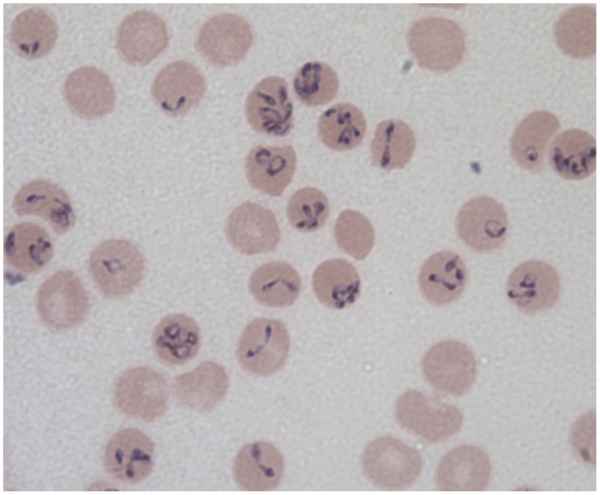
Babesiosis, also known as piroplasmosis, is a parasitic disease that affects dogs but can occasionally also affect cats and humans. It is a very small microorganism that, depending on the animal it infects, may cause practically no damage or may lead to death within a very short time.
It is very important to recognize the symptoms and take our dog to a veterinarian as soon as possible, so that they can promptly administer a drug capable of destroying the parasite in a short time.
What it is and how it is transmitted
Babesia, the genus of parasite whose most common species are Babesia canis in dogs, Babesia cati and Babesia felis in cats, consists of small protozoa that enter the animal’s body and penetrate the red blood cells, the cells that give blood its typical color and whose purpose is to transport oxygen throughout the body.
Babesia is approximately half the size of a red blood cell (which measures 0.007 mm in circumference), and once inside the cell it reproduces once, so that one organism becomes two; they then attempt to reproduce, but when they become four they are too many for one red blood cell, which “explodes” and dies. The four babesia each parasitize another red blood cell, reproduce again and so on.
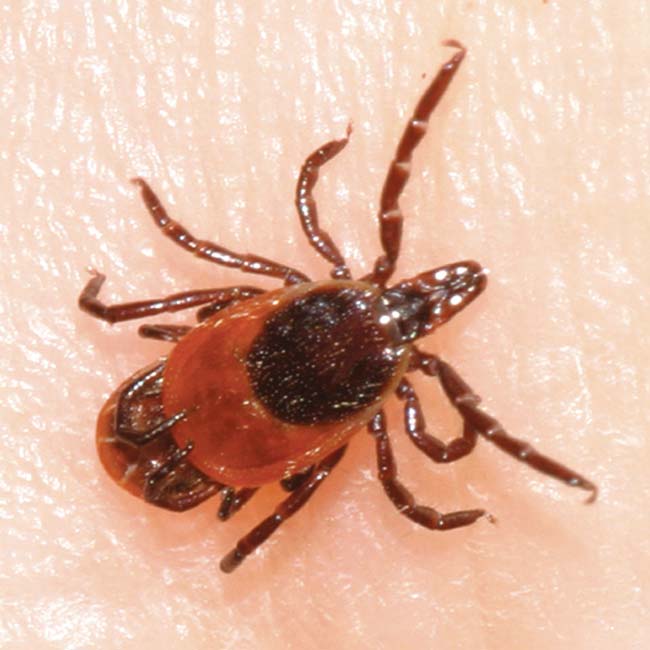
Transmission occurs directly through the blood, by means of a tick, an animal commonly found in grass that feeds on the blood of domestic animals.
If an infected tick bites our animal, it will transmit the infection, and our dog or cat, in addition to developing symptoms, becomes capable of transmitting it in turn to other animals.
If a healthy tick bites our dog or cat and acquires the babesia, when it bites another animal it will transmit the infection. But that is not all: the offspring of an infected tick are born with babesia inside their bodies, so they remain infectious throughout their lives.
Another, less common route of transmission is blood transfusion. Generally, transfusion centers check that the donor’s blood is free of infections (exactly as occurs with human blood donations), but if this procedure is skipped at negligent clinics, our dog could contract the infection.
What it does
We have already discussed the parasite’s particular mechanism of action: it penetrates red blood cells and effectively destroys them.
The dog’s immune system tries to limit the infection when the babesia are still outside the red blood cell, since they cannot reproduce unless they are inside it. If the dog or cat is healthy and has a properly functioning immune system, the disease may be stopped at the outset.
In puppies, whose immune systems are not yet fully developed, in older animals, or in subjects weakened perhaps by another disease, the consequences may be more serious.
In general, oxygen availability decreases. Red blood cells normally “stretch” to pass through the pulmonary capillaries, but if they contain the parasite they become more rigid and cannot do so; this creates actual blood blockages before the lungs, and available oxygen decreases. This is compounded by the fact that by destroying the red blood cells, which transport oxygen in the blood, even less oxygen remains.
The mucous membranes become yellowish because of the excessive destruction of red blood cells, and bleeding may be observed in various parts of the body because anticoagulant substances are rapidly depleted due to the presence of the parasite.
The worst symptoms, however, are fever, which may be very high, reluctance to move, constant tiredness, anemia detectable through simple blood tests, vomiting and diarrhea.
In puppies, allergic reactions may occur and can even be fatal due to shock, developing within a very short time. These cases are, however, fairly sporadic, while the symptoms described above are by far the most frequent.
How it is treated and prevented
Preventing this disease is very important, also because action must be taken against its route of transmission (ticks), which can transmit even more serious diseases.
Avoid tall grass, where ticks generally live, and pay close attention: noticing that the animal is scratching and biting a particular spot may allow us to remove the tick from our friend’s skin before it can transfer the parasites (this is not immediate; it must remain attached for some time before transmitting them).
Repellent products are also available that can keep ticks away from our animal’s skin.
If we notice fever (which generally appears a couple of weeks after the tick bite) and some of the symptoms described above (lift one lip and check whether the pink mucous membrane has become white or is tending somewhat toward yellow) take the animal immediately to a veterinarian, who will administer the appropriate drug to eliminate babesia permanently after confirming its presence through a simple microscopic examination of the red blood cells (babesia are clearly visible).
For several years, a vaccine has also been available. It cannot prevent infection but greatly reduces symptoms; however, its effectiveness has not yet been proven, so it would be useful to discuss it with the veterinarian to determine whether, given the environment in which the animal lives, it may help prevent babesiosis.