
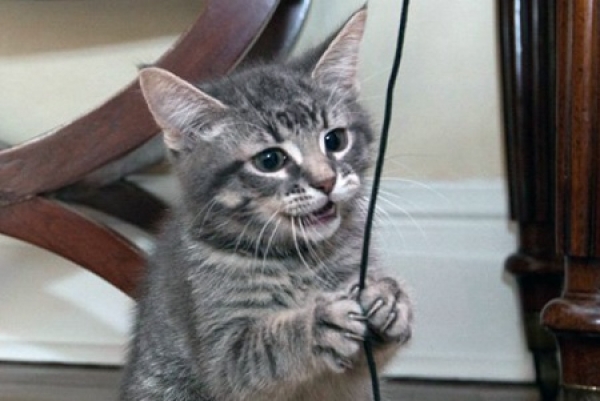
Dogs and cats, especially when young, love playing with all the objects they can find around the house. Unfortunately, some parts of these objects may be swallowed by the animal, exposing it to serious risks. In this article, we will understand what dangers they may face and what to do if the animal has swallowed an object.
Why animals eat objects
Puppies and kittens up to 6 months of age do not yet have a complete set of teeth. During the first two months, in fact, their baby teeth begin to erupt and are progressively replaced no earlier than 6 months of age.
Just as with babies, when new teeth emerge, the animal may feel some discomfort in the gums and therefore tends to put anything within reach into its mouth. This is precisely the age when puppies and kittens tend to gnaw and damage furniture in the house.
Animals may also swallow objects purely by instinct. During play, they may break up and tear their toys, swallowing some parts, or they may be so attracted to an object that they cannot resist eating it.
Dogs are considered great devourers of doll eyes and stuffed-animal parts, while cats prefer ribbons, fabric threads, plastic and aluminum.
However, swallowing objects may also occur because of a behavioral disorder. “Pica”, meaning the uncontrollable urge to swallow various types of inedible objects, is among obsessive-compulsive disorders. It occurs when an animal is overly stressed, anxious or traumatized, diverting attention from negative emotions toward a fixed action, which in this case is swallowing objects.
What are the risks
An animal that swallows a foreign body, regardless of the type of material or its size, is always exposed to risks. Naturally, some objects are particularly dangerous, such as larger and pointed ones.
The consequences of animals swallowing objects include:
-
The object becomes stuck in the mouth or between the teeth;
-
The object becomes lodged in the esophagus, stomach or intestine, causing a serious obstruction;
-
The object perforates any part of the digestive tract, from the esophagus to the rectum;
-
The object also becomes lodged in the respiratory system, causing suffocation;
-
The object contains harmful substances that are released into the animal’s body.
For this reason, it is extremely important to understand what to do when an event of this kind occurs.
Most dangerous objects
The most dangerous objects our animals may swallow include:
-
Balls
-
Caps
-
Stuffed-animal parts
-
Stones
-
Fruit pits
-
Garbage strings
-
Twine
-
Shoelaces
In essence, cats are more attracted to anything that may resemble a mouse’s tail. These are also among the most harmful objects, because they can become caught in the tongue and along the entire digestive tract, also creating a risk of suffocation.
What to do if the animal has swallowed an object
Let us clarify one point first.
Avoid giving your animal potentially dangerous toys, very small toys or toys with several detachable parts. Your children’s stuffed animals are often unsuitable for animals.
Also try not to leave within the animal’s reach certain common-use objects that may attract it.
It may also be useful to regularly take inventory of the dog’s or cat’s toys, to check that nothing is missing.
If you suspect that your dog or cat has swallowed an object, monitor it constantly. Check that it does not show particular symptoms, such as vomiting, fever, lethargy and loss of appetite.
Always check the cat’s litter box. Although it may seem unhygienic, you will need to examine all of the dog’s or cat’s feces, looking for the swallowed object.
If the animal has not eliminated the foreign body within twelve to twenty-four hours, take it immediately to the veterinarian, because it may have become lodged in the stomach or intestine.
In these cases, action must be taken as soon as possible, because some situations can truly place the animal’s health in serious danger.