

Have you decided to add a cat to your family, but have no idea where to start to give it the welcome it deserves? Then this guide is just what you need. Let us look at everything you need to know when adopting a cat.
Whether it is a newly weaned kitten or an adult cat, there are many things to know when deciding to bring a new four-legged friend home. The environment in which it will live, coexistence with its human housemates, and the rules to establish are all aspects that must be considered from the outset to provide the newcomer with the right balance.
Preparing to welcome the cat
First of all, we must make sure we have everything the newcomer will need. Among the items that should never be missing, be sure to obtain:
-
Carrier: whether it is made of soft fabric or hard plastic, a carrier can always be useful for transporting the cat safely and without trauma. It will be useful when you need to pick up the newcomer from the shelter or its previous home, but especially for taking it to the veterinarian or traveling. Unlike dogs, cats tend to run away and hide when they are in an unfamiliar or crowded place, so it is always necessary to have a carrier with safety closures;
-
Litter box: there are all kinds of shapes and colors available, but any sufficiently low container, filled with litter, will still be welcomed by the new cat. Even when young, cats learn this behavior from their mother, so they automatically begin using the garden soil or the litter provided for them and then cannot do without it. Remember to also buy a small scoop to remove all the cat’s “business” from the litter box;
-
Bed: the newcomer probably will not even look at it, since felines prefer to choose their own secluded and safe hiding places. In any case, a warm, clean bed can always be useful. Choose whichever you prefer, from a classic wicker basket to padded cushions and beds, as long as it has a washable sheet or blanket;
-
Food: if the cat is an adult, you have plenty of freedom of choice. For smaller cats, however, you should purchase food specifically for kittens, which is easier to digest and chew. A kitten’s stomach is very delicate, so avoid giving it foods unsuitable for its diet, and also avoid milk. Contrary to popular belief, cats cannot digest milk other than their mother’s, so you could cause severe diarrhea;
-
Bowls: your cat will need bowls in which to eat and drink, so choose whichever you like, provided they are easy to wash and accessible to the cat’s muzzle;
-
Toys: in this regard, you can really indulge in buying toy mice, cat lures, strings, and anything else you like. Remember, however, that cats may swallow some parts of toys, so make sure you remove anything that might tempt them, such as tails or thin ribbons;
-
Grooming kit: getting the cat used from an early age to the brush and nail clippers is an excellent way to avoid problems in the future. Ask your trusted shopkeeper for advice when choosing them.
Now that you have everything, absolutely everything the new cat needs, all that remains is to arrange it so that the house is more welcoming. Place the bed, litter box, and bowls in quiet areas of the house that the cat can access without feeling watched.
Arrival at home
If the new cat was entrusted to you inside a carrier, it may be useful to leave it available for the first few days. Take it to the room you have arranged for it, open the door, and move away. Resist the temptation to put an arm inside to pet it or, even worse, pull the cat out. A frightened cat knows how to use its claws!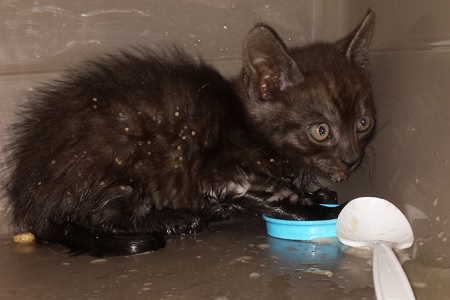
Do not pester it, and let it freely understand what is happening, where it is, and what your intentions are. Fill the food and water bowls, keep an eye on the litter box, and do not be alarmed if it seems to have vanished. It has probably simply found the most hidden spot in your home.
If there are other animals in the house, dogs, cats, hamsters, or other species, you should try to limit contact at least initially. Make sure the newcomer has a room of its own, perhaps placing the bowls beside the closed door. This way, the other animals will have some “advance notice” to mentally prepare for the arrival of a new housemate. Let them sense each other’s presence through the closed door without meeting. Let them smell the other animal’s scent on your hands or clothes, so they are guided by curiosity rather than terror or jealousy.
You can then arrange short meetings, always under your supervision. Avoid cuddling the newcomer in front of the “resident” cats, so that they do not feel offended or become jealous.
If you have small children, teach them to respect the new friend’s timing and space, showing them how to behave. Cats normally hate being tormented, let alone when they have not yet become accustomed to your presence. Once you have gained its trust, show your child how to pet it and pick it up. Always remind them that the cat is not a toy but a friend, so they must not pull its tail or whiskers or disturb it.
The veterinary visit
When adopting a new cat, whether large or small, you should always take it to the veterinarian, preferably within the first day after arriving home. Some cats, especially those taken in from the street, may have illnesses that need to be treated. The veterinarian can perform an initial general examination to assess the cat’s health, then proceed with deworming to remove any intestinal parasites and subsequently with vaccinations. Bringing an unvaccinated cat into contact with the household cats can expose both sides to the risk of transmitting diseases. A few days after vaccination, you can begin letting them meet.
The rules
As the cat begins to become comfortable with the house and its occupants, it may start showing all its enthusiasm. Let it burn off energy by playing and running as much as it likes, but remember to start establishing the first rules.
-
Do not scratch or bite: that is what its toys are for. If it starts attacking your hands, a clear and firm “no!” will be enough as you move away;
-
Do not destroy the upholstery: one of the most interesting things in the house in a cat’s eyes is the armrest of the sofa, which seems perfect for sharpening its claws. So, buy a scratching post, and make it understand that it may destroy that and nothing else;
-
Do not climb onto the table: many undisciplined cats may jump onto the table during lunch or, worse, onto the stovetop. Besides being unhygienic, this is also dangerous, so remember to tell it not to do so. If that is not enough, get a simple spray bottle, which you can easily find in the gardening section of a supermarket. When your cat does something undesirable, spray water at it without letting it realize that you were responsible. It will forever associate that action with something unpleasant.
Remember that kittens are very receptive, so everything you teach them when they are young, they will remember as adults.
Now that you have laid the foundations for a good start to living together, all that remains is to enjoy every minute you spend with your new friend.