
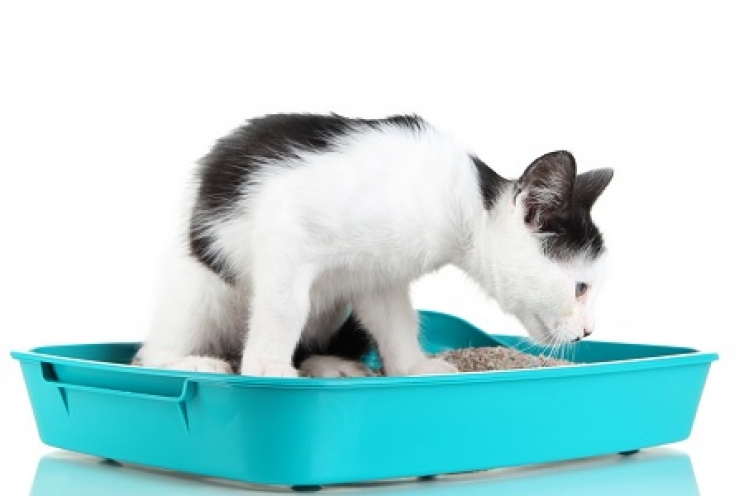
One of the most curious aspects of cats is certainly their innate ability to do their “business” in the litter box. However, some cats tend not to use the litter box and prefer sofas and floors to “relieve themselves”. What we owners should ask ourselves in these cases is above all: have we chosen the right litter box for our dear Fuffi?
The litter box is an essential accessory for cats that live indoors. From the time they are still small, all kittens require a litter box, using it as if they were somehow programmed to use it. In reality, cats are not born with an instruction manual for litter boxes, but learn the behavior from their mother and tend to imitate it from the first months of life.
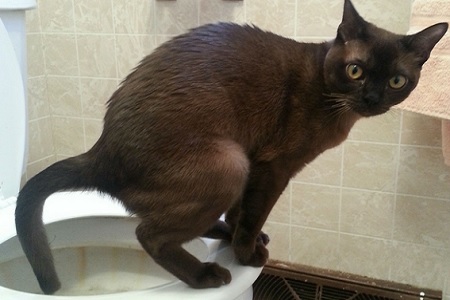 This aspect is certainly also connected with their tendency to seek an environment as similar as possible to the ground in which to do their business.
These are precisely the fundamental points on which we owners play a key role in providing our cat with everything it needs to feel comfortable.
Less demanding cats will also appreciate a simple saucer filled with inexpensive litter, as long as it is cleaned regularly and placed somewhere accessible.
It can nevertheless happen, as many of us will already have experienced, that Fuffi categorically rejects the idea of a litter box and continues to use the floor and furniture in the house as its personal toilet.
If the cat insists on peeing outside the litter box, first we must make sure that we have done everything possible to make it comfortable and functional, both practically and behaviorally.
As strange as it may seem, many owners consult a veterinarian to understand the reason or mysterious illness that causes Fuffi to leave little reminders around the house, when in most cases the problem is actually related to the litter box being used.
For this reason, it is very important to know how to choose the litter box and litter best suited to our cat’s character and needs.
Types of litter box
-
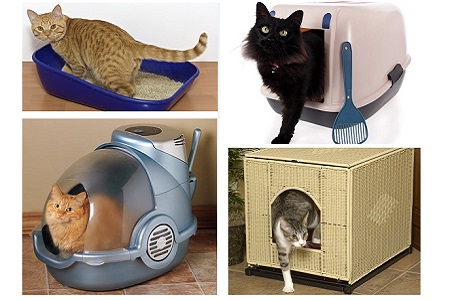
Covered with a flap: this offers Fuffi maximum privacy. It is particularly suitable for more reserved cats that feel inhibited about doing their business in front of their owner or other animals. It is not suitable, however, for cats that cannot tolerate enclosed spaces or simply cannot accept swinging flaps. It is ideal for owners who do not have to leave their cat’s waste on display, and because in most cases it is equipped with activated-carbon filters that reduce odors;
-
Without a swinging flap: this is an excellent compromise for cats that want to get away from prying eyes but at the same time require a space that is not too enclosed. We can buy one without a swinging flap, or we can buy a covered one and remove the supplied flap;
-
Open: this is certainly the most practical option for cats that do not want to waste time and do not care if a crowd of strangers watches them while they do their “business”. Unfortunately, it is not as convenient for owners, since it neither contains odors nor conceals its contents. Moreover, most cats tend to dig through the litter with the energy of a caterpillar, so much of the litter will inevitably end up on the floor;
-
Toilet houses: these are aesthetically pleasing but fairly bulky. They look much like children’s playhouses, but a litter box can be placed inside. They are certainly suitable for anyone forced to keep the cat’s litter box in the kitchen or bathroom.
There are also various developments of litter boxes, from futuristic and customized models to self-cleaning types.
Regardless of which one we choose, let us always remember to buy one of appropriate dimensions for the size of our cat and place it in an accessible but sheltered location.
Types of litter or cat litter material
To avoid misunderstandings, litter is what we pour into the litter box. We can classify it according to two criteria.
As regards absorbency, we can distinguish between:
-
Absorbent litter: this provides excellent liquid absorption and a fair ability to mask odors. It is the least expensive, but it needs to be changed more frequently and, above all, completely;
-
Clumping litter: this combines excellent absorbency with the major advantage of compacting whenever it becomes wet on contact with the cat’s urine, forming a ball that can easily be removed without having to discard the clean granules as well. The only disadvantage is the cost, which is usually higher than that of absorbent litter.
As regards the material, we can find litter made of: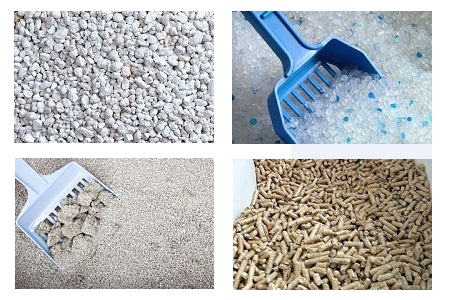
-
Silica: it has a very distinctive appearance, similar to coarse table salt. It has strong absorbent properties and also masks odors, but unfortunately it appeals more to owners than to cats;
-
Bentonite: this is a particular type of clay, highly absorbent and also clumping. It can be recognized by its very fine granules and dark gray color;
-
Sepiolite: it is highly absorbent but not clumping. The granules are large and spongy, and light gray. Pay attention to quality: cheaper varieties can create a lot of dust, which can be inhaled by both us and the cat;
-
Plant-based: it is made from barley, corn or pressed paper, making it ecological and biodegradable—so much so that it can even be flushed down the toilet. It can be purchased in both absorbent and clumping varieties;
-
Antibacterial: it may contain silver ions, which are especially useful for retaining unpleasant odors.
One final point concerns scented litter. Pine, lavender, citrus and other scents may be unpleasant for cats, which are extremely sensitive to odors.
If your cat refuses to use the litter, let us therefore proceed by trial and error, testing all types of litter box and cat litter. Naturally, this should be done after checking with our veterinarian that Fuffi has no health problems or behavioral distress.