
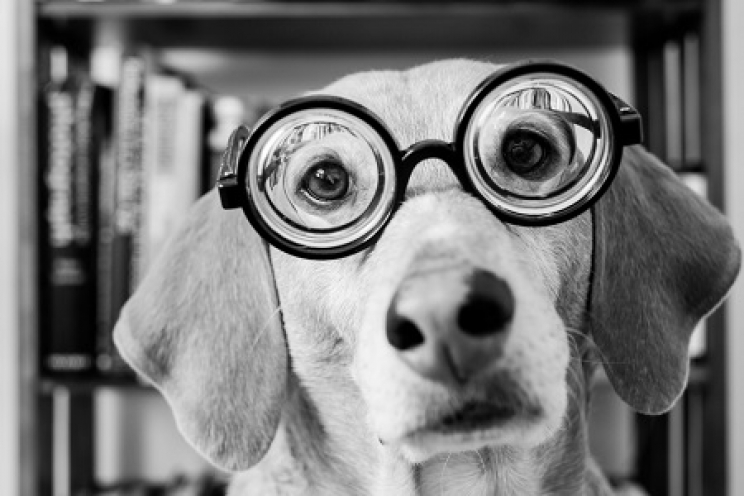
Dogs’ and cats’ eyes can fairly often develop various problems and diseases. In most cases, these present with a series of symptoms that can be easily recognized even by a less experienced observer. In some cases, owners may suspect that their four-legged friend cannot see well, perhaps noticing only after repeated accidents around the home. This is why it is important to recognize the early warning signs of vision problems in our animals.
The signs
Animals’ senses are so highly developed that they can perfectly compensate for any disorder or deficiency in one of them. This is why a cat born visually impaired or blind can still run and jump freely, precisely because its other senses will be able to compensate for reduced or absent vision.
However, this advantage for dogs and cats can confuse owners, who often believe that their four-legged friend’s vision is perfect when it is not.
Generally, animals that have vision problems from birth will have developed their adaptive abilities early, so unless the animal is visibly blind, the owner may have greater difficulty noticing the problem.
The case is different for dogs and cats that begin to develop vision deficiencies at some point in their lives, as they will have greater difficulty adapting to their new condition.
Many eye disorders and diseases that can lead to blindness can, however, be slowed in their progression or treated thanks to early diagnosis. For this reason, it is very important for owners to recognize the signs of vision problems in dogs and cats.
-
Frequently bumps into furniture;
-
Tends to move less;
-
Refuses to play;
-
Seems not to recognize us easily;
-
Cannot jump from a certain height;
-
Walks with its neck extended forward;
-
Tends to become frightened or aggressive when we approach.
To determine whether our four-legged friend’s vision is still good, we can try carrying out some of the tests used by veterinarians.
-
Drop a cotton ball within its field of vision. Does it follow the movement with its eyes?
-
Place some obstacles in a room and have it walk along the path. Does it avoid them or stumble?
-
Quickly wave a hand in front of its eyes, without getting too close so that it cannot detect our movements with its whiskers. Does it close its eyes and move away?
-
Turn on a fairly bright light and point it toward its face. Does it seem bothered by it?
If the result of these tests is always negative, our animal’s vision is probably impaired.
Causes of vision problems
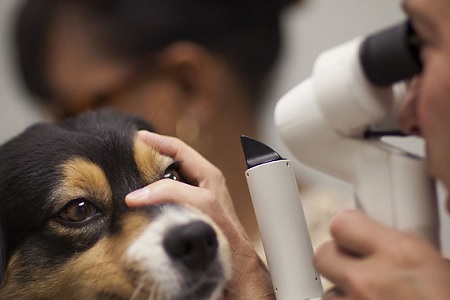
If we notice that our four-legged friend can no longer see well, we must contact our veterinarian immediately. Through a careful examination, they can determine whether or not our suspicions are justified.
The main causes that can lead to vision problems include:
-
Age: just as in people, in elderly animals vision can deteriorate over time;
-
Cataracts: this is a very common problem, especially in elderly dogs and cats. The eye becomes cloudy and the animal’s vision deteriorates. It is caused by clouding of the lens, an important part of the eye needed to focus images. It almost always requires surgery, after which vision may be restored;
-
Diabetes: this disease can cause serious vision problems in animals. Diabetic subjects cannot properly use glucose, so it accumulates inside the blood vessels, especially the smallest ones, such as the eye’s capillaries, damaging it;
-
Glaucoma: this is an eye disease that occurs when pressure inside the eye increases. If treated promptly, it may not lead to blindness;
-
Uveitis: this is severe inflammation of the eye, particularly of the white part, where most of the blood vessels are located. If untreated, it can lead to blindness;
-
Retinal problems: the retina is a fundamental structure for vision because it is traversed by nerves. Retinal detachment or damage is almost always irreversible and untreatable;
-
Neoplasms: the eye and surrounding structures can also develop tumors;
-
Infections: some viruses, such as that of feline infectious peritonitis (FIP) in cats or the distemper virus in dogs, can cause serious eye damage;
-
Stroke: animals that have suffered problems affecting the brain’s blood vessels, such as a stroke, may experience serious consequences, including blindness or reduced vision;
-
Trauma: this term refers to many accidents that can happen to our animals, from scratches and eye injuries to abuse and car accidents. All these situations can damage the eye or the parts of the brain necessary for good vision.
These are only some of the causes that can lead to vision problems in animals. Always consult a veterinarian to receive an appropriate diagnosis, which is essential for prompt intervention.