
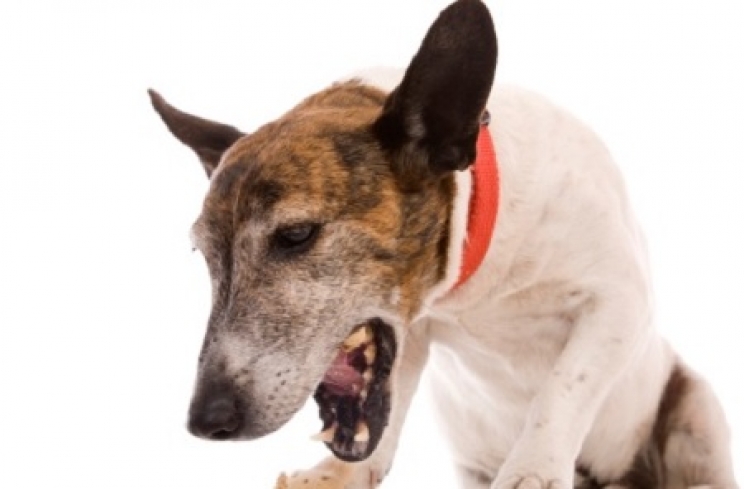
Tracheal collapse mainly affects adult and elderly small and toy dogs, while it is fairly rare in large dogs and cats. The typical symptom is so-called “reverse sneezing”, very similar to the sound of a duck. Let’s discover exactly what it is, its causes, and how tracheal collapse is treated.
What is tracheal collapse?
Tracheal collapse can be defined as respiratory insufficiency resulting from the compression of one or more sections of the trachea, whose lumen becomes reduced, preventing air from reaching the lungs properly. 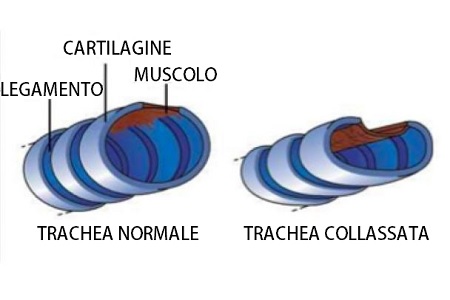
To explain this concept more clearly, it is useful to clarify some basic information about the anatomy of the respiratory tract. The trachea is a tube-shaped organ that connects the larynx to the bronchi, which branch repeatedly until they reach the lungs. The trachea consists of many ring-shaped segments (30-45), made of a fairly rigid “u”-shaped cartilaginous structure, and a small, softer upper section connecting the two ends of the cartilage.
The trachea’s function is simply to carry the air entering through the nostrils to the deeper structures (bronchi and bronchioles), so that oxygen can reach the lungs and from there pass directly into the blood.
In some animals, the rings that make up the trachea weaken progressively over time until they collapse, thereby narrowing the tracheal lumen. In other words, it almost seems as though the cartilage can no longer maintain its more or less cylindrical shape, instead creating a tube that folds from top to bottom. As a result, air can no longer reach the lungs easily, causing breathing difficulty of varying severity.
This is a progressive condition that worsens over time, as the animal develops chronic bronchitis, which increasingly reduces respiratory function and consequently blood oxygenation.
Symptoms
Tracheal collapse presents with typical symptoms that make the condition relatively easy to identify. These include:
-
Reverse sneezing: this is the distinctive sign of tracheal collapse, characterized by an unusual, repeated cough that strongly resembles the sound of a duck and may last several seconds. Initially, it tends to occur when the animal runs, eats, drinks, or pulls on the leash, and later may also appear at rest as the disorder advances;
-
Breathlessness, especially during physical activity;
-
Bluish gums due to poor blood oxygenation;
-
Rattling and unusual sounds during breathing.
Causes
Precise causes underlying tracheal collapse have not yet been identified. However, we can recognize a series of factors that may influence the onset of reverse sneezing, such as:
-
Size: small and toy dogs are most affected;
-
Breed: Chihuahuas, Miniature Poodles, Maltese, Pomeranians, Yorkshire terriers, etc.;
-
Age: adult and elderly dogs;
-
Genetic predisposition: according to some theories, certain dogs may be more predisposed to tracheal collapse because the substances that make cartilage so strong are present in reduced amounts.
Tracheal collapse is fairly easy to recognize because the “duck sound” is typical of this problem. In addition to the clinical examination, the veterinarian will perform an X-ray to check for narrowing of the trachea.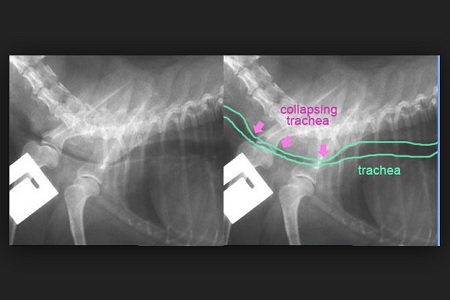
A correct diagnosis is also necessary to rule out any conditions and diseases that could present with the same symptoms, such as congenital narrowing of the trachea, respiratory infections, foreign bodies (especially grass awns), heart problems, and tumors. In addition, flat-faced dogs (Pugs, Pekingese, Bulldogs, Boxers) often make strange breathing sounds that could apparently be confused with tracheal collapse. In these cases, however, this is a natural anatomical characteristic: brachycephalic dogs have a longer soft palate that descends toward the throat and obstructs the passage of air.
To obtain a precise diagnosis, the veterinarian may also request other tests, such as:
-
Fluoroscopy
-
Endoscopy
-
CT scan
How it is treated
Therapeutic strategies for tracheal collapse involve two possibilities:
-
Drug therapy: this is the first choice and includes the use of cough medicines, antibiotics, and corticosteroids, which can significantly reduce symptoms for several years;
-
Surgical therapy: this is recommended only when drugs are no longer effective or when the collapse is so severe that an urgent solution is required. It involves applying prostheses around the trachea to support it and prevent collapse.
To improve the condition, it is advisable to follow some simple recommendations:
-
Weight reduction in dogs that are overweight or obese
-
Do not use a collar; replace it with a harness
-
Do not expose the dog to irritants or cigarette smoke
Although it cannot be cured, tracheal collapse can nevertheless be managed very satisfactorily, ensuring affected dogs a long and peaceful life.