

Among the conditions that can affect a dog or cat, heatstroke is probably the most urgent—if we do not act immediately, death can occur very quickly.
It is important to recognize its symptoms and know what to do immediately, even before taking the animal to the nearest veterinary clinic: a 10–15-minute journey might be too long if we do not act on our own first.
What is heatstroke
One of the functions necessary for animals’ survival is regulating body temperature. Vital organs function only within a specific temperature range, and every animal has its own methods for maintaining it: some, such as reptiles, “bask in the sun” and hibernate when it is cold to avoid losing heat, while others, such as dogs and cats, use the energy ingested through food.
When it is cold, heat must be retained in the body; when it is hot, it must be expelled. We do this through sweating, but dogs and cats do not, because they do not sweat.
If the heat-expulsion mechanism stops working, heat will accumulate in the body, becoming life-threatening.
Cats are generally less susceptible because, being animals descended from the desert (felines in general), they regulate body heat more effectively.
In any case, domestic animals expel heat through breathing, which releases warm moisture and lowers body temperature.
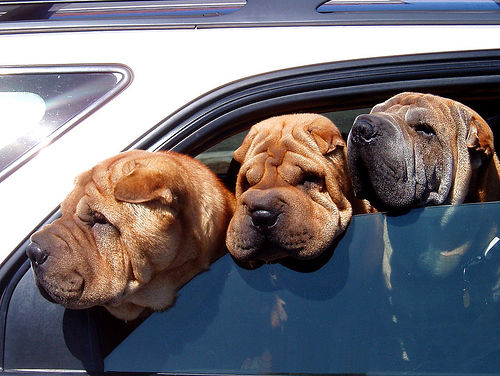
Heatstroke may develop as a result of certain poisons that cause involuntary muscle contractions, which in turn generate heat, or as a result of heat. A typical situation is a dog left tied up without water in the sun, or shut in a car in summer with the windows closed.
As long as the animal has moisture in its body to carry away the heat, it will do so simply by breathing; then it will become dehydrated, and the heat will remain inside the body, raising the temperature to 40º-41º.
What are the symptoms
The first thing we notice is certainly labored breathing, accompanied by excessive salivation; because of the lack of water, the saliva is very thick. The mucous membranes of the tongue and gums are visibly red.
A series of typical symptoms will then begin: the animal will no longer control its muscles, so we will see involuntary muscle contractions accompanied by diarrhea, often with blood, because control is also lost over the intestinal muscles. Vomiting, however, is rarer.
This will lead to uncoordinated movements and then fainting, small movements in search of places sheltered from the sun, and in some cases seizures. If action is not taken quickly, coma and then death may occur.
What to do to prevent heatstroke
First, assess how advanced the symptoms are: if you see a dog tied up in the sun that, however, is behaving normally, provide a bowl of fresh water and try to locate the owner or contact the municipal police, who can remove the dog without legal consequences for the owner. If a dog is locked in a car, theoretically you may break the window (under Article 54 of the Criminal Code), but if you call the police, let them do it if the dog is still “awake”.
When you have direct contact with the dog, if the heatstroke is advanced, first take it into the shade, to the coolest place possible.
Let it drink, but carefully: give it a little water at a time, because if it drinks too much all at once it may choke. If you can get it quickly to a veterinarian, fluids will be administered through an IV directly into a vein, which is safer.
We must then sprinkle water over its body to help release the heat externally, but here too we must be careful. Do not use ice or ice-cold water, because this could “constrict” the blood vessels, and with less blood flowing, the heat would be dissipated less effectively.
If we have a fan available, point it at the animal, which is already wet, to further assist heat dispersal. If we have alcohol available, pour it on areas such as the neck and armpits, where the blood vessels are more superficial, because it helps dissipate heat.
When the animal begins to move again, to “recover,” take it immediately to a veterinary clinic. It is good practice to call as soon as we leave, because in these cases time is critical, and if we call, the veterinarians can prepare a room with everything necessary to begin treatment, as well as give you advice by telephone during the journey.