
Giardiasis is a parasitic disease that can affect domestic animals or humans alike. It is not a fatal or particularly serious condition, but if contracted it can cause food malabsorption, which may persist for a long time in the absence of other symptoms.
It is important to know about because even when the animal is treated, there is a strong risk of reinfection: we must therefore address the root of the problem to eliminate it permanently.
What it is and how it is transmitted
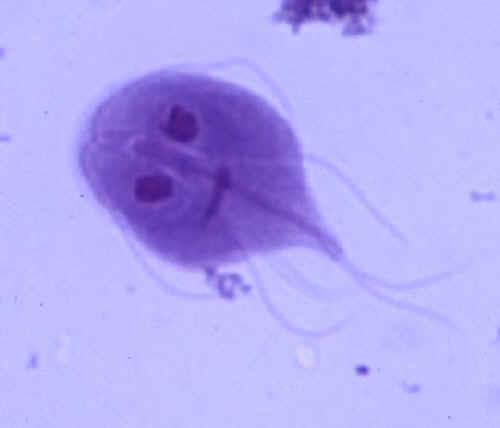
Giardiasis is caused by a parasite, a protozoan belonging to the genus Giardia. It is a microscopic organism that lives in the intestines of animals and humans and is expelled in feces. It has two forms: the first, called flagellated, is a form in which the parasite can move within the organism; when expelled with feces, it takes on a highly resistant form, the cystic form.
It thus becomes invulnerable to atmospheric agents and can survive in the external environment for a long time, even years, particularly when it is in water.
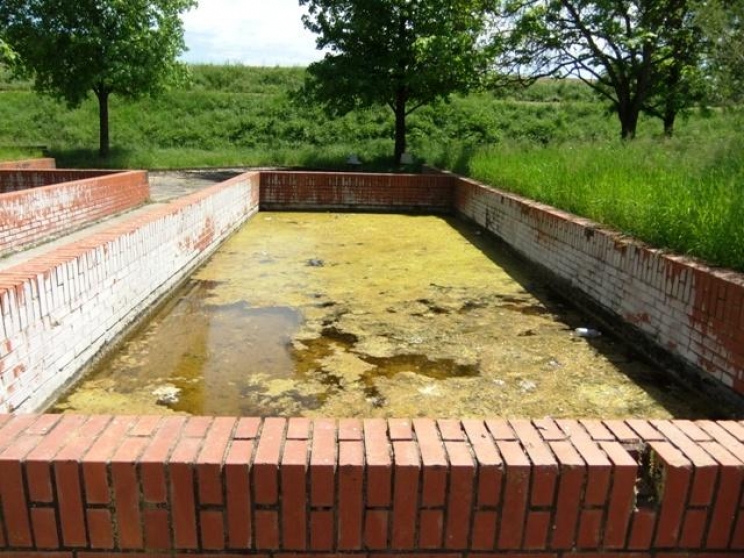
And water is precisely the parasite’s main means of transmission; our animal must necessarily drink it. Clearly, this refers to stagnant water that has been there for a long time, so it will not be exactly crystal clear.
Puddles, field irrigation channels, and rivers into which urban waste is discharged (even very large rivers such as the Po or the Tiber) will certainly contain Giardia cysts. Although it would never occur to us to drink that water, the same is not true of our animals.
What it does
Once the parasite is ingested through water, as soon as it reaches the intestine it ceases to be a cyst and resumes its other form, allowing it to move. It attaches to the intestinal wall and begins reproducing by feeding on the food ingested by the animal.
It reproduces in this way: one Giardia becomes two, two become four, four become eight, and so on. The immune system will try to limit its spread. Consequently, your dog or cat may ingest Giardia every day, but there may be so few that its body can easily keep them under control.
If highly contaminated water is drunk, or if the dog is not in peak condition (perhaps it has had another illness), the Giardia will replicate to the point that they can no longer be controlled, and will therefore colonize the intestinal lining.
They do not cause direct damage, but in this way the body will not be able to absorb the water and nutrients it needs because the parasites will prevent these substances from reaching the intestinal villi (the intestinal structures that absorb food and water).
As a result, these substances will remain in the feces, and our animal will develop diarrhea. If the situation persists for a long time, it may also begin to lose weight because it will continue not to absorb nutrients.
This does not lead to death or dehydration, but our animal may emerge from it very debilitated, and other pathogenic organisms could take advantage of this situation.
How it is treated and prevented
Treatment for giardiasis is fairly simple, and there are medicines that work perfectly and have no side effects, making them useful for eliminating it. A visit to the veterinarian is sufficient; through microscopic examination of the feces, they will establish whether the parasite is present and prescribe the treatment.
The most important thing, however, is prevention, which is based on understanding the cause of the disease—where it comes from, in other words. Failing to understand this means that our animal will ingest new Giardia cysts once treatment has ended, rendering it completely ineffective.
We must keep a close watch on our animal, especially if it lives outdoors, trying to determine whether it drinks from a source of water contaminated with soil, which could be the origin of the cysts. At that point, we must prevent it from reaching the source, for example by adding a fence.
When we begin the treatment prescribed by the veterinarian, it is very important to disinfect the entire house: bleach is best, as it works particularly well to eliminate Giardia cysts. Mop the entire house, wait until it dries thoroughly, and let the dog or cat back inside. This will prevent it from ingesting from the floor Giardia that it itself expelled some time earlier.