
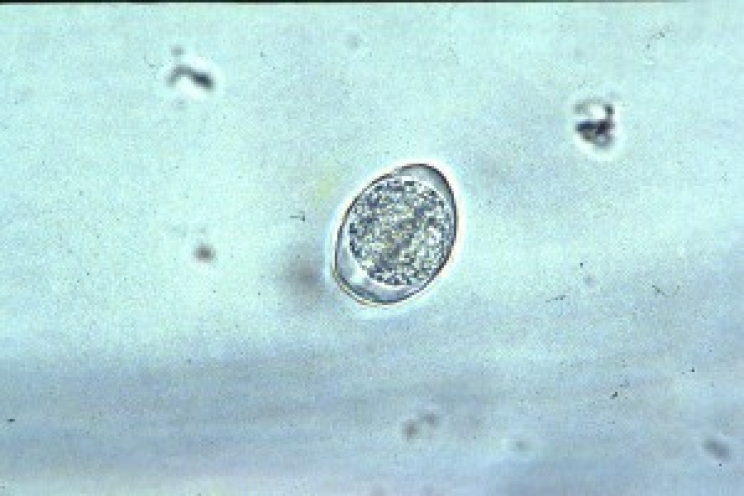
Coccidiosis is a well-known disease in veterinary medicine that affects virtually every animal. Production animals, pets, birds—all can be affected by coccidiosis, although one particular factor is that each coccidian (the organisms that cause the disease) can affect only one animal species. In other words, canine coccidiosis affects only dogs, feline coccidiosis only cats, and so on, although the symptoms are similar in all animals.
What it is and how it spreads
Coccidia are small parasites visible only under a microscope. They live in animals’ intestines, where they multiply and cause damage in some cases; their eggs then end up in the feces. They are fairly resistant in the external environment and can therefore be ingested by another animal, whose digestive system carries them to the intestine.
There they begin to parasitize the cells of the intestinal mucosa, whose purpose is to absorb nutrients. The coccidian enters the cell, preventing it from performing its function, and multiplies by “dividing into two parts”: it does this once, twice, three times, until there are about ten coccidia in each cell—too many to be “tolerated.”
The cell then dies, and each coccidian that emerges enters a different cell, repeating the same mechanism.
If the immune system eventually manages to limit the infestation, we may never notice any symptoms. The animal will be perfectly well but will expel the eggs of these organisms, thereby becoming a danger to other dogs.
If the animal is a puppy, whose immune system is not in ideal condition, or a very debilitated dog, or if an animal ingests a great many coccidian eggs, the situation will be more serious and the disease will develop.
Furthermore, although as mentioned earlier the disease can affect only one animal species, other animals can ingest the eggs without contracting the disease and then expel them in their feces a few days later. In this way, if that animal has moved, it will carry the coccidian to a different place from where it acquired it.
What it does
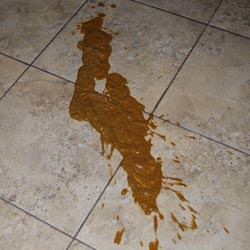
Since these parasites are located in the intestine, the symptoms are mainly those resulting from impaired intestinal function. The most noticeable symptom is very watery diarrhea, because nutrients and water are not absorbed due to the infestation; moreover, since the microorganisms create a genuine infection, the intestine responds by drawing water and mineral salts from the blood and releasing them into the feces.
As a consequence, the animal is debilitated, and in some cases also dehydrated. This general malaise predisposes it to other diseases, such as intestinal worm infestations, which have much more serious consequences.
How it is treated and prevented
Coccidiosis develops very slowly; consequently, the symptoms are not sudden but become increasingly evident as the days pass.
The animal must be taken to a veterinarian as soon as possible, who will administer specific medication and replenish water and mineral salts through an IV after determining, under a microscope, the presence of these microorganisms in the feces. Treatment is therefore quite simple if the disease is not complicated by other diseases that take advantage of the situation.
In any case, coccidia are always present to some extent in the intestines of all dogs and cats: the important thing is that they do not gain the upper hand.
They do so particularly when there are highly stressful situations, when animals live in a dirty environment, or when they are malnourished.
Preventing the disease is therefore fairly simple: first, avoid causes of stress, such as keeping an animal constantly tied up or taking long trips without allowing the dog or cat to relax (puppies illegally imported from Eastern European countries very often die of coccidiosis).
It is important to prevent too many animals from living in a confined space and, if there is no alternative, to clean as much as possible and remove feces, since this is precisely where coccidian eggs are found.
It is also important to feed animals appropriately, without overfeeding them (to prevent other types of disease) but also without providing too little food, which would cause debilitation.
Coccidiosis is rarely contracted by animals that live indoors and are healthy; it is more common when they live in kennels or similar facilities. We must be very careful when dealing with dogs or cats that live in these places.