
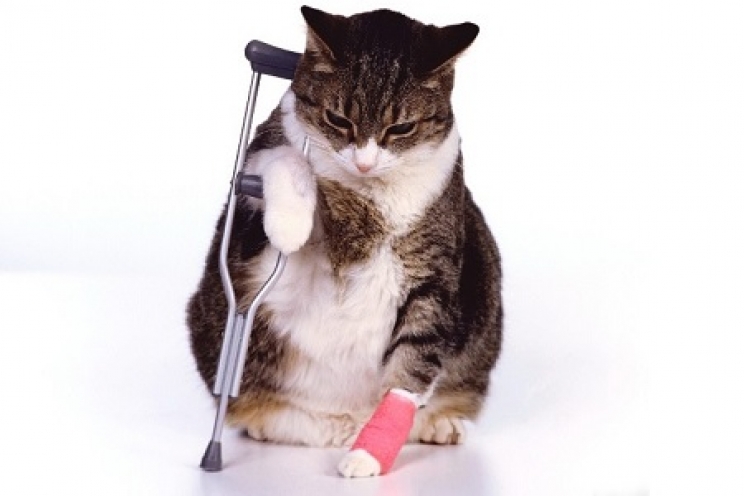
If just a few years ago it was difficult even to recognize the fundamental rights of our four-legged friends, today all the campaigns and progress pursued by volunteers and animal lovers are beginning to have an influence. One of the most innovative forms of recognition is certainly insurance, which allows dog and cat owners to take out policies covering accidental damage suffered by or caused to third parties by their animal, as well as providing greater health protection. But how do these policies work, and what types of damage do they cover?
Third-party liability
In the specific case of cat insurance, the situations covered by the policies are different from those for dogs, which we have already discussed in a specific article.
A cat is unlikely to chase an unfortunate jogger through a park in a rage, just as it will rarely be able to bite a dog without being provoked. It is also true, however, that some cats can be truly ferocious, even attacking visitors to our home with their claws. At the same time, it is not particularly uncommon to hear stories of dogs being struck in the eyes by a cat’s paw.
In essence, however, cats tend to attack only when provoked. This is the case, for example, with children who mistake the family cat for a toy, pulling its tail or disturbing it while it is sleeping or eating. Cats are simply very independent and demand great respect for their personal space. Some cats may be more tolerant of humans and other animals, but in most cases they may unsheathe their claws when disturbed.
If your cat belongs to the less tolerant category, you could choose insurance covering any damage caused to property or people, including other animals. This is a standard third-party liability policy, with insurance features very similar to those provided for our car.
Essentially, this type of policy provides the owner with financial protection to cover damage caused by their animal, whether it has attacked a person or another animal, or irreparably damaged a valuable object while walking along shelves at home.
Injury and illness
Another type of coverage offered by the main pet insurance policies protects owners financially in the event of injury or illness.
This category mainly includes situations caused by external factors, for example if our cat is hit by a car or mistreated by someone with malicious intent.
In these and similar circumstances, we may receive a partial or full reimbursement of the cost of treatment and any surgical procedures, including hospitalization, rehabilitation, therapies, and diagnostic tests.
Congenital or hereditary diseases are excluded, as are any neoplasms, since insurance policies are based mainly on the risk that certain situations may occur. In these cases, the risk is always relatively high and foreseeable.
It is also possible to request coverage in the event of the cat’s accidental death.
Many cat insurance policies also provide the option of consulting a veterinarian affiliated with the company or insurer, so that we can obtain a second opinion regarding the cost and methods of treatment. At the same time, it is possible to use a legal service able to assist us in pursuing any complaints.
Situations excluded from compensation
Several situations are excluded from the policy, depending on the type of contract we wish to take out. The most common are:
-
Spaying or neutering procedures;
-
Dental procedures;
-
Eye procedures not caused by accidents;
-
Cesarean section;
-
Diseases preventable through mandatory vaccinations;
-
Damage caused by family members.
When the contract is taken out, the cat must be in good health, regularly vaccinated against the main infectious diseases, and must have a valid, up-to-date health record.