
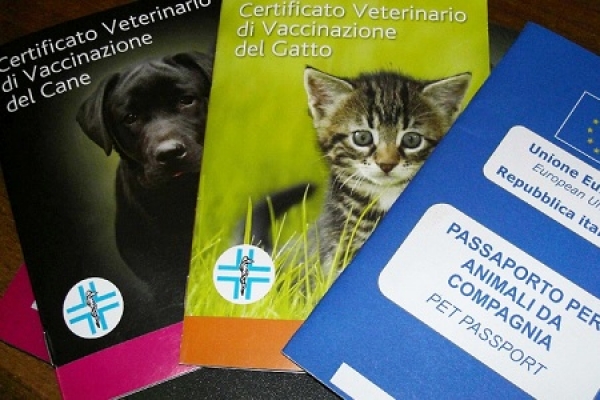
According to recent regulations, all dog owners must have the required documents. However, there is often considerable confusion between the health booklet, passport, pedigree and microchip. Let’s look together at which documents should always be carried and what they are used for.
Health booklet
The health booklet is issued free of charge by your veterinarian during the first visit.
It contains all the dog’s personal and health information, divided into various sections that the veterinarian will complete periodically throughout the animal’s life. The main information includes:
-
Name, species, breed, date of birth, colour;
-
Identification number of the microchip;
-
The owner’s personal details;
-
Information about deworming, including the date it was carried out, the date scheduled for the next treatment, the drug used and the dosage;
-
Information about vaccinations, including the administration date and the date scheduled for the booster, together with the identification label from the medicine vial;
-
Parasite-treatment schedule;
-
Surgical procedures performed;
-
Diagnostic tests, such as stool, urine and blood tests, with a brief summary of their respective results;
-
Any confirmed allergies.
In essence, the health booklet is not legally mandatory, but it is essential to always carry it when travelling. If our dog were to feel unwell while on holiday, the veterinarian treating it at the local clinic would undoubtedly need to know its medical history.
The microchip
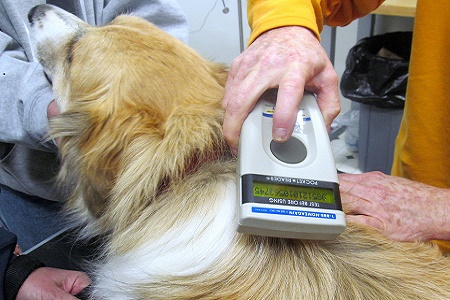
The microchip is required by law. More specifically, we are required both to insert the chip into the animal’s body and to always carry the document containing the identifying details, including:
-
15-digit identification code;
-
Relevant local health authority;
-
Owner’s personal details;
-
Owner’s telephone number;
-
Owner’s tax code.
The actual microchip, inserted by the veterinarian into the layer immediately beneath the dog’s skin, is detected using a special reader.
The microchip document must always be carried with you, even during a simple walk, because it is the dog’s main means of identification.
The passport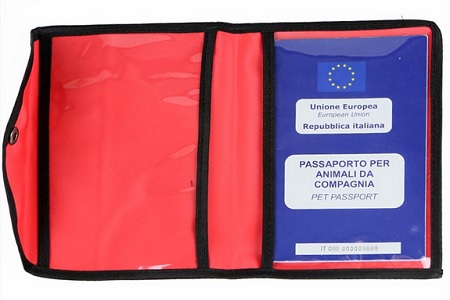
A passport is a document required when travelling or moving abroad. It is the international equivalent of the health booklet, so it contains all information about the dog, its health and its medical history.
It should be remembered that for travel to certain foreign countries, the dog must have received the rabies vaccination, which must be recorded in the passport.
The pedigree
This document is not issued for all dogs, but only for purebred dogs.
The pedigree is normally issued by the breeder when the dog is purchased, because the father’s and mother’s details are required to request it.
The pedigree is, in fact, nothing more than a detailed family tree of the purebred dog, extending back four generations. It contains various details about the parents and “ancestors”, including:
-
Name
-
Date of birth
-
Breed
-
Colour
-
Microchip number
-
Any awards won
-
Changes of ownership
-
Any degree of hip dysplasia in predisposed dogs
The pedigree is requested from ENCI by the breeder shortly after the mother gives birth, but several weeks are needed before it is ready.
For this reason, in most cases it is then the new owner who has to collect it from ENCI, precisely because the average age at which puppies are delivered is approximately 2 months.
The pedigree is especially useful if you intend to breed your dog once it has grown up. A puppy can in fact be legitimately sold for a certain sum of money only if it has a pedigree.
If this is your future intention, you will need to have a copy of your dog’s pedigree and that of its partner, so that you can request pedigrees for the puppies.
The pedigree may also be requested when registering for a dog show.