
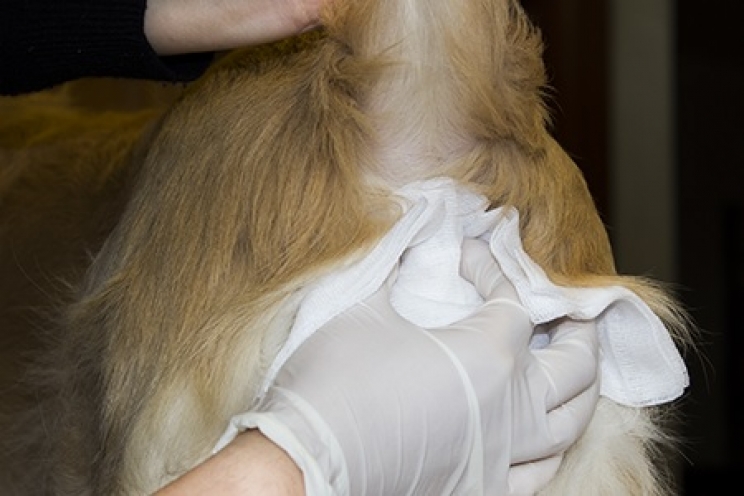
When our dog often drags its bottom along the floor, it probably has full or inflamed anal glands. Let’s look together at how to recognize this problem and how to empty a dog’s anal glands ourselves.
What are anal glands
Before explaining the procedure for emptying a dog’s anal glands, we should first understand what we are dealing with.
Anal glands are two small glands located on either side of the dog’s anus. Their shape makes them similar to two little sacs, connected to the final part of the dog’s intestine by two thin tubes.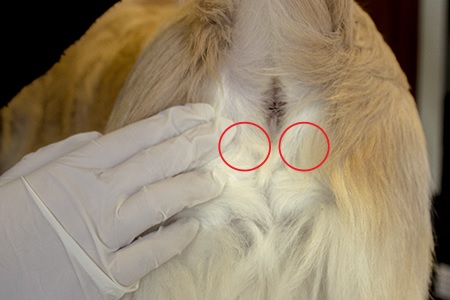
The main function of these glands is to produce and release a thick, foul-smelling substance that is expelled each time feces pass through the opening of their ducts, the small tubes located beside the anus.
This substance essentially serves to lubricate the feces, making them softer and facilitating their elimination.
In fact, once they have passed through the dog’s entire intestine, feces enter the final section, precisely where the anal glands are located, stimulating them to release their secretion.
Dogs may also release the substance produced by the anal glands for other reasons, for example when they feel frightened or overly excited, or for territorial reasons.
The reason why most dogs tend to sniff other animals’ feces is precisely the presence of this substance in the feces. In a sense, it is a signature that each dog leaves to identify its feces and mark its territory.
Anal gland problems
Anal glands can develop a number of problems, including:
-
Blockages;
-
Inflammation;
-
Bacterial infections;
-
Complications of bacterial infections, such as abscesses, meaning collections of pus;
-
Benign and malignant tumors.
The causes of these problems may vary depending on the situation. The main ones include:
-
Blocked ducts caused by malformations;
-
Secretion from the glands that is too thick, preventing it from flowing through the ducts;
-
Bacteria from the intestine that travel up the ducts;
-
Bacteria from outside;
-
Prolonged stress;
-
Prolonged diarrhea;
-
Excess fat around the anal area;
-
Food intolerances and allergies.
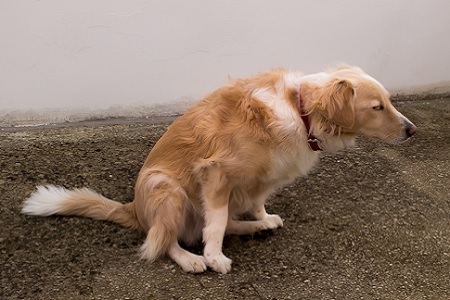
When the anal glands cannot perform their function properly, their secretion increasingly accumulates inside the ducts connecting them to the anus.
Over time, the glands tend to increase in size and may become inflamed, so the dog feels discomfort, pain, and itching and begins to show the typical symptom of these problems: scooting.
This is the common term used to describe the dog’s behavior of dragging its bottom along the floor. It moves its pelvis forward, raises its tail, and walks while dragging its hind legs and bottom against the floor.
The reason it adopts this behavior is to seek relief from itching and discomfort, trying to compress the anal glands through contact with the floor.
How to empty a dog’s anal glands
In these cases, we can help our dog by stimulating the emptying of the anal glands.
The veterinarian can determine why the dog is dragging its bottom along the floor, checking that there are no more serious problems underlying the issue.
In the absence of complications, they may manually empty the anal glands using certain techniques, which can be performed from the outside or from inside the anal canal.
Have your veterinarian show you the correct procedure and, if they consider it appropriate, begin doing it yourself at home.
Ask someone to help you hold the dog still.
Let’s look together at how to empty a dog’s anal glands.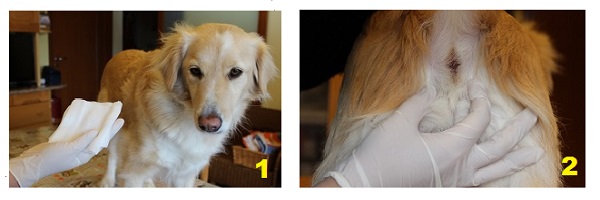
-
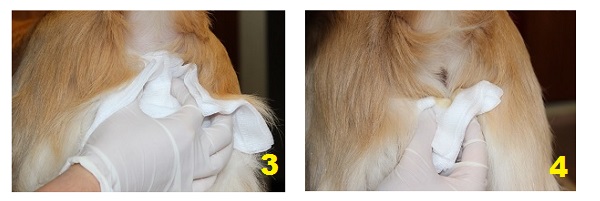
Raise your dog’s tail and try to locate the anal glands. To make them easier to find, imagine the anal area as a clock. The glands are located at the 4 and 8 o’clock positions relative to the anus;
-
By touch, you should be able to feel some swelling, especially if the glands are inflamed or “blocked”;
-
Take a gauze pad and begin pressing the glands with lateral pressure, as though you were pinching the area;
-
At this point, if the location and pressure are correct, a nauseating-smelling substance should come out. If pus or blood is present, contact your veterinarian immediately, as there may be an infection;
-
Wash your dog’s bottom with a specific shampoo.
In cases of frequent recurrence, the veterinarian may perform an anal gland flush to dilute their secretion. Definitive treatment, on the other hand, involves surgical removal of the glands.
Anal glands can become blocked for various reasons. Therefore, before attempting self-treatment, seek your veterinarian’s advice. They will know how to recommend the best way to help your four-legged friend without putting their health at risk.