

With the arrival of the first warm days, we once again begin hearing a great deal about fleas and ticks. These parasites attach themselves to an animal’s skin, causing various consequences, from simple itching to serious health problems and infections. This is why it is very important to prevent infestations by using the antiparasitic products best suited to the needs of dogs and cats.
What to consider when choosing
There are truly many antiparasitic products on the market, so choosing can be difficult. Generally speaking, we can distinguish between chemical and natural antiparasitic products, but also between those that kill fleas and ticks already present on the animal’s body and those that also help prevent new infestations. Some more recent formulations also repel flies, mosquitoes, and other sand flies, which are responsible for certain dangerous diseases, such as Leishmaniasis.
When choosing an antiparasitic product, we must therefore consider the goal we want to achieve. For example, among the questions we should always ask ourselves are:
-
Does our four-legged friend already have an active infestation, or do we simply want to protect it from fleas and ticks?
-
Does the cat live exclusively indoors, or can it access balconies, terraces, and gardens?
-
Can the area where we live be considered at risk for Leishmaniasis?
-
Do we have only dogs, or do cats live with us as well?
We must also consider the animal’s health. If we are dealing with a dog or cat with dermatitis, itching, or skin redness, the symptoms could worsen with the use of a chemical product. In these cases, it would therefore be better to consider a natural product, such as those based on neem oil.
For the first few applications, in any case, it would be an excellent idea to ask our veterinarian for advice. Although these products are readily available even in large supermarkets, let’s remember that they are still chemical substances absorbed through our animal’s skin.
The most common antiparasitic products
The most widely used products are mainly common antiparasitic products, available without a prescription.
The chemical products preferred by dog and cat owners include those based on: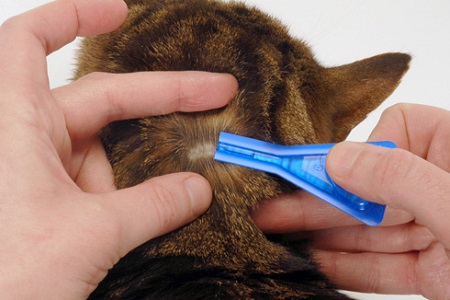
-
Fipronil (Frontline, Effipro): this was one of the first formulations placed on the market. It works by killing ticks, lice, and adult fleas in both dogs and cats. At the same time, it provides protection against new tick infestations for about 30 days and against fleas for 90 days. It may also be administered during pregnancy or nursing, as well as to puppies at least 8 weeks old. For younger puppies and kittens, a spray formulation can be chosen;
-
Fipronil + (S)-methoprene (Frontline Combo): this is a valid alternative to antiparasitic products containing fipronil alone. This formulation kills not only adult parasites but their eggs as well, thereby also preventing contamination of the environment in which the animal lives. If the eggs are not eliminated, they will instead be scattered on carpets, beds, and sofas, waiting to hatch and infest the animal again;
-
Permethrin (Exspot): this substance is very useful for repelling fleas, ticks, and lice, but also mosquitoes, sand flies, and other phlebotomines, which can transmit Leishmaniasis to dogs. It is included exclusively in formulations intended for dogs. Applying it to a cat’s body can have extremely serious consequences, since permethrin is highly toxic to felines. Application of permethrin-based products must therefore be limited to dogs, and they should not be used if cats also live in the home. This substance may be found alone or combined with other common antiparasitic agents, such as Fipronil (Frontline Tri-Act) and Imidacloprid (Advantix).
If, instead, we prefer to avoid chemical antiparasitic products, by choice or necessity, we can opt for natural products. Those based on neem oil (Azardirachta indica), a plant capable of effectively combating bacterial, viral, parasitic, and fungal infections, are excellent examples. We can find many formulations based on neem oil, from classic spot-on pipettes and collars to lotions and room diffusers.
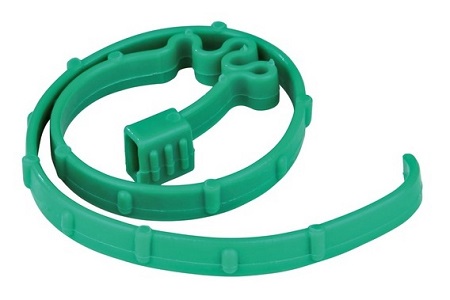 These products are particularly suitable for animals with dermatitis, allergies, and other skin problems. Neem oil also has a refreshing and soothing effect on itching. If you are considering this type of solution for your cat, always check that the product packaging specifically indicates that it is intended for felines.
Antiparasitic collars are another alternative. They are especially useful for dogs and cats that live outdoors. The protection is constant, comprehensive against most parasites, and long-lasting, since it can last as long as 7–8 months. Here too, we find chemical formulations (Seresto, Scalibor) and natural ones based on neem oil.
Remember to put it on while always leaving a two-finger gap between the animal’s neck and the collar, and above all ensuring that the clasp is secure, to prevent it from coming loose and being accidentally swallowed.
If, instead, we believe our four-legged friend needs a more complete antiparasitic product with a deeper action, we should consult our veterinarian, who will be able to prescribe a product suited to our needs. Some products act simultaneously on both external parasites (fleas, ticks, lice) and intestinal parasites. In these cases, a veterinary prescription is nevertheless required.