
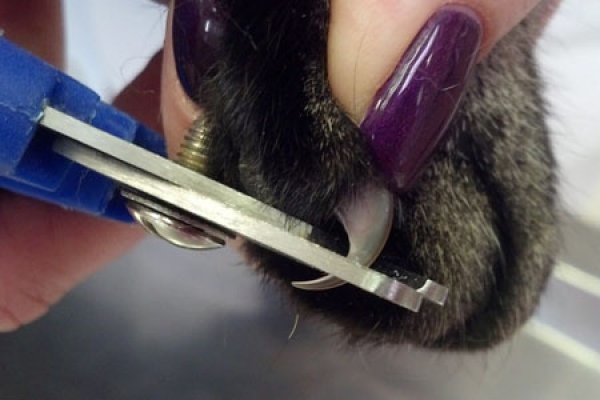
For cats that live indoors, it is very important to have the opportunity to sharpen and shorten their claws. In nature, felines maintain the proper length of their claws simply by running on rough surfaces and climbing trees. Only in this way can they defend themselves from possible attacks by other animals and, above all, hunt prey with well-sharpened claws.
Clearly, not all domestic cats have the opportunity to roam freely in a garden. So what can a cat do to recreate a stimulating environment at home? Naturally, it will take advantage of your furniture.
Anyone who owns a cat knows exactly what we mean. Scratched sofas, torn upholstery, destroyed wicker baskets—this is the typical scene in a home inhabited by at least one cat. If the number of four-legged residents increases, the situation will most likely become even more noticeable. Cats, in fact, also “sharpen their claws” to mark their territory.
To solve this rather annoying problem, you only need to put a few simple measures into practice.
First, you will need to “trim” your cat’s nails. During regular checkups with the veterinarian, ask them to do it while carefully observing the procedure. The more adventurous owners can then repeat the operation at home once the nails have grown back.
But how do you trim a cat’s nails?
Cats are not very cooperative animals, especially if they are not used to certain procedures. Therefore, if you have just adopted a kitten, this is exactly the right time to start getting it accustomed to nail trimming.
When the cat is relaxed, approach cautiously and show it the nail clippers. Let it sniff and examine them and understand what kind of devilish contraption they are. Similarly, it is important to handle the kitten’s paws often. During your usual cuddling sessions, also stroke its paws, pressing the pads until the nail becomes visible.
Only then will the cat not run away in fear as soon as it sees you holding a strange object with a horror-movie expression on your face.
If your cat is already an adult and you want to try trimming its nails for the first time, you will probably need a few more attempts.
At least the first few times, find someone to hold the cat still while you trim the nails. Remember that cats absolutely hate feeling restrained, so your grip must be firm without being excessive. In practice, the cat should feel that you will intervene as soon as it tries to move, without feeling pressure from your hands on its body.
If your friend absolutely refuses to stay still and repeatedly tries to bite or scratch you, get a sheet and wrap it around the animal’s body, naturally including one of the two legs. This way, you can work on the nails of one paw without it extending the claws of the other.
Once your cat has calmed down, take one paw at the level of the pads. If you still cannot see the nails, do not make strange assumptions. A cat’s claws are retractable, which means they are normally hidden between the pads and can be extended when needed.
To make the cat extend its claws, press lightly on the pad and maintain this position until you have finished.
Various types of nail clippers are available. The best one should ensure a quick and precise cut, while allowing the owner to stop in time if the animal feels pain. Alternatively, you can use ordinary manicure or pedicure clippers.
Look at the nail from the side so you can determine where to cut. Examine it carefully in the light and identify all the important features.
The nail is considered long when it ends in a small hook. Starting at the base, you may notice a small central cone-shaped area that is light pink. That is precisely the area you must absolutely avoid, because it contains blood vessels and nerves. If you accidentally cut the nail at this point, you will cause severe pain and heavy bleeding.
Only the white part of the nail should be trimmed, just as we would do for our own manicure. The nail clippers should be positioned at a slight angle relative to the paw, and the cut should be made from bottom to top so that the nail does not split.
If your cat has no way to shorten its nails on its own, the greatest risk is that they may grow until they become embedded in the underlying pad. An ingrown nail not only causes pain every time the cat places its paw on the ground, but can also become infected.
In these cases, the cat will rarely allow itself to be handled, and the nail is often so thickened that you would not know where to begin trimming.
For this reason, your veterinarian will need to intervene and can act promptly to stop any bleeding.
What to do if your cat “sharpens its claws” on the furniture
Before blaming the cat or considering having it adopted, think carefully.
Cats have an extreme need to “sharpen their claws,” and if they have no other means available, they can only use whatever they find at home.
For this reason, you should always furnish your home with specific objects for Fuffi’s claw care, which it can destroy without causing problems. Buy a scratching post or make one yourself using twine or cardboard.
If the cat still refuses, you could try repellent sprays to apply to the furniture that attracts your cat most or, conversely, attractant sprays that make scratching posts more interesting.
Remember that the minor damage our four-legged friends cause at home can often be easily resolved with simple measures that are easy to put into practice.