
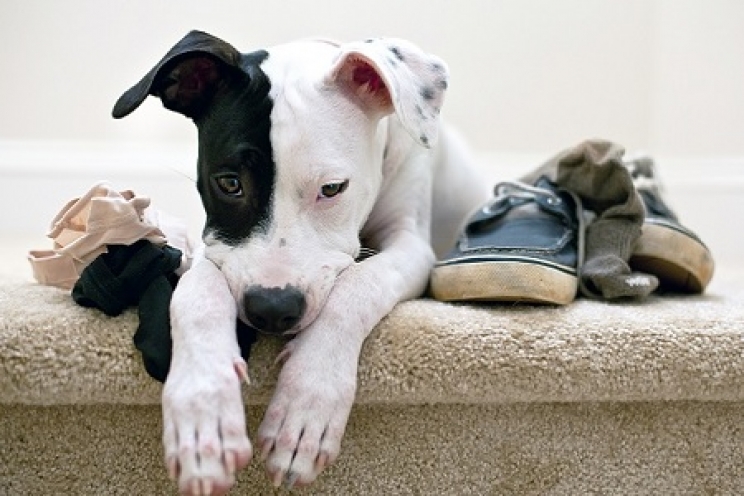
All dogs, especially puppies, go through the typical phase in which they take slippers, shoes and socks from us, categorically refusing to give them back. This type of behavior can occur for many different reasons, which we will analyze in this article, trying to understand what remedies can be put into practice to prevent it.
Dogs have an innate tendency to seek out and catch small prey they find nearby. If we start from this premise, we will more easily understand what may drive them to take our personal belongings.
Generally speaking, as long as these are items of little value, such as old shoes or worn-out socks, these small “thefts” should not cause major problems. The problem arises, however, when the dog starts to “steal” slippers—a classic—as well as new shoes and clothing, perhaps even expensive ones. Let’s admit it: any of us would lose our patience at the sight of our favorite pair of shoes completely destroyed by Fido’s teeth!
We must also consider that some dogs tend to take objects that could even endanger their health. Tights, socks, small objects and electronic devices—such as remote controls and cell phones—can in fact be easily swallowed by the dog, which may then suffer the dangerous consequences associated with the ingestion of foreign bodies.
But what might be the reasons that drive a dog to steal these objects?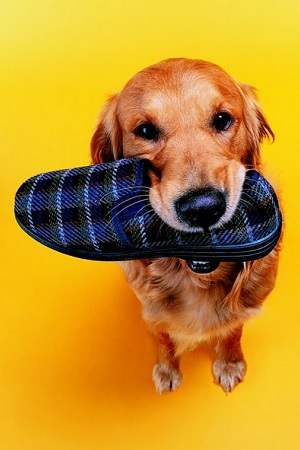
One fundamental point to clarify is that, contrary to what many people believe, these are absolutely not acts of spite that Fido carries out because he wants to “punish” us for something we have done. The actual reasons may instead include:
-
Reassurance: our clothing, especially when taken from the dirty-laundry basket, is very interesting to a dog precisely because it is infused with our scent. This is the reason why most puppies carry shoes and socks to their bed, to sleep peacefully alongside them, especially when we are not at home. It is a way to feel safe and experience less loneliness. The same may apply to adult dogs, whether they developed this habit when young or learned it over time. Another condition connected to this explanation is the much more difficult issue of separation anxiety, for which, not coincidentally, one of the most effective remedies is to “give” the dog a used item of our clothing, so it feels the burden of loneliness less;
-
Stress and boredom: these two elements can generate a strong sense of frustration in the dog, which may begin to display behaviors it has never exhibited before, such as stealing our belongings. This is typical of dogs that rarely go outside and do not spend enough time playing, thereby accumulating pent-up energy that can result in “wrong” behaviors or even compulsive disorders;
-
Possessiveness: some dogs may develop such a high level of territoriality that they regard everything they decide to take as their own and untouchable. In these cases, the characteristic sign is a tendency to hide the “stolen goods”, defending them with their teeth, quite literally;
-
Seeking attention: a dog that feels neglected often behaves inappropriately, knowing that, if it is lucky, we will start chasing it to recover what it has stolen, initiating an extremely entertaining pursuit. In the worst case, it will instead receive a good scolding, which nevertheless always amounts to a form of attention directed toward it, something it always appreciates;
-
Teething: puppies tend to chew everything they find nearby, especially when they are changing their teeth. Generally, if they destroy our shoes—as well as chairs and tables—only during this phase and stop once they have grown up, it may be only a temporary problem, but one that should not be overlooked;
-
Owner errors: what if we told you that we owners ourselves might be the cause of this problem? We often give dogs old shoes and used socks as toys, then expect Fido to understand that he may play only with those items and not with the others in the house, which look identical to him.
What to do and what not to do
First of all, what must absolutely not be done is: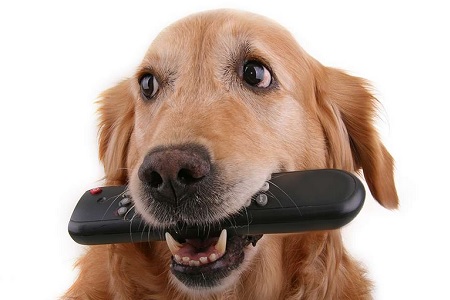
-
Scold him: if the underlying cause is a search for attention, even a reprimand could represent a victory for the dog, reinforcing the behavior even further;
-
Chase him: starting to chase the dog in an attempt to reclaim our belongings is very wrong, for the reason we have just seen;
-
Let him play with our belongings: especially when dealing with a puppy, teaching it that playing with shoes and socks is fun—and permitted—will instill in the dog the idea that it can use other similar objects for the same purpose.
An excellent tool at our disposal, instead, is bartering. Putting it into practice is very simple. First, we need to get some highly appealing treats or one of its favorite toys. As soon as we see that the dog has taken the “forbidden” object, approach it in a friendly manner, offer the reward and let it give back what it took. This way, it will understand that whenever we ask it to give something back, it can receive a much more interesting reward.
Regarding the problem of loneliness or separation anxiety, good advice may be to wear an old sweater for a few hours and then leave it in the dog’s bed, so it already has something carrying our scent without having to search for it around the house.