
Although separation anxiety is a problem that is often discussed, most owners tend not to give it the attention it deserves, precisely because they do not know exactly what it is or what to do about it. In this article, we will explain why dogs may suffer from this form of anxiety and what remedies can help reduce the distress for both owners and dogs.
Separation anxiety is a very common problem in dogs, with which many owners find themselves having to deal—not only figuratively, but literally as well.
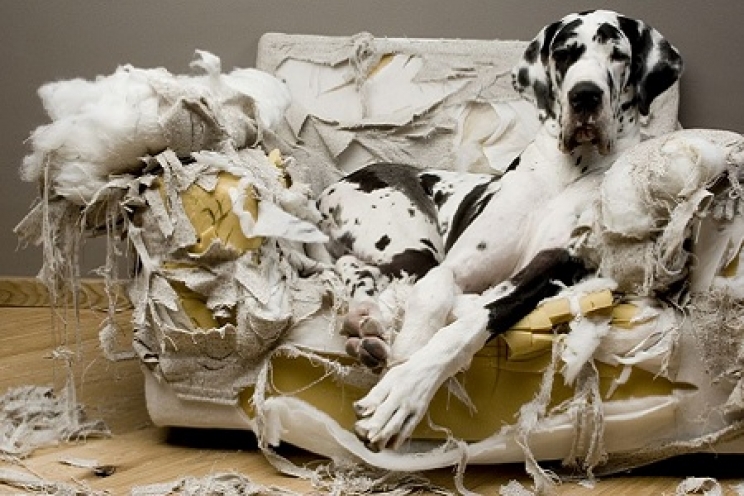
It occurs mainly when the dog is left home alone for several hours. When they return, owners find “accidents” on the carpet, table legs chewed, and plants overturned on the floor. In addition, after a day at work, they have to deal with inevitable arguments with neighbors, tired of the dog’s constant barking.
What it is
Separation anxiety is a behavioral disorder that occurs mainly when the dog is left home alone. In these circumstances, it begins to release all its anxiety onto furniture and objects, engaging in behavior that may seem like spite to the owner.
A widespread belief is that all the damage the dog causes in the owner’s absence is “simply” a way of communicating its displeasure at being left alone.
In reality, the situation is much more complex than it may seem, because a dog that behaves this way does not do so because it is angry or offended, but solely because it feels inner distress that it cannot express in other ways.
How it manifests
A dog suffering from separation anxiety may show one or more typical signs only when the owner is absent: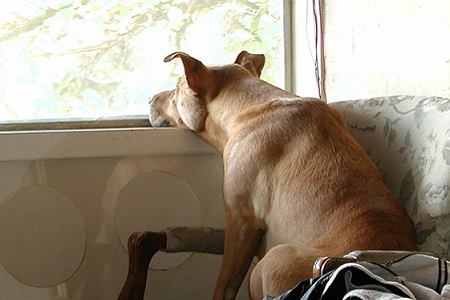
-
It destroys furniture, rummages through the garbage, digs in plants, and causes other similar damage in the home;
-
It tends to urinate and defecate on the floor or carpets;
-
It barks and howls for a long time.
These are the classic situations that allow a diagnosis of separation anxiety. The dog may nevertheless engage in other behaviors when left alone, such as:
-
Refusing to eat or drink;
-
Scratching the front door;
-
Not moving away from the entrance hall or windows;
-
Vomiting or having diarrhea;
-
Creating wounds by biting itself;
-
Eating its own feces.
The causes
All these actions the dog performs while the owner is away express emotions it experiences when left alone. Separation anxiety may be rooted in trauma the dog has suffered or in fear of noises coming from outside.
At the same time, however, separation anxiety may also be linked to other causes, such as a dominance issue. In nature, the dominant dog is always surrounded by other members of its pack. For this reason, if your dog has assumed the role of pack leader in the family, it will not tolerate being left at home.
Separation anxiety may also reflect an incorrect relationship between the owner and the dog. This is typical of dogs that are morbidly attached to the entire family or to just one owner.
In this case, the first step is to understand whether it is truly a reaction to the absence of that particular person or a general condition related specifically to being left alone.
If the dog is morbidly attached to only one family member, several typical signs should be observed:
-
The dog becomes agitated only when that person is absent;
-
The dog constantly follows that person;
-
The dog cries, howls, or scratches the door if that person is in the bathroom or somewhere it cannot reach them;
-
Whenever it senses that person is about to leave the house, it becomes alert and worried;
-
When that person returns, the dog shows excessive enthusiasm.
If these signs are instead generalized to all family members, the dog probably suffers from separation anxiety specifically related to being left alone.
What to do
Separation anxiety can be treated in two ways.
The first is drug therapy, intended to reduce anxiety and stress levels in the dog. This type of assistance must be decided on and prescribed exclusively by a veterinarian. 
The second remedy is psychological support, implemented with the help of a behaviorist. After carefully analyzing the situation, the specialist can explain the causes underlying the separation anxiety and provide the tools needed to resolve it.
Behavioral therapy is based mainly on retraining the dog, as well as the owner, through a series of recommendations:
-
Do not say goodbye to your dog when you leave home, so as not to place even more emphasis on the moment of departure;
-
Do not show exaggerated enthusiasm when you return;
-
For 20 minutes before leaving and 20 minutes after returning, attend to your usual activities while ignoring the dog;
-
Do not pay attention to it if it barks, jumps, or shows excessive enthusiasm when you return. Start paying attention to it again only when it is calm;
-
Always leave stimulating toys available to the dog before leaving;
-
Do not scold the dog if it has made a mess in your absence. Not only will it be unable to connect the reprimand with what it did hours earlier, but it may react with even more anxiety;
-
When you are at home, train it to respond to the command “stay!”, moving farther away each time and rewarding it when it succeeds;
-
Make sure the dog does not associate the sounds and actions typical of leaving with your absence. When you are with it, at various times during the day, put on your coat for a few minutes, play with your house keys, or pick up your bag.
These are important tips that are easy to put into practice. Do not expect immediate results, because the learning process is not instantaneous. Only through consistent practice can you help your dog avoid becoming agitated every time you leave the house.