
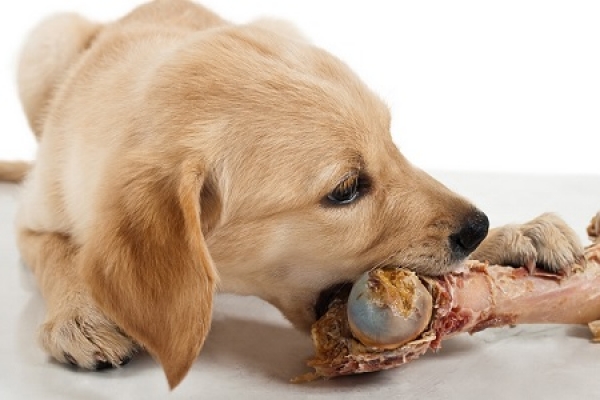
Lately, in the pet food sector, people have been talking more and more often about raw feeding and “raw food”. The recent and controversial BARF Diet for dogs and cats stands out in particular within this dietary movement. Let’s look together at what this new dietary theory involves and the ideas underlying a raw diet for animals.
Food and healthy eating have certainly been among the most widely discussed topics in recent years. Debates, theories and dietary movements are now everyday subjects, and more and more diets and nutritional lifestyles are appearing everywhere. Now that organic food culture has become well established at our tables and the word “vegan” no longer raises many questions for those who hear it, one of the major trends is raw feeding.
Carnivores or omnivores?
Supporters of raw feeding base their views on the idea that animals should return to feeding exactly as they would in nature. Both dogs and cats, in fact, are predators in the wild, meaning that they need to hunt prey in order to feed.
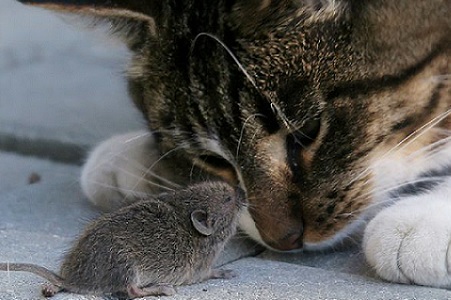
Mice and birds are undoubtedly among the favourite prey of dogs and cats. When hunting, animals set off a series of mechanisms and emotions that make the act of capturing prey not only an action intended to provide nourishment, but also a way to stimulate attention and channel their energy, like a rush of adrenaline.
Once they have caught their prey, they must therefore eat. Microwaves, electric ovens and gas stoves are certainly not available when hunting, so animals have no choice but to eat it raw.
Dogs and cats are carnivores, which does not simply mean that they prefer to eat meat. What makes an animal more predisposed to a type of food is its ability to digest it.
Digestion is a very complex mechanism, made possible first of all by enzymes. These are small proteins produced by our bodies, each with a different task. Essentially, digestive enzymes break down sugars, proteins, fats and all the other nutrients into smaller substances that can easily be absorbed by the body.
Dogs, but especially cats, possess only enzymes that enable them to digest the substances found in meat and fish, as well as in other protein sources, such as eggs. This means that if we offer a cat pasta or rice, it will probably eat them if it is accustomed to them or hungry, but it would not know how to digest them.
The matter is even more complex for dogs. Over the centuries, this animal evolved from a member of the wolf family into man’s best friend.
For hunting, managing flocks, guarding or simply providing companionship, dogs were gradually introduced into homes. The “price” of this achievement, however, was giving up their eating habits and adapting to feed on the leftovers offered by their owners.
This is precisely why the dog’s body evolved, enabling it to digest the substances found in our food as well. Today, in fact, the dog is not defined as an exclusively carnivorous animal.
Cats, on the other hand, having been used for centuries mainly to keep mice away from farms and homes, did not need to adapt their bodies to anything other than meat. They therefore remained true to their role, and it can be said that cats are instead “strict” carnivores.
Another consideration must also be added. In more recent times, dog and cat owners have gradually replaced the pleasure and necessity of hunting with food that is always available and toys.
The result of this centuries-long adaptation is nothing other than a change in the animals’ digestive enzyme profile, which can now digest other types of food as well, different from those for which they are, in a sense, programmed.
Raw feeding
Supporters of raw feeding believe that dogs and cats should return to their dietary origins, “resetting” all the information and changes they have acquired over the centuries.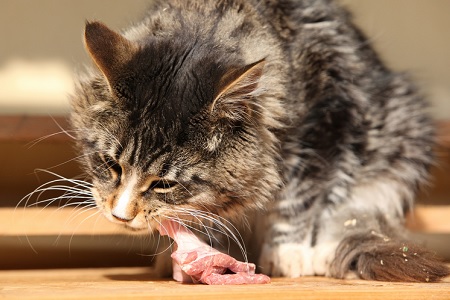
According to raw-feeding theories, this return to their origins should be applied on the basis of several main points, such as:
-
In nature, animals eat freshly hunted raw meat;
-
Animals are genetically predisposed to eating raw meat;
-
In dogs and cats, food remains in the intestine for a maximum of 24 hours, whereas in herbivores it remains much longer, because animal carcasses can easily rot if retained for too long;
-
Carnivores do not have enzymes in their saliva, unlike humans and other animals, which produce salivary enzymes essential for beginning to digest carbohydrates and starches found, for example, in cereals, pasta and potatoes;
-
Carnivores’ stomachs are highly acidic, specifically to destroy all the bacteria present in carcasses. Giving them cereals and vegetables reduces acidity, because an acidic environment is not needed to digest these foods.
Raw-feeding advocates are absolutely opposed to commercial pet food normally offered to dogs and cats, from dry food to wet food. Commercial pet food, in fact, would have certain negative characteristics, such as:
-
It increases the risk of diseases and tumours;
-
It does not stimulate the immune defences;
-
It contains too many cereals and too little meat;
-
The proteins it contains are of poor quality, because they come from offal, feet, beaks and other body parts of slaughter animals, which cannot be considered nutritious;
-
It contains too many preservatives;
-
Most nutrients are damaged during cooking.
The BARF Diet
One of the most widespread raw-feeding trends is undoubtedly the BARF Diet. The name stands for Bones And Raw Foods, literally bones and raw meat. And this is precisely the basic principle of this diet.
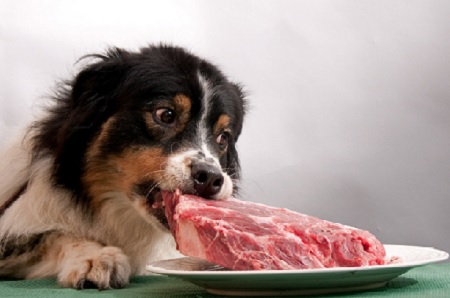
The BARF Diet firmly maintains that dogs and cats should start eating again in the same way they would in nature.
First of all, food must consist mainly of meat, and it must be strictly raw.
Ideally, animals should be allowed to feed on the whole prey, such as chickens, birds and other animal parts. Taken as a whole, prey contains all the substances dogs and cats need: proteins, fats, vitamins and, above all, minerals such as calcium and phosphorus, found in the bones.
Naturally, it is not so easy to obtain whole prey, much less to have the courage to offer it to our animals.
For this reason, according to BARF Diet supporters, we should move as close as possible to this type of feeding, but gradually.
The foods that must not be missing from a raw diet for dogs and cats are:
- Meat from cattle, sheep, horse, chicken, turkey, rabbit and game;
- Organs and offal, such as liver, kidney, spleen, lung, tongue, heart, sweetbreads and bovine stomach;
- Raw bones;
- Fish and shellfish;
- Eggs with or without shells;
- Raw fruit and vegetables, except potatoes, tomatoes, aubergines and onions;
- Cereals optional;
- Dairy products, especially yoghurt, cottage cheese and ricotta.
The meat must be strictly organic, purchased specifically for dogs and cats from specialist shops.
Opposing views
Despite the widespread popularity of raw diets, both for animals and humans, many veterinarians still consider them harmful to health. The main observations against the BARF Diet and similar theories are above all:
- Raw meat carries a high risk of contamination by bacteria and parasites, which only cooking can eliminate;
- Bones are very dangerous for the mouth, teeth, stomach and intestines, which can be damaged;
- Bones and bone meal also cause constipation and may lead to serious intestinal blockages;
- To ensure a balanced diet, it would be necessary to pay close attention to the proportions of meat, bones, vegetables and cereals.
In addition, almost all veterinarians consider it appropriate to feed their animals a diet based on pet food simply because it is balanced. Dry and wet food already contain all the substances the animal needs, provided they are of good quality.
The best brands on the market, in fact, are constantly developing increasingly specialised foods for every need. The important thing is not to rely on very low-cost products with equally low quality.
Essentially, it is only necessary to dispel the myth that industrial food is synonymous with junk food.