
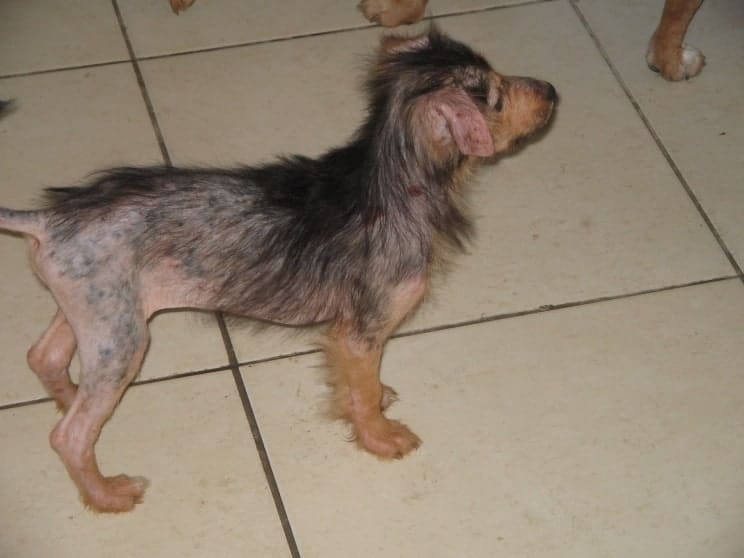
Mange, a disease with several types, is a condition that can affect dogs, cats, and humans alike. It is not at all fatal, but it can become very bothersome because of the intense itching it causes and, if not treated quickly, can lead to hair loss and pyoderma, that is, the presence of pus-filled pockets in the skin of our dog or cat in certain situations.
Let us take a closer look at what mange is and how to prevent it.
Types: sarcoptic mange, notoedric mange, demodectic mange
The names in the title are the most common types of mange that can affect our animals; the first and third more frequently affect dogs, while the second preferentially affects cats, although cross-infections cannot be ruled out; we humans are also susceptible to contracting the infection.
Sarcoptic mange is caused by mites of the genus Sarcoptes, which are small organisms invisible to the naked eye that live on a dog’s skin. Here they burrow tunnels into the animal’s skin, which is rather thick, and lay their eggs; from the time the eggs are laid, the new mites will be able to reproduce after about three weeks, so new generations will multiply in a very short time. Preferred locations are first the ears, then the shoulders and elbows, but any part of the body may be affected.
Notoedric mange is very similar, mainly affects cats, and is caused by Notoedres cati.
Demodectic mange, caused by parasites of the genus Demodex, is somewhat different because these mites, normally present in the skin, do not burrow tunnels but settle in the hair follicles of the dog or animal that contracts it. Imagine that each of our hairs is a houseplant: Demodex mites settle in the plant’s pot. If there are only a few, there are no problems, but when they become too numerous, the hair will no longer have enough nourishment and will fall out.
Transmission of these types of mange is always and exclusively through contact, and they are also highly contagious. An infected animal that rubs against, licks, or plays with another will most likely transmit the disease to its companion.
We want to clarify that mange is infectious and contagious to humans.
What mange does
In the case of sarcoptic and notoedric mange, itching will initially be the predominant symptom. Understandably so, with little animals burrowing tunnels into our friend’s skin. Redness, actual scratches caused by scratching, progressing to scabs, then to hair loss and, over time, an unpleasant skin odor and lethargy because bacteria can take advantage of the dog’s or cat’s weakened condition.
Demodectic mange is somewhat different because it does not cause itching, since it does not actually burrow or move much; it simply remains in the hair follicle.
However, if it reproduces excessively, the hairs will fall out, resulting in true bald patches that are very red. If the Demodex mites continue multiplying even after the hair has fallen out, they will enlarge the follicles, which could be colonized by pus-producing bacteria. We will therefore see small pus-filled pockets distributed throughout the skin, in addition to scaling (the “dandruff”).
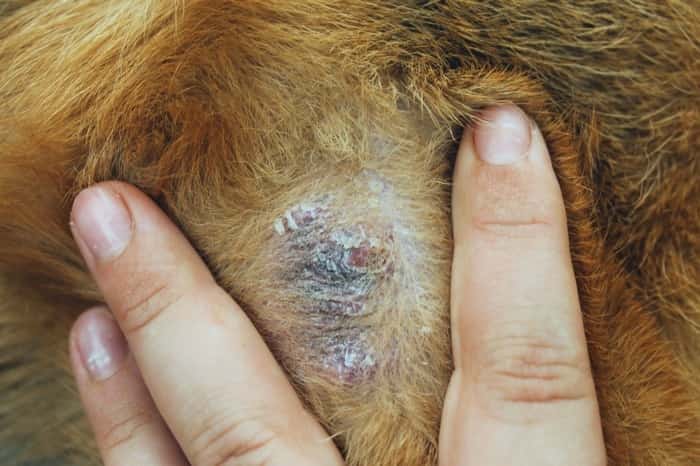
How to treat mange in dogs and cats
Although these diseases do not require urgent treatment (if it is Saturday, we can safely take the animal to the veterinarian the following Monday), the sooner they are resolved, the less our dog or cat will suffer.
The first thing to do is request an ear examination, which is where mange is most commonly located (and where infestations are also less noticeable), and then confirm the presence of mites with very simple tests performed directly in the clinic.
Acaricidal products will then be administered, along with topical antibiotics in the case of Demodex, and baths with disinfectant products for the skin.
As for prevention, it is especially important to avoid contact with sick animals, and it is best to avoid cat-dog contact as well.
If we see an animal with scabs, skin redness, or areas of the body without hair (unless the owner knows they are caused by hormonal problems such as Cushing’s disease), we should try not to let our friend approach until the other animal has recovered.
And we should not approach either: mange is always lurking, even for us humans.