
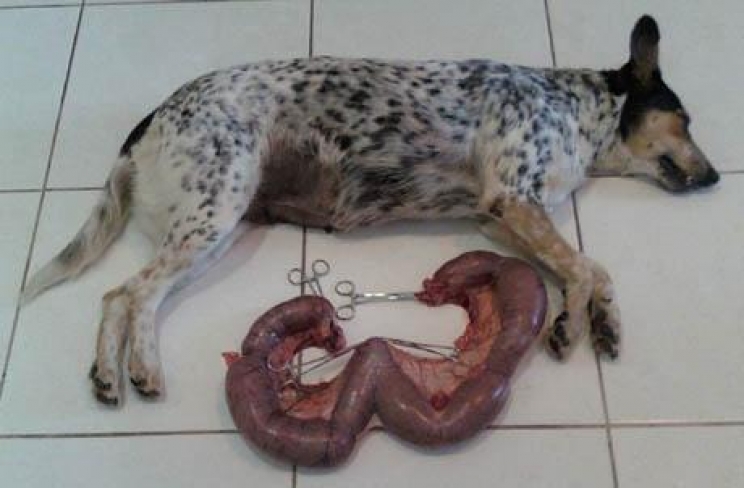
Pyometra is one of the most common infections affecting the female reproductive system in dogs, and certainly the most serious.
It is little known and results from a habit that companion dogs would not have in nature: not mating when they are in heat. In fact, generally a female dog should mate from time to time: this would lead, through giving birth, to a “total cleansing” of the uterus.
The alternative, if we do not intend to let her give birth, is to castrate her (I remind you that castration in females means removing the ovaries, while sterilization means tying the ovarian tubes without removing anything) to eliminate the problem at its root.
What is pyometra
“Pyometra” is a word made up of two terms: the first means pus, the second uterus. And this is exactly what pyometra means: pus in the uterus.
Naturally, the pus must get there somehow: it is a substance of bacterial origin, produced by bacteria that develop when they find a favorable environment.
The “problem” with female dogs is that they have a very long post-heat period compared, for example, with women. This period lasts sixty days, exactly like pregnancy. This is because, reproductively, the female dog’s body functions in the same way whether puppies are in the uterus or not.
An hormone, progesterone, is therefore produced, causing the uterus to thicken and creating small fluid-filled sacs that, under normal circumstances, would nourish the embryos.
If there are no embryos, these sacs remain there, and this fluid, which is then “food” for bacteria, can become infected in certain cases. Pyometra can occur at any age, but is more common in older female dogs that have experienced this thickening several times and will therefore have larger sacs.
It is very dangerous to use estrogen to induce an abortion in a dog that has become unintentionally pregnant: estrogen “strangles” the sacs in the uterus, creating many cysts and almost certainly causing pyometra.
If bacteria manage to reach these cysts, they can become infected.
At this point there are two possibilities: the cervix (the entrance) of the uterus may be open or closed; if it is open, the situation is less dangerous because the pus comes out with the urine and we realize that something is wrong; if it is closed, the pus remains inside and keeps increasing, until the bacteria, which have meanwhile multiplied, begin to enter the bloodstream, causing extensive damage. The most dangerous damage is to the kidneys, which can lead to death from acute renal failure.
How to recognize pyometra
The symptoms of the disease are fairly obvious. First of all, they appear approximately forty to sixty days after heat (at the beginning of heat there is some blood loss), so if you notice symptoms after this period, consider this disease.
The dog will appear depressed, will have a fever, the abdomen will be swollen, and episodes of vomiting and diarrhea may occur. The urine may look unusual, but this is not certain, because if the cervix of the uterus is closed, the pus does not pass into the urine and it will be completely normal.
If this situation persists, the fever will progress to hypothermia caused by the bacteria that are doing extensive damage in the body: it is important to take the dog to a veterinarian urgently, even at night, because this disease is life-threatening.
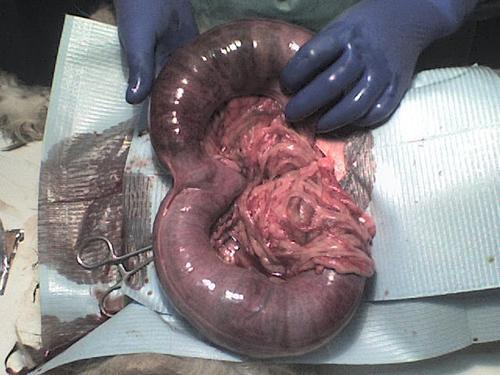
Treatment and prevention
If pyometra is already present, the veterinarian will essentially have to do two things: first, eliminate the bacteria present in the blood, using antibiotic medicines; second, remove the source of the problem. Specifically, the uterus and ovaries will be removed, effectively castrating the dog at that time through surgery.
There is no other way to treat this disease, so if your four-legged friend contracts it, she will no longer be able to give birth during her lifetime.
As for prevention, the best method is to undergo preventive ovariohysterectomy . In practice, we ask a veterinarian to castrate our dog while also removing the uterus, to prevent any kind of problem in the future.
We must also castrate her if she has become pregnant and we do not want the pregnancy: never ask for estrogen to be administered, as it will almost certainly cause the problem.
If we intend to let our friend give birth, however, there is no problem: the puppies’ placentas actually “clean” the uterus as they come out, immediately after birth. In this way we can be sure that we have restored the uterus to optimal condition.
If you intend to let her give birth, you can always let her go through the pregnancy and then have her castrated at the end of lactation, thus avoiding this serious problem anyway.