
Tetanus and botulism are two diseases caused by bacteria belonging to the same genus, Clostridium. They are well-known diseases that are difficult to contract but can cause extremely serious consequences and, if not treated immediately, can cause death within a few days. It is therefore important to know about them, understand how to identify them and act as quickly as possible.
What Are Clostridia?
Clostridia are somewhat unusual bacteria. While most microorganisms enter a dog’s or cat’s body and begin causing damage, they remain at the “point of entry” and develop there without penetrating further. The disease is caused by the fact that they produce toxins, substances comparable to poison that gradually cause the loss of muscle function, including that of the respiratory muscles, leading to death by suffocation.
They also have another peculiarity: they are extremely resistant. When environmental conditions become unfavourable, they can transform into spores, almost indestructible forms that can survive for some time at a temperature of 100º (the botulism bacterium) or even for a century (!) in the external environment (the tetanus bacterium).
Tetanus
This disease is generally associated with rust, which is iron oxidised by water. In reality, tetanus is not transmitted by rust, but by the spore of Clostridium tetani, the bacterium that causes it.
The association with rust is due to the fact that if we see a rusty piece of metal in the countryside, it has been there for a long time, although we do not know how long. And if, even fifty years ago, a horse had died of tetanus on that piece of metal, the spores would most likely still be there.
Thus, if our dog were to injure itself while running, it would be at high risk of contracting the disease. It follows that if a new knife has rusted because it was left on the home terrace in the rain, cutting oneself with that knife would be unlikely to cause tetanus; cutting oneself on something that has been in one place for a long time (it could even be a brick) puts our animal at risk.
The clostridium remains in the wound without spreading further and begins to produce extremely dangerous toxins.
The first thing to do is to wash and disinfect the wound as soon as possible, in order to remove any spores from it, if there are any.
Botulism
Clostridium botulinum, which causes botulism, behaves similarly to tetanus: it also forms spores, but ones capable of surviving only at low oxygen concentrations.
Home-preserved foods are the most frequent cause of the disease, especially because the spores require pasteurisation or boiling for many hours to be killed, something that is rarely done at home.
Foods of animal origin, such as sausages preserved in oil, are particularly risky because the toxin may have been present from the outset in the pork used to make them.
In this case, the bacterium enters through the mouth rather than a wound, and usually settles in the pharynx, where it begins to produce toxins.
What They Do
The onset of the diseases is very similar, even though they have opposite effects.
The bacteria, located as described above, begin producing toxins that reach the entire body through the bloodstream and then reach the neuromuscular junctions, the points where nerves end and “tell” muscles when to contract. When we voluntarily move a finger, the brain initiates the action and transmits the intention to the nerve, which, through the junction, “tells” the muscle “contract!” The muscle then contracts and we move the finger. In this respect, a dog’s or cat’s body is completely identical to ours.
The tetanus toxin settles at this junction, “replacing” the nerve and continually telling the muscle, “contract!” This happens with all the muscles, which remain tense. The dog gradually adopts a “wooden horse” posture and becomes unable to move.
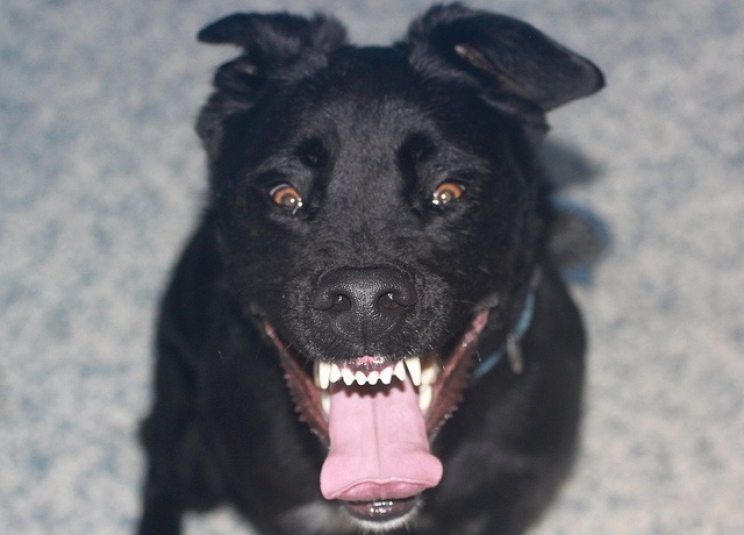
One of the first signs is the so-called smile: the dog’s or cat’s lips will be pulled into a smile. This should tell us to take the dog to a veterinarian immediately, because a dog never smiles in this way.
If no action is taken in time, death occurs by suffocation because the respiratory muscles remain permanently contracted, preventing breathing.
The botulinum toxin acts in the same way, with the difference that the muscles remain permanently relaxed. The dog or cat will be tired and unable to move its legs, and therefore unable to walk. Here too, it is extremely important to take them to a veterinarian quickly because they may also die from suffocation, as they cannot contract their respiratory muscles.

How to Act and How to Prevent Them
Treatment for both diseases consists of so-called antitoxin sera, actual antidotes similar to anti-poison substances.
Their success, however, depends on when they are administered. If it is already too late, even if the animal is still alive, there will be no possibility of saving it. It is therefore important to take our friend to the doctor as soon as we notice the first signs of the diseases.
Prevention, which also applies to humans, is fairly simple: wash and disinfect every wound immediately, especially if it occurred outdoors, in the case of tetanus, and avoid homemade preserves made by anyone who is not experienced in food safety when it comes to botulism.
These diseases are very rare, but their consequences can be fatal.