
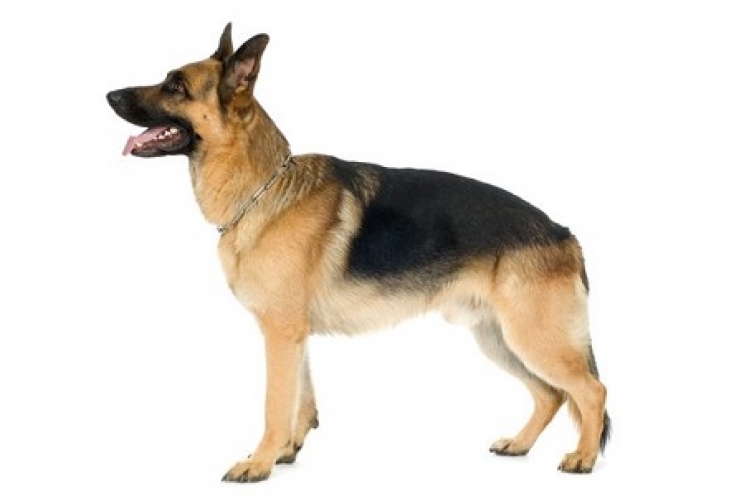
Degenerative myelopathy is a neurological disease that primarily affects large dogs, with a higher incidence in German Shepherds. Let us look at exactly what it is, its causes, symptoms and possible treatments.
What is degenerative myelopathy?
Degenerative myelopathy, or DM, is a progressive disease affecting the spinal cord, the part of the nervous system that extends from the skull through the vertebral column. Numerous nerves, known as spinal nerves, emerge from the spinal cord and stimulate all the body’s organs and tissues.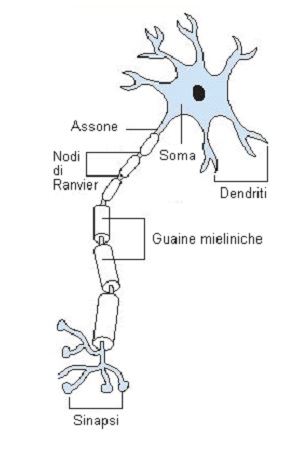
The disorder primarily appears in dogs between 8 and 14 years of age, although it can rarely also occur in younger dogs. There appears to be a certain predisposition among German Shepherds, but it can be considered a typical disease of large dogs, such as Labrador Retrievers, Rhodesian Ridgebacks, Bobtails, Belgian Shepherds, Chesapeake Bay Retrievers and Bernese Mountain Dogs.
But what happens to the spinal cord of dogs affected by this disease?
Essentially, degenerative myelopathy consists of slow, progressive demyelination and axonal degeneration of neurons contained in the white matter of the spinal cord. Let us try to explain it all very simply.
The spinal cord consists of many overlapping neurons (nerve cells), grouped into two components: white matter and gray matter. The outer white matter contains the neurons’ axons, which appear as long, thin tails originating from the cell body and covered with whitish fat (hence the name “white matter”), forming the so-called myelin. The inner gray matter contains the initial part of these neurons, which receive all stimuli from the body, and lacks myelin.
This important lipid coating isolates the axons in the white matter and speeds up the transmission of nerve impulses. Each stimulus travels along the axons as an electrical current, just as happens with the electrical wires in our homes. In short, when we press a light switch, an impulse travels along the wires until it reaches the bulb, which then lights up; if there were a problem with the wires, this would not be possible. In reality, myelin does not permit the impulse to propagate because it is an insulator, but it ensures better conduction because it does not completely cover the axons, leaving some sections exposed. The impulse can therefore “jump” from one exposed section to another much more quickly than it would without myelin.
In dogs with degenerative myelopathy, the myelin becomes increasingly thin, no longer able to ensure proper transmission of nerve impulses. At the same time, the entire axon undergoes slow but irreversible damage, further worsening the condition.
The causes of degenerative myelopathy are not yet completely clear, but a genetic problem appears to be involved. Essentially, some genes in the dog have mutations compared with healthy animals, predisposing it to the disorder.
Symptoms
Because it is a progressive disease, the symptoms may evolve over time. In most cases, degenerative myelopathy first appears as a lack of coordination in the hind limbs, meaning the dog cannot walk normally, staggers and often stumbles. These symptoms usually begin in one limb and then extend to the other.
In more advanced stages, weakness in the legs becomes so pronounced that the animal can no longer remain standing, resulting in marked paralysis of the hind limbs. Over time, due to prolonged inactivity, the affected muscles progressively atrophy. Another typical sign of severe forms is the inability to urinate and defecate independently.
When the condition is particularly widespread, the front legs may also be affected, although this is rather uncommon.
An important aspect of degenerative myelopathy, which helps the veterinarian make a correct diagnosis, is that the animal never experiences pain in the affected area, so it does not react to palpation by whining or attempting to bite.
Degenerative myelopathy typically progresses over a period of 6 months to 1 year before the animal becomes fully paraplegic, meaning it can no longer control the rear part of its body.
Diagnosis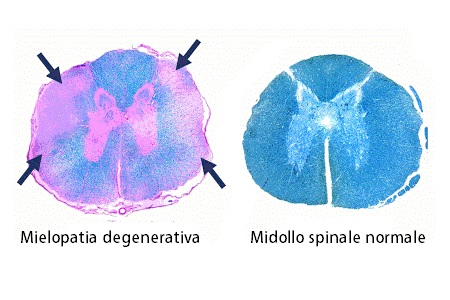
It is not easy to make a rapid diagnosis because degenerative myelopathy presents, at least in its early stages, with symptoms very similar to those of other canine diseases, such as:
-
Trauma
-
Herniated disc
-
Other neurological diseases (tumors, myelitis)
Unfortunately, there is no way to state with certainty that the condition is degenerative myelopathy, so each of the diseases listed above must be ruled out through various tests. The most useful are certainly an X-ray, an MRI scan or a CT scan, which would reveal any joint problems or tumors. The only way to identify degenerative myelopathy is to examine the spinal cord after an autopsy, so this is not possible in a living animal.
Treatment
Unfortunately, there is no definitive cure for degenerative myelopathy, so it is only possible to try to slow the progression of symptoms, although the usual outcome is paralysis of the hind limbs. 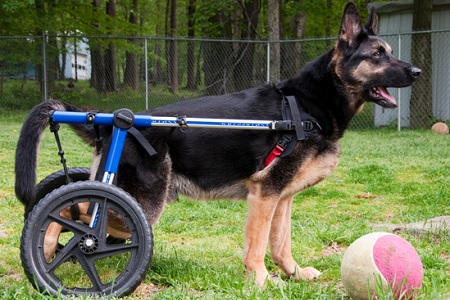
Physical activity is strongly recommended, both in the form of walks with us and rehabilitative exercise with the help of a physiotherapist, perhaps in water. This helps prevent the inevitable muscle atrophy resulting from reduced movement. Carts and harnesses to help the dog move around are readily available.
Managing a dog destined for paralysis is not easy at all and requires time and attention that not everyone can afford. One possible outcome is also loss of bladder control, so in this case it will be necessary to have the veterinarian teach you how to manually empty the bladder.
A specific diet is also very useful for preventing weight gain and strengthening the immune system and bone health. In particular, the dog’s diet should be supplemented with supplements, especially those containing vitamins E and B, omega-3 fatty acids and antioxidants. The most suitable option is also aminocaproic acid, an excellent anti-inflammatory.