
Most diseases, or at least the problems affecting dogs and cats, can be avoided through prevention. We can prevent our dog from licking the ground, cats from fighting, insects from stinging, and provide suitable nutrition.
Yet there are situations in which we can do very little, despite all the love we may have for our animals. Fractures are among them, and can occur for trivial reasons, such as an animal placing a paw incorrectly, landing badly after a jump, or inadvertently being hit by the car while we are reversing in the driveway.
These things can happen and there is little we can do to prevent them, but it is important to know how to behave in such situations.
What fractures are
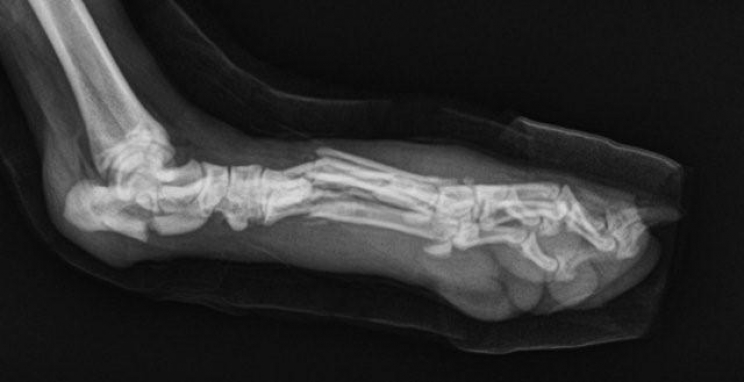
Defining a fracture is not difficult: it is the breaking of a bone. Any bone can fracture, but those that do so most frequently are the bones of the limbs, the long bones that make up the legs (humerus, radius, ulna, femur and tibia).
There are two types of fracture: a stable fracture, in which the bone is broken on one side but not the other (you know when you bend a banana and it breaks on one side while the two pieces remain attached on the other? That is a stable fracture), and an unstable, fracture, in which the two bone fragments are completely separated from each other. Among the latter, fractures may be closed when the bones remain inside the limb, or open when we can see the bone from outside with the naked eye; these are the worst.
Obviously, if a dog or cat fractures a leg, it must be taken to the veterinarian as soon as possible, because the fracture may worsen (from stable to unstable, from closed to open, from open to infected). However, there are precautions we should take before setting off, especially if there is no veterinary practice or clinic near our home.
How to behave with an animal that has a fracture
Basically, our task as owners is to prevent the situation from worsening. Only an X-ray taken by veterinarians can clarify the actual problem and whether surgery is needed to resolve it.
In the case of more unusual fractures, involving the skull bones or ribs, we can do very little, because surgery will be necessary in any event.
In the case of limb fractures, we notice that the animal has a leg problem because it is essentially limping. Try touching the affected limb: if the animal is not in pain, a fracture can generally be ruled out (it may be a muscle strain); if it growls or hisses and does not want that area touched, things are becoming more serious.
In the case of unstable fractures, the consequences are clearly visible: the part of the limb closest to the ground swings and moves independently of the rest of the leg, indicating that the bone is completely broken.
We must keep the animal as still as possible while waiting to reach the veterinarian.
Take a cardboard box, which everyone has at home, and cut off one side so that you have a long cardboard panel approximately as long as the dog’s or cat’s leg.
Then take the animal and place the opposite leg (if one front leg is broken, place the other, healthy front leg) on the cardboard and, with a pen or pencil, trace its outline. Then cut out the shape we have drawn with scissors.
You will thus have a cardboard leg the same size as the animal’s leg.
Place it against the fractured leg, then tie it with gauze, very tightly, wrapping it around the leg to secure it to the cardboard. We have thus made a homemade “splint.”
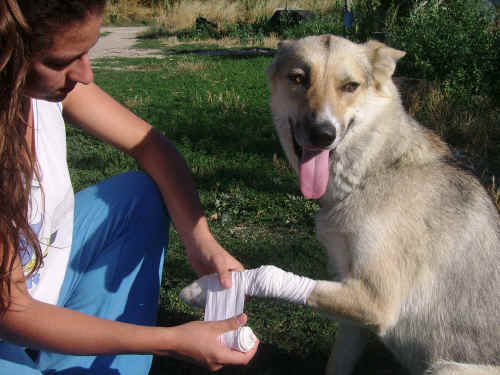
Once we have ensured that our intervention prevents the fractured leg from moving, we can go to the veterinarian, who will perform an X-ray and place the leg in the most appropriate condition.
Healing fractures
Depending on the original fracture, a rigid splint or cast may be enough for it to heal (in the case of stable fractures), or surgery may be necessary to implant a metal support that brings the two fragments back together and prevents them from moving (in the case of unstable fractures).
Bone is tissue that tends to heal and, above all, heals completely, unlike other tissues such as skin (where a scar remains, a sign of healing that will never be complete).
Clearly, this takes time, which varies according to the severity of the fracture and the animal’s age (an elderly animal will take longer than a young one).
There are two fundamental rules for promoting healing as much as possible: the first is to act promptly, as we said earlier, when the fracture occurs; if we do not, the two fragments may begin to rejoin spontaneously in an unnatural position, which could mean that the animal will be unable to walk properly again.
The second is, after veterinary treatment, to keep the leg in use. If the dog or cat tries to take a few steps, do not stop it because it may hurt itself; let it do so. Of course, it will feel pain, but the pressure of the body on the floor stimulates bone healing, which will therefore be faster and occur correctly.
With these simple tips, our animal will be able to walk properly again, like all the others, as if it had never had this problem.
Most diseases, or at least the problems affecting dogs and cats, can be avoided through prevention. We can prevent our dog from licking the ground, cats from fighting, insects from stinging, and provide suitable nutrition.
Yet there are situations in which we can do very little, despite all the love we may have for our animals. Fractures are among them, and can occur for trivial reasons, such as an animal placing a paw incorrectly, landing badly after a jump, or inadvertently being hit by the car while we are reversing in the driveway.
These things can happen and there is little we can do to prevent them, but it is important to know how to behave in such situations.
What fractures are
Defining a fracture is not difficult: it is the breaking of a bone. Any bone can fracture, but those that do so most frequently are the bones of the limbs, the long bones that make up the legs (humerus, radius, ulna, femur and tibia).
There are two types of fracture: a stable fracture, in which the bone is broken on one side but not the other (you know when you bend a banana and it breaks on one side while the two pieces remain attached on the other? That is a stable fracture), and an unstable, fracture, in which the two bone fragments are completely separated from each other. Among the latter, fractures may be closed when the bones remain inside the limb, or open when we can see the bone from outside with the naked eye; these are the worst.
Obviously, if a dog or cat fractures a leg, it must be taken to the veterinarian as soon as possible, because the fracture may worsen (from stable to unstable, from closed to open, from open to infected). However, there are precautions we should take before setting off, especially if there is no veterinary practice or clinic near our home.
How to behave with an animal that has a fracture
Basically, our task as owners is to prevent the situation from worsening. Only an X-ray taken by veterinarians can clarify the actual problem and whether surgery is needed to resolve it.
In the case of more unusual fractures, involving the skull bones or ribs, we can do very little, because surgery will be necessary in any event.
In the case of limb fractures, we notice that the animal has a leg problem because it is essentially limping. Try touching the affected limb: if the animal is not in pain, a fracture can generally be ruled out (it may be a muscle strain); if it growls or hisses and does not want that area touched, things are becoming more serious.
In the case of unstable fractures, the consequences are clearly visible: the part of the limb closest to the ground swings and moves independently of the rest of the leg, indicating that the bone is completely broken.
We must keep the animal as still as possible while waiting to reach the veterinarian.
Take a cardboard box, which everyone has at home, and cut off one side so that you have a long cardboard panel approximately as long as the dog’s or cat’s leg.
Then take the animal and place the opposite leg (if one front leg is broken, place the other, healthy front leg) on the cardboard and, with a pen or pencil, trace its outline. Then cut out the shape we have drawn with scissors.
You will thus have a cardboard leg the same size as the animal’s leg.
Place it against the fractured leg, then tie it with gauze, very tightly, wrapping it around the leg to secure it to the cardboard. We have thus made a homemade “splint.”
Once we have ensured that our intervention prevents the fractured leg from moving, we can go to the veterinarian, who will perform an X-ray and place the leg in the most appropriate condition.
Healing fractures
Depending on the original fracture, a rigid splint or cast may be enough for it to heal (in the case of stable fractures), or surgery may be necessary to implant a metal support that brings the two fragments back together and prevents them from moving (in the case of unstable fractures).
Bone is tissue that tends to heal and, above all, heals completely, unlike other tissues such as skin (where a scar remains, a sign of healing that will never be complete).
Clearly, this takes time, which varies according to the severity of the fracture and the animal’s age (an elderly animal will take longer than a young one).
There are two fundamental rules for promoting healing as much as possible: the first is to act promptly, as we said earlier, when the fracture occurs; if we do not, the two fragments may begin to rejoin spontaneously in an unnatural position, which could mean that the animal will be unable to walk properly again.
The second is, after veterinary treatment, to keep the leg in use. If the dog or cat tries to take a few steps, do not stop it because it may hurt itself; let it do so. Of course, it will feel pain, but the pressure of the body on the floor stimulates bone healing, which will therefore be faster and occur correctly.
With these simple tips, our animal will be able to walk properly again, like all the others, as if it had never had this problem.
Most diseases, or at least the problems affecting dogs and cats, can be avoided through prevention. We can prevent our dog from licking the ground, cats from fighting, insects from stinging, and provide suitable nutrition.
Yet there are situations in which we can do very little, despite all the love we may have for our animals. Fractures are among them, and can occur for trivial reasons, such as an animal placing a paw incorrectly, landing badly after a jump, or inadvertently being hit by the car while we are reversing in the driveway.
These things can happen and there is little we can do to prevent them, but it is important to know how to behave in such situations.
What fractures are
Defining a fracture is not difficult: it is the breaking of a bone. Any bone can fracture, but those that do so most frequently are the bones of the limbs, the long bones that make up the legs (humerus, radius, ulna, femur and tibia).
There are two types of fracture: a stable fracture, in which the bone is broken on one side but not the other (you know when you bend a banana and it breaks on one side while the two pieces remain attached on the other? That is a stable fracture), and an unstable, fracture, in which the two bone fragments are completely separated from each other. Among the latter, fractures may be closed when the bones remain inside the limb, or open when we can see the bone from outside with the naked eye; these are the worst.
Obviously, if a dog or cat fractures a leg, it must be taken to the veterinarian as soon as possible, because the fracture may worsen (from stable to unstable, from closed to open, from open to infected). However, there are precautions we should take before setting off, especially if there is no veterinary practice or clinic near our home.
How to behave with an animal that has a fracture
Basically, our task as owners is to prevent the situation from worsening. Only an X-ray taken by veterinarians can clarify the actual problem and whether surgery is needed to resolve it.
In the case of more unusual fractures, involving the skull bones or ribs, we can do very little, because surgery will be necessary in any event.
In the case of limb fractures, we notice that the animal has a leg problem because it is essentially limping. Try touching the affected limb: if the animal is not in pain, a fracture can generally be ruled out (it may be a muscle strain); if it growls or hisses and does not want that area touched, things are becoming more serious.
In the case of unstable fractures, the consequences are clearly visible: the part of the limb closest to the ground swings and moves independently of the rest of the leg, indicating that the bone is completely broken.
We must keep the animal as still as possible while waiting to reach the veterinarian.
Take a cardboard box, which everyone has at home, and cut off one side so that you have a long cardboard panel approximately as long as the dog’s or cat’s leg.
Then take the animal and place the opposite leg (if one front leg is broken, place the other, healthy front leg) on the cardboard and, with a pen or pencil, trace its outline. Then cut out the shape we have drawn with scissors.
You will thus have a cardboard leg the same size as the animal’s leg.
Place it against the fractured leg, then tie it with gauze, very tightly, wrapping it around the leg to secure it to the cardboard. We have thus made a homemade “splint.”
Once we have ensured that our intervention prevents the fractured leg from moving, we can go to the veterinarian, who will perform an X-ray and place the leg in the most appropriate condition.
Healing fractures
Depending on the original fracture, a rigid splint or cast may be enough for it to heal (in the case of stable fractures), or surgery may be necessary to implant a metal support that brings the two fragments back together and prevents them from moving (in the case of unstable fractures).
Bone is tissue that tends to heal and, above all, heals completely, unlike other tissues such as skin (where a scar remains, a sign of healing that will never be complete).
Clearly, this takes time, which varies according to the severity of the fracture and the animal’s age (an elderly animal will take longer than a young one).
There are two fundamental rules for promoting healing as much as possible: the first is to act promptly, as we said earlier, when the fracture occurs; if we do not, the two fragments may begin to rejoin spontaneously in an unnatural position, which could mean that the animal will be unable to walk properly again.
The second is, after veterinary treatment, to keep the leg in use. If the dog or cat tries to take a few steps, do not stop it because it may hurt itself; let it do so. Of course, it will feel pain, but the pressure of the body on the floor stimulates bone healing, which will therefore be faster and occur correctly.
With these simple tips, our animal will be able to walk properly again, like all the others, as if it had never had this problem.
Most diseases, or at least the problems affecting dogs and cats, can be avoided through prevention. We can prevent our dog from licking the ground, cats from fighting, insects from stinging, and provide suitable nutrition.
Yet there are situations in which we can do very little, despite all the love we may have for our animals. Fractures are among them, and can occur for trivial reasons, such as an animal placing a paw incorrectly, landing badly after a jump, or inadvertently being hit by the car while we are reversing in the driveway.
These things can happen and there is little we can do to prevent them, but it is important to know how to behave in such situations.
What fractures are
Defining a fracture is not difficult: it is the breaking of a bone. Any bone can fracture, but those that do so most frequently are the bones of the limbs, the long bones that make up the legs (humerus, radius, ulna, femur and tibia).
There are two types of fracture: a stable fracture, in which the bone is broken on one side but not the other (you know when you bend a banana and it breaks on one side while the two pieces remain attached on the other? That is a stable fracture), and an unstable, fracture, in which the two bone fragments are completely separated from each other. Among the latter, fractures may be closed when the bones remain inside the limb, or open when we can see the bone from outside with the naked eye; these are the worst.
Obviously, if a dog or cat fractures a leg, it must be taken to the veterinarian as soon as possible, because the fracture may worsen (from stable to unstable, from closed to open, from open to infected). However, there are precautions we should take before setting off, especially if there is no veterinary practice or clinic near our home.
How to behave with an animal that has a fracture
Basically, our task as owners is to prevent the situation from worsening. Only an X-ray taken by veterinarians can clarify the actual problem and whether surgery is needed to resolve it.
In the case of more unusual fractures, involving the skull bones or ribs, we can do very little, because surgery will be necessary in any event.
In the case of limb fractures, we notice that the animal has a leg problem because it is essentially limping. Try touching the affected limb: if the animal is not in pain, a fracture can generally be ruled out (it may be a muscle strain); if it growls or hisses and does not want that area touched, things are becoming more serious.
In the case of unstable fractures, the consequences are clearly visible: the part of the limb closest to the ground swings and moves independently of the rest of the leg, indicating that the bone is completely broken.
We must keep the animal as still as possible while waiting to reach the veterinarian.
Take a cardboard box, which everyone has at home, and cut off one side so that you have a long cardboard panel approximately as long as the dog’s or cat’s leg.
Then take the animal and place the opposite leg (if one front leg is broken, place the other, healthy front leg) on the cardboard and, with a pen or pencil, trace its outline. Then cut out the shape we have drawn with scissors.
You will thus have a cardboard leg the same size as the animal’s leg.
Place it against the fractured leg, then tie it with gauze, very tightly, wrapping it around the leg to secure it to the cardboard. We have thus made a homemade “splint.”
Once we have ensured that our intervention prevents the fractured leg from moving, we can go to the veterinarian, who will perform an X-ray and place the leg in the most appropriate condition.
Healing fractures
Depending on the original fracture, a rigid splint or cast may be enough for it to heal (in the case of stable fractures), or surgery may be necessary to implant a metal support that brings the two fragments back together and prevents them from moving (in the case of unstable fractures).
Bone is tissue that tends to heal and, above all, heals completely, unlike other tissues such as skin (where a scar remains, a sign of healing that will never be complete).
Clearly, this takes time, which varies according to the severity of the fracture and the animal’s age (an elderly animal will take longer than a young one).
There are two fundamental rules for promoting healing as much as possible: the first is to act promptly, as we said earlier, when the fracture occurs; if we do not, the two fragments may begin to rejoin spontaneously in an unnatural position, which could mean that the animal will be unable to walk properly again.
The second is, after veterinary treatment, to keep the leg in use. If the dog or cat tries to take a few steps, do not stop it because it may hurt itself; let it do so. Of course, it will feel pain, but the pressure of the body on the floor stimulates bone healing, which will therefore be faster and occur correctly.
With these simple tips, our animal will be able to walk properly again, like all the others, as if it had never had this problem.