
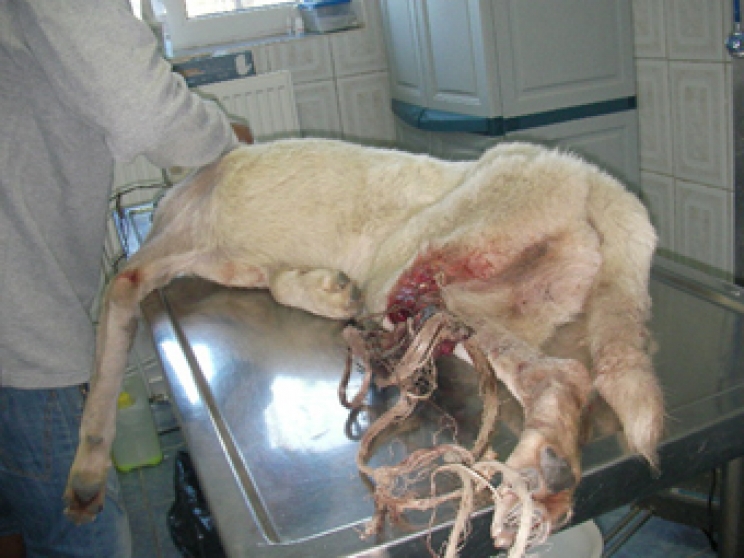
Among the many diseases our pets can develop, one of the worst of all is septicemia.
It is an extremely serious condition that can lead to death within a short time, which is why it is very important for an owner to recognize its symptoms and act as soon as possible if it becomes clear that something is wrong.
What it is
Septicemia is infection of the blood by bacteria. To speak of septicemia, however, there must truly be very many of these microorganisms, enough to overwhelm or at least equal numerically the “good” cells, those of the animal’s immune system.
It is like saying that if three people try to enter a military base with weapons, it cannot be called a “war.”
When we cut ourselves, blood comes into contact with the external environment, and bacteria present on our skin or on the blade that cut us enter the bloodstream, but there are so few of them that our defensive system immediately stops them. Things work in exactly the same way in our animals.
Septicemia, the infection of the blood, is a situation in which there are enormous numbers of bacteria. This happens because they have had the time and opportunity to multiply before entering the bloodstream. Precisely because of this “time” factor, developing or preventing this condition is often a direct consequence of the owner’s behavior.
How septicemia develops
The development of such a serious condition is due to infections that were already present somewhere in the body. Sometimes they are asymptomatic, meaning the dog or cat seems well, but this is difficult: usually we notice that something is wrong.
It may begin with a bladder infection, or a uterine infection such as pyometra, or with a neglected wound.
The microorganisms present in these areas cause damage and obtain nourishment, so they multiply; the body’s defenses try to limit them as best they can, especially by preventing them from entering the bloodstream, but they can do little outside the bloodstream itself.
Let us use a visual example to better understand this situation: a new supermarket opens in the city, and everyone wants to go there. It does not open until eight, but as early as five in the morning people begin gathering at the entrance and pushing. The security guards, fewer in number, can only prevent people from entering through the door, but they cannot do much against the entire mass of people outside.
The situation with infections is similar: many bacteria in an infected organ or wound “push” to enter the bloodstream. They keep pushing until the body’s defenses can no longer withstand them and collapse. At this point, the microorganisms enter the bloodstream en masse.
Their number is immense after they have spent so much time not only pushing but also multiplying, and at that point the body can do nothing against them; the defensive system is compromised.
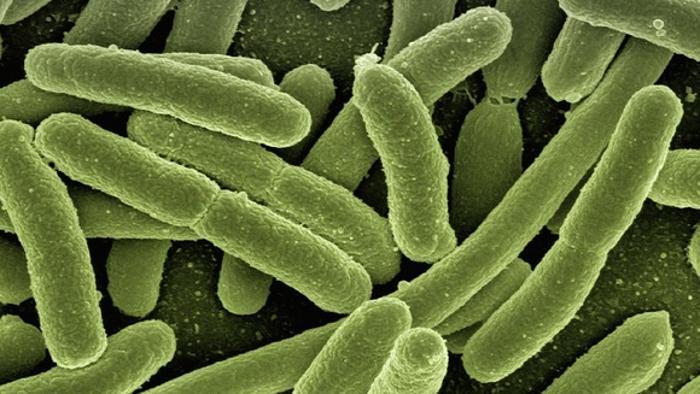
The most serious consequence is septic shock, in which the presence of bacteria disrupts blood circulation and the heart can no longer pump blood to the vital organs. At this point, without external help (from a veterinarian), survival is impossible.
How to prevent this condition
Fortunately, it is difficult for animals to reach this stage. It can happen if a dog gets lost in the woods and is not found by anyone, perhaps becomes injured, and the wound becomes infected.
As far as domestic animals are concerned, this situation can occur only if the animal had an infection that was not treated in any way.
If we see that the dog or cat is unwell, lethargic, has a fever (we should always remember that a condition of this kind is never sudden, but is preceded by malaise for several days); if they have a urinary infection, they will pass blood with their urine; if there is a wound, it can be seen: the important thing is to take the animal for an examination when it is unwell and not ignore the situation, convinced that it will pass, because without practical help (antibiotics), there is no guarantee that the body can prevent the condition using its own strength alone.
One final note: if you have read this article, you surely care enough about your animal to avoid situations like this.
Always remember, however, that not all owners are like you, and many ignore the situation until the dog has extremely serious symptoms such as fainting or seizures. Only then, when almost nothing more can be done, do they go to the veterinarian saying, “this morning there was nothing wrong” (when it had actually been barely conscious for a week…).
If you see a dog or cat that is not yours, is unwell, does not move, or follows its owner reluctantly (symptoms of “lethargy”), advise the owner to take it for an examination, explaining the serious consequences that may result.
In these cases, “play veterinarian” a little yourselves, because you might even save a dog or cat’s life simply with your words.