
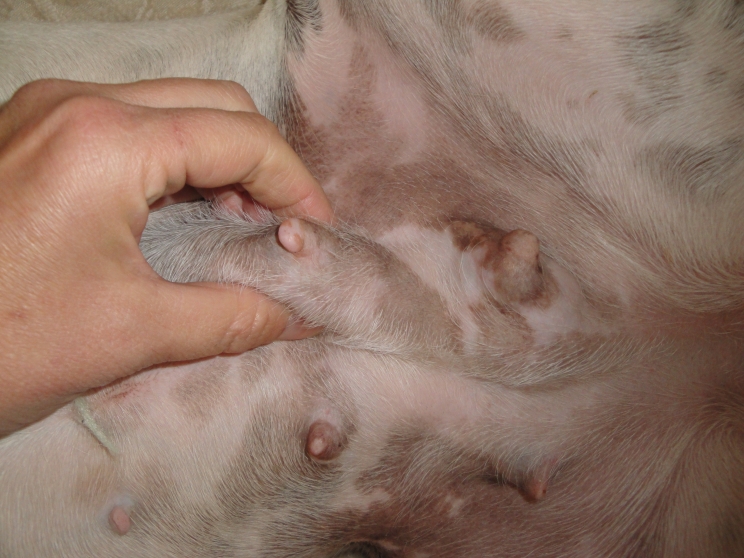
In this article, we discuss some of the most serious diseases that can affect our dogs or cats: tumors.
It is a difficult subject, one that is rarely discussed, as though it were some kind of taboo. Yet talking about it, gathering information, and above all helping owners understand how important it is to keep their animals under control is the only way to prevent them or, at the very least, treat them before they can cause too much damage.
WARNING: In this article I will write directly, without euphemisms or beating around the bush, to discuss this serious problem. Do not continue reading if you are sensitive or fear this problem for your animals; have someone else read it and tell you what I wrote. Forgive me, but this seems to me the best way to address the subject. Softening it serves no purpose.
What tumors are
Just like human doctors, veterinarians still do not fully understand why tumors form. Some diseases are directly linked to their appearance (FeLV in cats, Marek’s disease in birds), but in most cases their appearance is due to factors over which we, as owners, have no control.
Pollution, owners’ smoke, carcinogenic substances in food are small inputs that, over time, can lead to the appearance of so-called neoplasia, the new and uncontrolled growth of a cell, which begins multiplying without any kind of control by the body.
As it grows, a tumor (generally malignant ones) can break into several parts, which can reach areas far from the original site, giving rise to a new tumor called a metastasis; if, after removal, a tumor (generally benign ones) returns in the same place, this is called a recurrence.
The difference between benign and malignant is that the latter grows faster and tends to “eat” everything it encounters as it grows. A benign tumor is less aggressive, although one type can develop into another.
Tumors can appear anywhere. Lungs, spleen, bladder, mammary glands, prostate—there is practically no organ that is immune.
Moreover, they appear only in animals that have reached a certain age. For a neoplasm to begin, a series of repeated carcinogenic stimuli is needed, which cannot occur in a puppy for time-related reasons, but can occur in an adult or elderly animal: this is the age at which we need to pay the most attention.
How to tell whether an animal has a neoplasm
Diagnosing neoplasms is not simple. Since they can be in any organ and do not necessarily cause symptoms (consider lung cancer, which must grow considerably before causing breathing problems), they must be sought “blindly.”
A complete check-up when our animal reaches 6-7 years of age, repeated once or twice a year, is certainly an excellent rule: we should not go to the veterinarian only when the dog or cat is ill. We should go even when they are well. Not too often, but we should go, so that they can continue to stay well.
During an examination that includes an ultrasound, the veterinarian will notice if something is wrong. A small nodule that has not yet grown can be removed without too much difficulty with a simple surgical procedure, eliminating the problem at its root. A large mass that may have produced metastases often cannot be removed without permanently damaging the organ in which it developed.
A very important recommendation is to neuter animals if we are not interested in breeding: by removing the ovaries and testicles, we remove the hormones that cause the mammary glands, uterus, and prostate to grow. Since these organs do not develop, they cannot develop neoplasms in the future. It is better to perform the procedure while the animal is still young.
As for elderly animals, if we have not carried out check-ups or neutering, we might notice a swelling somewhere on the body, or respiratory or intestinal problems. We should go to the veterinarian as soon as possible, for the reasons discussed above. We should not wait for it to grow further.
One particular case to watch out for is splenic hemangiosarcoma: it is one of the most dangerous tumors, affects dogs, and appears as a swelling on the left side of the abdomen. It is a strange neoplasm because, essentially, it is a blood-filled bubble that can rupture at any moment. If it does, it causes severe internal bleeding that will kill the dog within a few minutes.
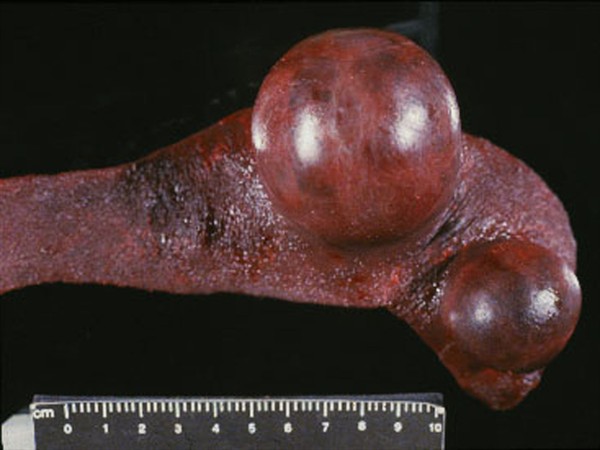
Do not let the dog jump; keep it as still as possible. We should place it in the car ourselves to take it to the veterinarian and not let it jump in. We should request an ultrasound as soon as possible to plan surgery to remove the spleen, the only procedure that can resolve the situation.
If the tumor is benign, not too large, and, above all, has not produced metastases, the veterinarian may try to resolve it with surgery to remove it. If this is not possible, the alternative is chemotherapy, which is unfortunately very expensive (the owner must pay for everything), lengthy, and not always successful. Research is still in its infancy regarding cancer in people, let alone in animals.
For these reasons, if you truly care about your dog, take it for the check-ups we mentioned earlier. This is the only way to detect this type of problem early and begin treatment as soon as possible: no certain cures exist, and no one is immune. In recent years, these have been among the most widespread diseases in both dogs and cats.