
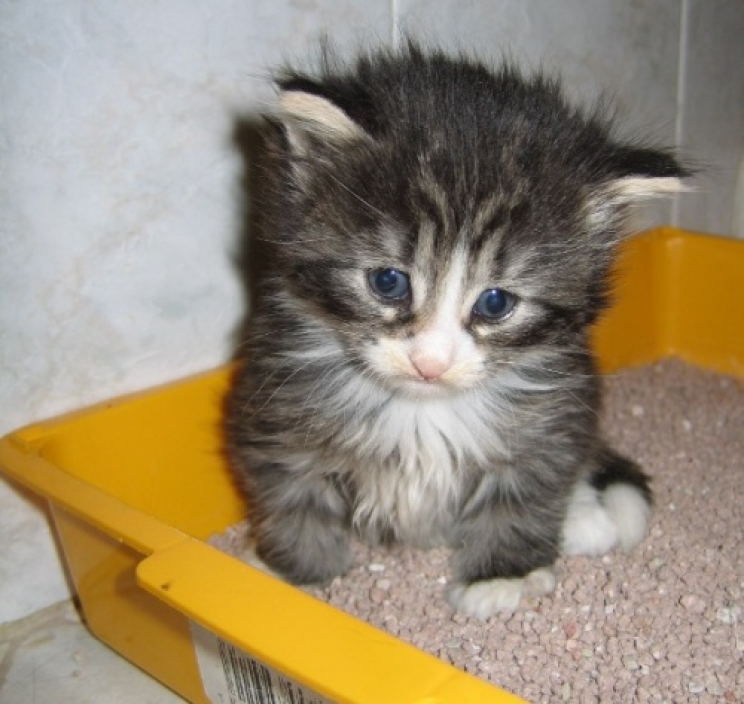
The bodies of our dogs and cats are made up of a series of organs, which are the parts of the body responsible for specific functions.
They are not all alike: some, because of their very precise function, are highly protected and rarely become ill, such as the brain or heart; others, on the other hand, are constantly exposed to harmful or waste substances, meaning that problems, although not serious, are commonplace.
Among these organs we certainly find the intestine: which of you who has a dog or cat has never experienced even one episode of diarrhea in its life?
Diarrhea is in fact the most common symptom when there are intestinal problems. Although it sometimes results from simple dietary errors that resolve on their own, in other cases the causes can be much, much more serious. Let us try to understand how the intestine is structured and what problems may arise.
Intestinal problems
The intestine is a long tube that begins at the stomach and ends at the anal opening, through which undigested material leaves the body.
Its purpose is both to digest nutrients and to absorb them so that they enter the bloodstream and provide energy to the various organs.
It is divided into two main sections: the small intestine, which is very long and narrow, and the large intestine, which is shorter but wider. In dogs and cats it has no major functions because these animals eat essentially meat, whereas in herbivores, where it is much more developed, such as horses, it serves to digest the fibers they consume by eating grass.
Intestinal problems essentially depend on what has been ingested: with their food, our dog or cat might eat spoiled food, something indigestible (such as sand), or food containing dangerous parasites or bacteria.
Indigestible substances, precisely because they are not broken down, essentially irritate and scratch the intestinal wall. Parasites, bacteria and pathogenic viruses, on the other hand, directly damage the intestinal wall from the inside because they try to cross it.
The intestine’s main defense mechanism, when it realizes that something is wrong, is to try to move harmful material toward the anus, in other words to “throw it out”, by absorbing less water than normal. This leaves the feces more liquid and allows them to pass more easily. That is how diarrhea occurs.
Diarrhea: what to do if it occurs
Naturally, diarrhea is not caused only by this intestinal defense mechanism; in many cases it is a combination of this mechanism and the direct action of the microorganism or substance causing the problem. Some parasites, for example, damage (or, more accurately, eat) the intestinal wall and cause water to leak out, worsening the problem.
In general, it is up to us owners to take the first step when our animal has episodes of diarrhea: we must observe the animal’s behavior and, first of all, see how long the symptom lasts.
If it lasts a couple of days and then does not reappear, the cause was probably that the dog or cat had eaten something difficult to digest (such as milk). If it persists for several days, it could be caused by a bacterial or viral disease, and a veterinary examination is needed to determine what it is before the situation worsens.
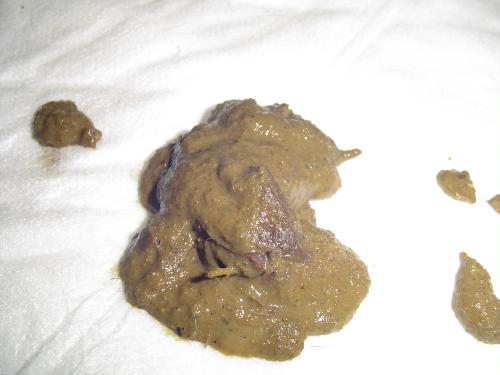
We may also see blood in the feces. A single drop is normal, while larger and, above all, repeated amounts indicate a problem; intestinal parasites, for example, may be present.
In this regard, if there are truly many of them, some die (when there are only a few, they try not to be expelled with the feces) and can be found in the stool. They are visible, white and in some cases move. Finding them means that a massive infestation is underway, so we must contact a veterinarian as soon as possible.
Another possible cause of diarrhea is food allergies: if the symptom has lasted a long time but the dog or cat does not appear particularly ill, it probably has this type of problem. It is allergic to a food that causes a reaction, and we must identify it so that it can be removed from the diet, with the veterinarian’s help.
Finally, it is also important to consider the exact opposite of diarrhea: the absence of defecation. If the animal eats normally, it must expel what is not digested. If we notice that its usual 2 bowel movements a day decrease to one, or even to one every two or three days, and the stools may be scant, there could be problems with poor intestinal movement or, even worse, something obstructing the passage of feces: neither case should be underestimated. We must act so that the veterinarian can determine the problem and resolve it as soon as possible, often requiring surgery.