
Otitis is a fairly common problem in dogs, both those that live in gardens or outdoors and those that live indoors. It can be caused by a number of factors and can affect different parts of the dog’s ear. Let’s look together at the main causes of otitis and the most appropriate treatments.
Otitis can generally be defined as inflammation of the ear. More specifically, however, it is useful to distinguish between the individual parts that make up the ear. These can, in fact, be affected by different types of otitis, depending on the location of the problem.
The ear can be divided into three parts: outer, middle, and inner.
At first glance, when we look at our dog’s ear, we can immediately notice an area crossed by various ridges. This is the pinna, which can be described as the entrance to the actual ear. Looking deeper, we can see the external auditory canal, a fairly long passage, also crossed by a series of ridges. This canal ends with a thin membrane called the eardrum, beyond which lie the middle and inner ear.
The middle ear contains three small bones—the malleus, incus, and stapes—whose task is to transmit sound to the innermost parts. A problem in the middle ear can cause hearing loss of varying severity.
In the inner ear, on the other hand, there are particular structures that serve both hearing and balance. For this reason, if inflammation or trauma affects the inner ear, the dog may have serious difficulty even walking along a precise path.
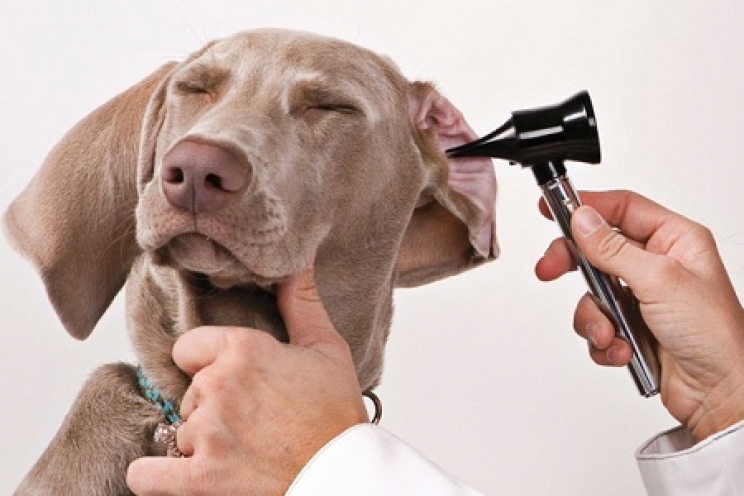
Examination of these deeper parts must be performed by a veterinarian using a special instrument called an otoscope, which magnifies and illuminates all the innermost structures of the dog’s ear.
In any case, the most common forms of otitis in dogs are those that primarily affect the outer ear, and to a lesser extent the middle ear as well. We will therefore focus mainly on external and middle-ear otitis.
Symptoms of otitis
Symptoms that may occur in cases of otitis include:
-
Intense scratching of one or both ears;
-
Shaking the head;
-
Tilting the head to one side;
-
The dog presses the ear area against your hand when you pet it;
-
The dog experiences discomfort or pain when you touch its ears;
-
Bad odor;
-
Swelling and redness of the pinna and the innermost part;
-
Dark earwax;
-
Pus;
-
Skin flakes or dandruff;
-
Hair loss around the ear.
All these symptoms may indicate a different form of otitis, so identifying them and describing them to your veterinarian can already point them toward an initial diagnosis.
Causes of otitis in dogs
The main causes that can lead to inflammation of a dog’s ears include:
-
Fungal infections: the most common is a fungus called Malassezia, recognized by the unmistakable foul-smelling earwax. Malassezia, like other fungi and yeasts, grows in conditions of considerable humidity. For this reason, the typical situation behind fungal otitis is washing the dog or bathing at the beach without then drying the dog’s ears thoroughly;
-
Bacterial infections: the main bacteria that can cause otitis include Pseudomonas and Staphylococci. If these infections are not treated properly, they can cause severe pain accompanied by the discharge of a whitish-yellow substance, pus;
-
Parasites: the main parasite responsible is a mite similar to the one that causes mange, called Otodectes cynotis. The typical sign is the presence of brown or black earwax, which is not particularly foul-smelling but can trigger very intense itching in dogs;
-
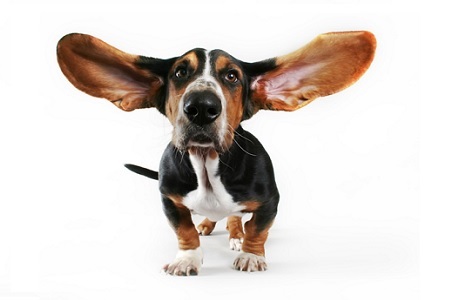
Foreign bodies: this phenomenon is especially common in dogs with long ears or a lot of hair, particularly Cocker Spaniels and Basset Hounds. Dogs with this ear structure can “trap” dust, dirt, and various residues in the hair around their ears, which can easily end up inside the auditory canal. The most frequent foreign bodies are those the dog “picks up” in gardens or the countryside. The most dangerous are the so-called “foxtails,” small, particularly sharp grass awns that can become lodged on or in the ear of the grane, causing severe inflammation and, in some cases, even perforating the eardrum;
-
Allergies: the skin lining the ear is often the site of inflammation caused by an allergic reaction, for example to the ordinary food given to the dog. In this case, we speak of food intolerances or allergies. The typical symptom is the presence of skin flakes, very similar to dandruff, accompanied by intense itching.
What to do in case of otitis
First of all, always consult your veterinarian, who can make the correct diagnosis after a thorough examination. Follow the prescribed treatment precisely and consistently. Generally, in cases of infection, treatment involves administering drugs specific to the responsible agent. Antibiotics are useful for bacterial infections, while antifungal ear gels and drops act against fungi and yeasts.
For parasites, the most suitable treatment may be local, inside the ear, or more general, using products specifically targeting mites.
If the dog has a foreign body resting on the ear and it is still completely visible, you should remove it immediately to prevent it from becoming embedded in the dog’s skin. In these cases, it will be necessary to seek veterinary help, so it can be removed completely and the inflammation treated afterward. In the case of grass awns “embedded” in the ear, do not try to perform surgery yourself, as you could break the stem and leave fragments in the skin, making them even more difficult to locate and remove.
Tips for preventing otitis in dogs
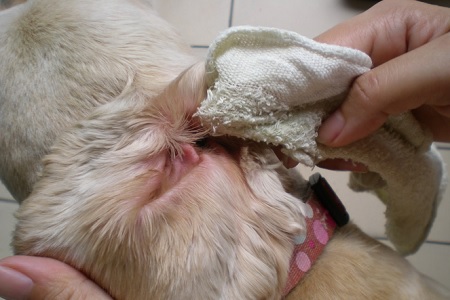 First of all, it is very important to keep your dog’s ears clean at all times. Avoid using cotton swabs as much as possible, as they may have the opposite effect. If the maneuver is not performed correctly, earwax may be pushed deeper, creating plugs and buildup as far as the eardrum.
Instead, use a simple cotton ball or makeup-removal pad soaked in specialized cleaners for cleaning the dog’s ears. Without rubbing, pass it over the entire pinna and the visible canal, removing earwax and dirt.
Another precaution is to make sure your dog’s ears are thoroughly dry after grooming or bathing at the beach. Gently pat both the inside of the ear, without going too deep, and the surrounding hair and skin with a towel.
Taking the dog for a walk is one of the most enjoyable moments, especially on beautiful spring and summer days. However, if you choose to take your dog to the countryside or through tall grass, always remember to check the dog’s paws, armpits, and ears once the walk is over. Also, if your dog has very long ears, tie a scarf around its head so that they do not come into contact with the ground.