
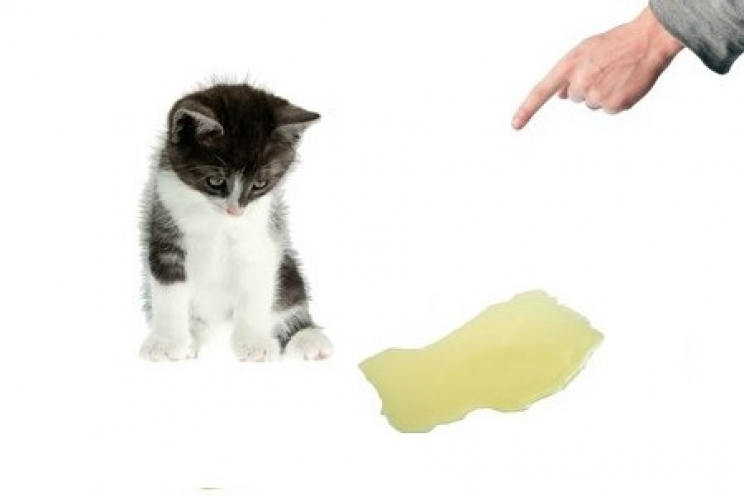
A cat that goes outside the litter box may simply need to communicate something to its owner, but inappropriate elimination may also indicate internal distress in the animal. Let’s look at the most common situations and why a cat may decide to go outside the box.
First of all, it is important to understand how often this event occurs. It may be an isolated episode, probably linked to behavioural or “technical” causes, but it may also occur systematically.
The most common situations
If a cat decides not to do its “business” in the litter box, it may do so around the house, even in the most unexpected places. The most common include:
-
Shower and bathtub;
-
Next to the litter box;
-
On the floor;
-
Along the walls;
-
On the bed;
-
On the sofa;
-
In wardrobes;
-
On clothes;
-
In boxes, containers and baskets.
The cat may do it secretly or deliberately in the owner’s presence.
Before urinating or defecating, it may sniff and scratch, or it may do it directly without any warning. Identifying the places and situations in which the cat decides to urinate or defecate can help clarify the underlying causes of the problem.
The causes
Inappropriate elimination is a problem that should not be ignored, because it may be an alarm signal for distress or illness in the cat.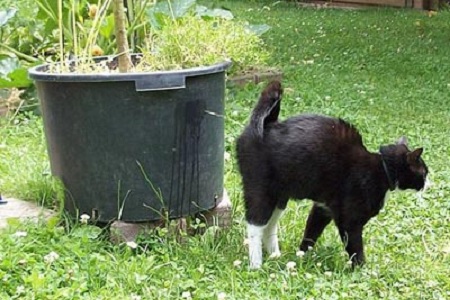
Among the main behavioural problems that lead a cat to go outside the litter box are factors directly related to the box, including:
-
The litter box is located in places that are difficult for the cat to reach;
-
The litter box is not in a secluded place;
-
The cat cannot use the litter box’s flap;
-
The number of litter boxes is insufficient;
-
The litter box is not cleaned often enough;
-
The cat litter used is not accepted by the cat;
-
Other animals in the home disturb the cat while it is in the litter box;
-
The litter box is positioned next to the food.
Other possible causes are behavioural, related to anxiety and stress or dominance. These problems are typical of situations such as:
-
Arrival of a new animal or child;
-
Moving house;
-
Relocation of one of the owners;
-
Bereavement;
-
Use of perfumes or air fresheners;
-
Odour of other animals on clothing and furniture.
The causes of inappropriate elimination also include some disorders and diseases, for example:
-
Urinary tract problems: in cats, these are all grouped under the name FLUTD, among which the main condition is cystitis, inflammation of the bladder. In these cases, the cat may feel the need to urinate very frequently and may tend to do it in front of its owner and without warning. The urine may have pinkish shades if there are traces of blood;
-
Diabetes: diabetic cats urinate more frequently and may therefore be unable to reach the litter box. Excess sugar in the blood is also eliminated through the urine, which will therefore be fairly sticky;
-
Incontinence: some urinary tract problems, paralysis and advanced age may negatively affect the cat’s ability to hold its urine;
-
Joint pain: if the cat suffers from joint problems, it may be unable to lift its legs over the edge of the litter box, so it goes on the floor, often next to the tray;
-
Diarrhoea: if the need to defecate is urgent, the cat may be unable to reach the litter box in time, doing it where it is or along the way to it;
-
Liver problems: in these cases, cats tend to urinate very often and their urine takes on a characteristic orange colour due to the accumulation of bilirubin, a coloured substance produced by the liver.
What to do
The first step in solving the problem is undoubtedly understanding its cause. It is therefore very important to take the cat to the vet to rule out or identify any disorders or diseases.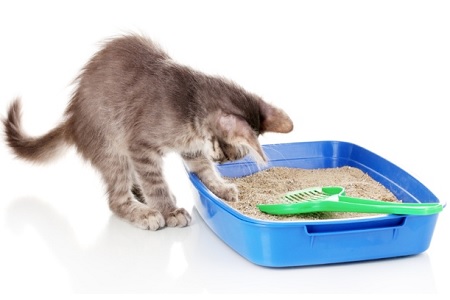
Once it has been established that the cat is in perfect health, some useful advice can be put into practice. On the one hand, appropriate use of the litter boxes should be encouraged; on the other, the cat should be kept away from the areas of the house where it urinates most often.
First, keep the litter box clean at all times. Place it in quiet, easily accessible areas of the house. Choose a type of litter the cat may accept. Silica litter, for example, is highly absorbent and reduces unpleasant odours, but some cats may not adapt to the different texture.
If you have several cats, make sure to place a number of litter boxes in different areas of the house equal to the number of cats, plus one spare. If you have three cats, put out four.
Locate the areas of the house where the cat urinates most often, and cover the floor with aluminium foil. The crackling noise will discourage it from stepping on it.
If your cat’s preferred place to urinate is the shower, keep it closed at all times. For the bathtub, you could try leaving a few centimetres of water in the bottom.
There are repellent sprays available commercially that can be sprayed on furniture, sofas and floors. An odour unpleasant to the cat will prevent it from approaching those areas of the house again.
It is essential for the owner to resist the temptation to scold the animal, especially if the cat did its “business” some time ago. If you catch it in the act, clap loudly or make a sudden noise to distract it and direct it towards the appropriate place. Above all, remember to reward it when it goes in the litter box.
The final important piece of advice is not to use ammonia- or bleach-based cleaners to clean the litter boxes and the house. These substances smell similar to urine, so the cat will be even more encouraged to cover the smell with its own urine.
With these useful measures, you should be able to solve the problem of inappropriate elimination. If it persists, you should seek advice from a vet or an animal behaviourist.