
72
544×376
Compared with other animals, vomiting is a fairly common event in cats. There may be several reasons why our feline friend expels food through vomiting. In most cases there is no need to worry, especially if it occurs rarely and without additional symptoms. Let us look at the main causes.
On average, in fact, cats may vomit up to 3 times a month without suffering from any disease. Hairballs, eating too greedily and hunting in the garden are just some of the situations that may cause vomiting in our feline friend.
Vomiting or regurgitation?
Another aspect to consider is that what may seem like vomiting to us is often actually simple regurgitation. Distinguishing between these two events is not very difficult. Simply observe your cat carefully during one of these episodes. 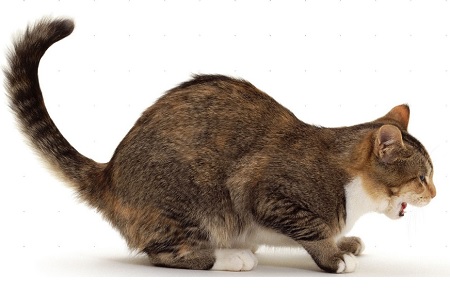
In the case of vomiting, it is always preceded by the classic “retching”: the cat rhythmically contracts its abdomen and salivation increases. The material expelled from the stomach may have a particular consistency because the food has already been partially digested. In short, everything the cat has eaten will be expelled with a different appearance.
In the case of regurgitation, on the other hand, the signs preceding the expulsion of food are absent. Thus the cat will not retch, but will simply stretch its head forward, bringing out everything it has recently swallowed. Regurgitation mainly involves expulsion of food or other material contained in the esophagus, the canal connecting the stomach to the mouth. Since cats very often do not chew their food, it will be expelled in its original form, almost always with a typical “sausage-like” shape.
Naturally, the appearance of regurgitated material varies according to the consistency of the food. In the case of regurgitated kibble or other more solid foods, it will be possible to assess shape and appearance more clearly, unlike liquids or pâté.
We do not need to worry if…
Whether it is vomiting or regurgitation, some situations may promote expulsion of food contained in the stomach or esophagus. In particular, we do not need to worry if:
-
The food is eaten too quickly and greedily;
-
The cat has drunk too much water;
-
There are hairballs in the vomit;
-
The cat played frantically immediately after eating;
-
The food eaten was spoiled;
-
The cat ate cat grass or other non-toxic plants;
-
We suddenly changed the type of food;
-
The kitten has just begun weaning.
In the case of isolated episodes occurring in one of these circumstances, the cat generally becomes active again immediately after vomiting and may ask for food again just a few minutes later. Otherwise, consult your veterinarian immediately.
When should we be concerned instead?
Vomiting could be a warning sign of more serious problems if the cat shows other symptoms, including:
-
Frequent vomiting, at least once a day;
-
Persistent diarrhea;
-
Fever;
-
Apathy;
-
Weakness;
-
Lethargy;
-
Weight loss;
-
Loss of appetite;
-
Abdominal pain;
-
The cat drinks a lot and often;
-
Reddish or greenish vomit;
-
Vomit with a “fecal” odor;
-
Presence of parasites in the vomit.
These symptoms could indicate the presence of certain conditions and diseases in the cat. The main ones are:
-
Foreign bodies in the stomach or intestine;
-
Hairballs that prevent food from passing;
-
Constipation;
-
Food intolerances and allergies;
-
Gastritis;
-
Bacterial or viral gastroenteritis;
-
Intestinal obstructions;
-
Presence of intestinal parasites, resembling grains of rice or narrow and elongated;
-
Inflammation of the pancreas or liver;
-
Diabetes;
-
Kidney failure;
-
Respiratory infections;
-
Intoxication or poisoning;
-
Stomach or intestinal tumors;
-
Neurological disorders;
-
Fecal impactions, compact masses of hard feces in the intestine.
If your cat shows one of the symptoms listed above, take it to your veterinarian immediately, who can identify
the cause of the problem through a thorough examination. One of the main risks associated with persistent vomiting is in fact dehydration.
Excessive loss of fluids, especially if vomiting is associated with diarrhea, can endanger the cat’s health. For this reason, in most cases the veterinarian will immediately rehydrate your cat through an IV drip to replace lost fluids.
Once the cause has been identified, it will be easier to administer targeted, specific treatment to the four-legged patient.
What to do if your cat vomits often?
If your veterinarian has ruled out particular conditions or diseases that may cause frequent vomiting, you can put some tips into practice to help your cat. 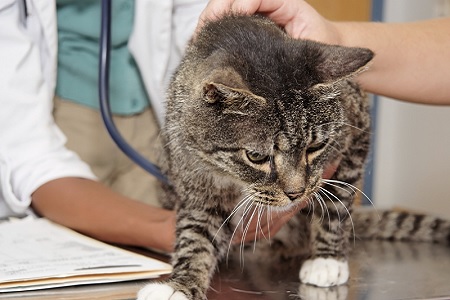
-
Try changing the diet. You could choose a more digestible food, for example chicken- or turkey-based, or a single-protein food, to check for food intolerances or allergies. Your veterinarian will be able to advise you best;
-
Make the cat eat more slowly. Try feeding it yourself, waiting a few seconds between one bite and the next. To make this more enjoyable, try puzzle toys. Kibble is placed in the partly enclosed holder, forcing the cat to work to open it;
-
Raise the bowl onto an elevated surface. Supports for water and food bowls at feline height are available commercially. Holding the head downward while eating may cause difficulty in food passing down the esophagus;
-
Move away all objects and plants that may attract your cat. Pay particular attention to ribbons, string and wires used to close garbage bags. Remember that anything vaguely resembling a mouse’s tail is very interesting to a cat. If the cat has swallowed a foreign body, you will need to act appropriately;
-
Do not feed several cats together. If you have more than one cat, feed them at different times or in places sufficiently far apart in the home. Anxious cats may often eat greedily to prevent the other cats from taking their food.
If these measures do not work either, it will be time to proceed with further investigations by your veterinarian.
Normal
0
14
false
false
false
IT
X-NONE
X-NONE