
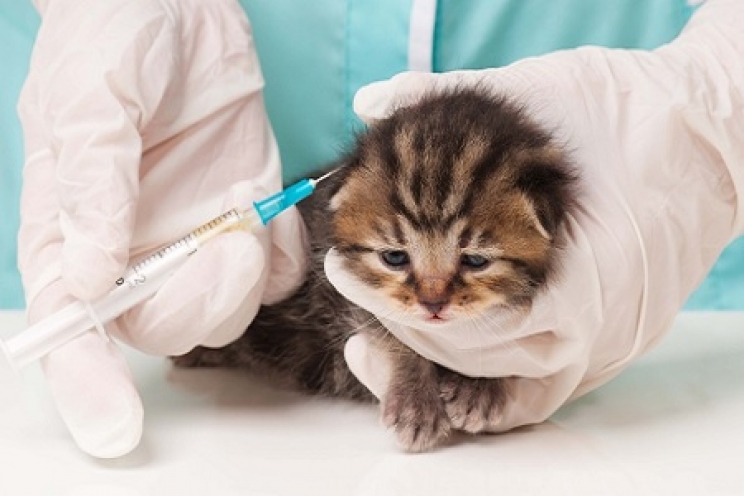
One issue pet owners must deal with is vaccination. Whether they are newly adopted kittens or adult cats, vaccination is an important appointment for the health of our four-legged friend. Vaccinations are intended to protect dogs or cats from diseases that could seriously endanger their health. Let’s look at the main cat vaccines and some information about vaccinations.
Why is it important to vaccinate your cat?
During the first hours of life, a kitten can obtain all the tools it needs to defend itself against disease through its mother’s first milk, called “colostrum”. In fact, maternal antibodies are contained in the milk, acting as weapons that the body possesses and can produce whenever a threat arises.
 Throughout our lives, infection after infection, each of us can expand our “arsenal” with different antibodies, specific to each virus, bacterium and other microorganism. This way, whenever one of them appears again, the body can use the antibodies already produced to defeat the threat quickly and effectively. Similarly, it can produce new ones whenever it encounters a new “enemy”.
All the antibodies a female cat has had the opportunity to “collect” during her life are passed to her offspring through nursing, forming the kittens’ first defenses. This important protection remains fully active for approximately six, at most seven weeks, after which maternal antibodies tend to decrease, leaving the offspring exposed to infection.
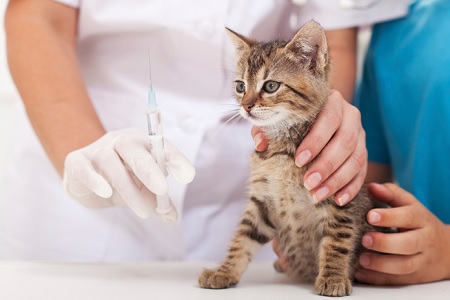
It is precisely from the eighth week of life, therefore, that kittens should start being vaccinated, to fill the gap left by maternal antibodies.
How does the vaccine work?
The vaccine stimulates the body to produce new antibodies specific to a particular microorganism. Vaccines contain small parts of a virus or bacterium that have been modified to make them completely harmless. When injected into the cat, these parts stimulate the cat’s immune system, which responds by producing antibodies fully capable of fighting an attack by that specific virus or bacterium.
What are the main cat vaccines?
The diseases for which cats can be vaccinated differ from those covered by dog vaccines. The main cat vaccines include:
-
Viral infectious rhinotracheitis: the microorganism responsible is a “Herpesvirus”, from the same family as the virus that causes the familiar ”Herpes” on our lips. In cats, this virus causes respiratory symptoms such as coughing, sneezing, heavy nasal discharge, watery eyes and fever. The vaccine for viral infectious rhinotracheitis is among the cat’s mandatory vaccinations;
-
Feline calicivirus infection: this is one of the most common infectious diseases in cats, caused by “Calicivirus”. This virus affects the respiratory tract, from the trachea to the bronchi and lungs, causing symptoms very similar to those of a cold, such as coughing, sneezing and nasal discharge. Ulcers on the palate or tongue, extensive and painful wounds, often occur as well. The contagion rate is quite high, so the feline calicivirus vaccine is one of the first to be administered and is included among the cat’s mandatory vaccinations;
-
Viral infectious panleukopenia: this is a very dangerous disease for cats, capable of causing severe gastrointestinal symptoms such as vomiting, hemorrhagic diarrhea, fever and dehydration. Symptoms often appear so rapidly and intensely that the disease has a high mortality rate. For this reason, cats must be vaccinated against it from the first weeks of life;
-
Chlamydiosis: this disease is caused by a bacterium that mainly attacks the cat’s eye. The main symptoms include heavy tearing, often with mucus or pus, sneezing and coughing. This vaccination is not mandatory but is recommended for cats living in shelters or areas populated by multiple cats;
-
FeLV or feline leukemia: the FeLV vaccine was introduced recently. It is not mandatory but is recommended for cats that frequently come into contact with stray or infection-prone cats. This virus causes a reduction in immune-system cells, so cats with feline leukemia are more susceptible to secondary infections and even tumors;
-
Rabies: this vaccine is no longer mandatory in our country, given the significant reduction in the spread of rabies. In the event of travel abroad or relocation, however, the national vaccination requirements should be consulted.
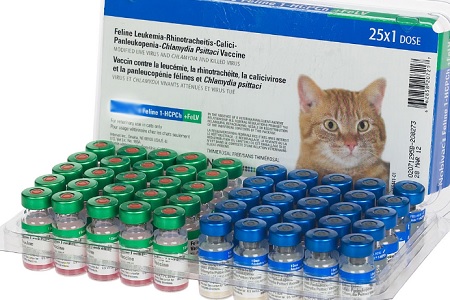
Generally, the three mandatory vaccinations are included in a single vaccine, known as the “trivalent” vaccine. It provides protection against infectious rhinotracheitis, calicivirus infection and feline panleukopenia.
A new “quadrivalent” vaccine can also be requested. In addition to these infections, it also protects against feline leukemia virus.
When should the first vaccination be given? And what about boosters?
All kittens from 8 weeks of age should receive the mandatory vaccinations.
The first booster must be given four weeks after the previous vaccination, followed by vaccination every year.
The veterinarian will record the date and information for each vaccination in your cat’s health booklet, also indicating the scheduled date of each booster.