
Anyone who has a pet knows how important it is to travel and move around with them. With cats, to be honest, this is much less true because they are much more sedentary, especially if neutered, but with dogs things are more complicated.
On this page we deal with short trips and the regulations concerning them. Not journeys to foreign countries, therefore, but walks in places near home. We divide the page into three sections, useful both for those who want to travel on foot, those who want to take their dog in their own car, and those who want to use public transport to reach their destination.
Travelling on foot
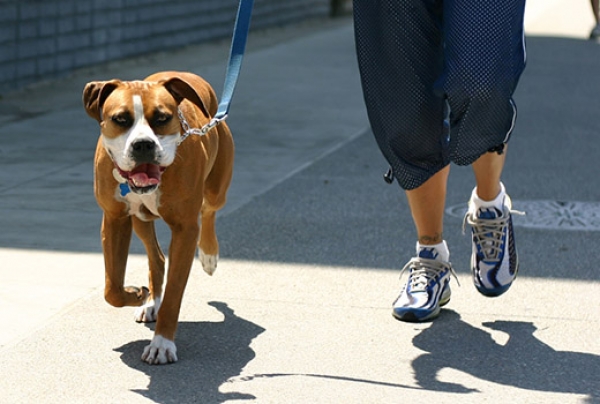
“Travelling on foot” also includes the short walk around the neighborhood that dog owners take every day. Clearly, it is easier to run into difficulties with the authorities (especially the municipal police, but also law-enforcement officers) if we are far from home than if we are nearby and have left the health record at home, which we can go upstairs to retrieve.
- The first thing we should always have with us is the certificate of registration in the canine registry: it will have been issued by the private veterinarian or the local health authority that implanted the animal’s microchip, and it is a photocopy that should be folded and placed in the health record, which we should always carry with us in case it is needed.
- We must also keep the dog on a leash no longer than 1.5 m (although we are currently in a legislative “transition” phase). The leash is mandatory except in dog exercise areas designated by individual municipalities, where we may remove it.
- A muzzle is not always mandatory on the street, but we are required to always carry one with us, to show and put on the dog if requested by the authorities to deal with potentially dangerous situations.
- Finally, the dog’s solid waste must be collected by the owner. Not only that, but whenever we have the dog with us, we must always carry suitable means for collecting it, namely a plastic bag or a small scoop. If we do not have them, we risk a fine even if the dog has not defecated in the presence of the authorities.
Travelling by car
Travelling by car with our four-legged friend also has its own rules.
Besides always being accompanied by the dog and therefore having to follow all the rules that apply to travelling on foot, we must transport animals under specific conditions.
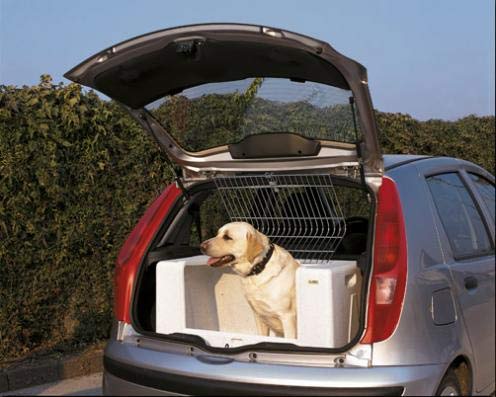
Only domestic animals, and no other types of animals, may be transported in a car. We can choose to transport dogs and cats (or rabbits, ferrets, and so on) in suitable cages placed in the car’s trunk, or leave the dog free on the back seat provided it does not obstruct driving. To make this possible, it is necessary to install a suitable divider across the car, although a permanently installed divider must be authorized by the motor vehicle authority in our province of residence.
Travelling by bus
The last situation we consider when discussing short trips is travelling by bus.
At present, there are only general guidelines for the various public transport companies, so before taking the first trip it is advisable to visit the website of the company operating public transport in our province and read its regulations. There we will also find a section concerning the transport of animals.
Dogs may board buses in general if they are equipped with a leash and muzzle, and they must pay the regular fare just as people do. There may not be more than one dog per person (one person, one dog maximum; two people, two dogs maximum; and so on). Guide dogs for blind people are exempt and may travel by bus without paying.
They may not sit on the seats, unless they are very small and are held by their owner. If other passengers object, moreover, the driver may ask the owner to get off the bus at the nearest stop, despite having paid the fare.
Travelling with your dog means following rules that we must all respect for civilized coexistence and, above all, to avoid the various penalties provided by law for offenders.