
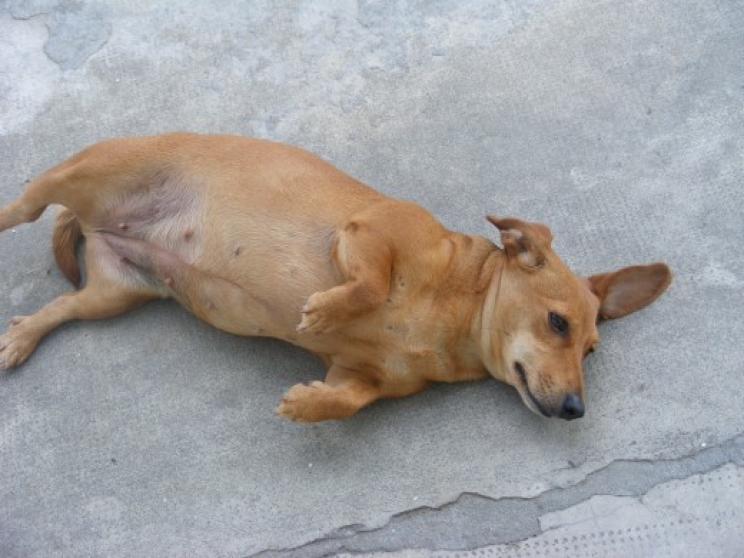
Peritonitis is one of the most urgent diseases that can affect dogs or cats and can become fatal if not treated promptly.
We often hear about it in relation to humans, generally as a complication of appendicitis that can become fatal; dogs and cats do not have an appendix, but there are a whole series of other causes that can lead to exactly the same outcome.
It is important for owners to know about it and recognize its symptoms, because if the animal were affected, treatment must be prompt.
NB: in this article we will not discuss FIP, or Feline Infectious Peritonitis, a viral infectious disease to which we dedicate a separate fact sheet.
What It Is
Peritonitis is simply inflammation of the peritoneum. It is easy to understand if we know precisely what the peritoneum is.
Imagine moving house and putting all the glass ornaments you have at home into a box. To prevent them from breaking, I put into the box a sheet of packing plastic that completely covers the inside of the box (the kind with the bubbles that “pop”). Then, before putting in each ornament, I wrap it in packing plastic as well. In this way, no ornament ever touches another ornament or the box.
If I call the ornaments “liver,” “stomach,” “bladder,” in short, using the names of all the organs found in the abdomen, the peritoneum is the space remaining between one sheet of packing plastic and the other. In the box it is filled with air; in an animal’s body, with fluid (not much).
Let us imagine closing the box, so that our peritoneum has no contact with the external environment. If an organ “outside” the box (which is the abdominal cavity) becomes infected, there will be no consequences in the peritoneum. If an ornament (an organ) becomes infected, we will still have no problems in the peritoneum because it is surrounded by packing plastic. If an organ becomes so infected that it perforates the plastic, the infection will spread into the space between the organs, namely the peritoneum, which should remain sterile throughout life. This is peritonitis.
Causes
The causes can be extremely varied and always depend on the rupture of an organ or an external perforation that has “punctured” our packing plastic.
It may be caused by a perforation of the intestine or stomach because the animal has eaten a toy or a piece of metal that caused damage; it may be caused by pancreatitis, a very serious inflammation of the pancreas that digests itself; it may also be caused by a fairly deep wound that has brought the external environment into contact with the peritoneum, such as a deep stab wound to the abdomen; it may be caused by rupture of the bladder, generally as a result of an accident; in short, anything that brings the peritoneum into contact with something else.
The problem is that the peritoneum is sterile and contains only a few ml of pure fluid that “seeps” from the blood vessels passing through the abdominal cavity. Even a very small hole can therefore allow bacteria to enter a cavity that is practically without defenses. The bacteria begin to multiply in a completely uncontrolled manner, and this is when pain and the danger of the disease arise, because so many bacteria can easily infect the entire body.
Symptoms
Leaving aside accidents, in which there will also be other problems and the peritonitis will be diagnosed directly by the veterinarian, in subtler cases such as ingestion of a toy or pancreatitis, we must be able to recognize the symptoms.
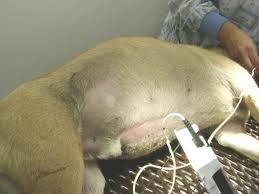
First of all, the animal will be lethargic and may have a fever; in short, we can see that it is unwell. It will then experience severe abdominal pain, which will cause it to adopt a “sphinx” position to feel as little pain as possible. It will be difficult to approach and touch its abdomen, but if we manage to do so, we will see that the dog or cat, even with the slightest pressure, will yelp or meow because of excruciating pain.
Depending on the causes, vomiting may also occur, but it is not an essential component of the problem.
Treatment
{amazonWS:searchIndex=All;keywords=amaca coprisedile cane;showRevs=yes;Availability=Availability}{amazonWS:searchIndex=All;keywords=trasporto gatto;showRevs=yes;Availability=Availability}
Unfortunately, this is one of those cases in which, apart from rushing to the nearest veterinarian, there is not much we can do.
The doctor will then determine whether peritonitis is present and identify its causes; in certain cases, such as an intestinal perforation, the animal will have to undergo surgery to resolve the problem.
In any case, the peritoneal fluid will be analyzed to determine precisely what it contains, followed by a lavage in which sterile fluid is introduced with a syringe and the “dirty” fluid is removed.
An appropriate antibiotic therapy will then be prescribed, and the lost fluids will be replaced through intravenous fluids, in order to prevent the worst and lead our friend to a full recovery after some time.