
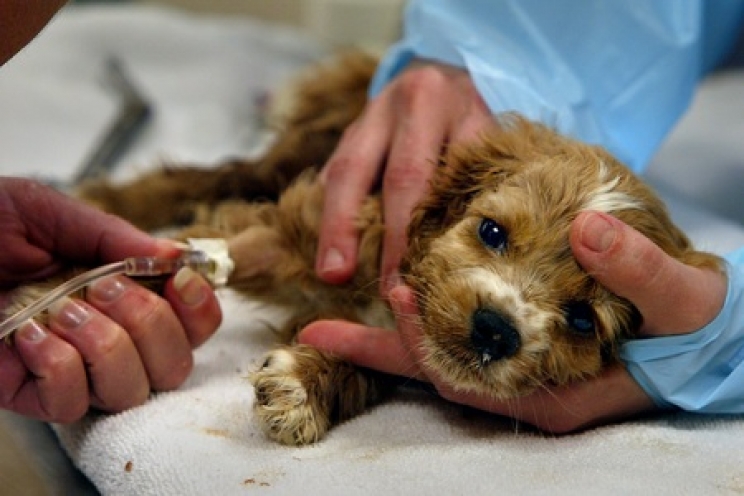
Recently, numerous articles and discussions have been circulating about an infection that is both common and dangerous: parvovirosis. What is most surprising is that cases continue to occur even in regularly vaccinated dogs. The reasons for this “recurrence” seem to be attributed mainly to the presence of a new strain of the virus. However, it is necessary to clarify this debated subject. Let’s find out more.
What is parvovirosis?
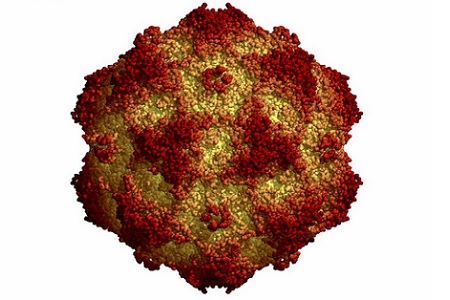
Parvovirosis is a highly contagious infectious disease caused by a virus, specifically canine parvovirus (CPV-2), responsible for severe hemorrhagic gastroenteritis in puppies 1–3 months old.
An important characteristic of parvovirus is that, unlike most other viruses, it does not possess the genes needed to replicate, so it must use those of the animal. It is no coincidence that puppies are most affected, since their cells are constantly multiplying to ensure the development of the body and organs. In particular, the heart is very active in this respect, while the intestine continually produces “replacement” cells even in adults.
This brief introduction helps explain the different clinical forms observed in dogs of different ages. In puppies, parvovirosis can often be fatal, because it can affect the heart during the first 3–4 weeks of life (although this is fairly rare, since puppies that young are almost always protected by their mothers’ antibodies), but especially because it destroys part of the intestine that is essential for regenerating new cells. As a result, the damage cannot be repaired and very serious symptoms appear, such as:
-
Diarrhea, often bloody
-
Unstoppable vomiting
-
Anorexia
-
Lethargy
-
Fever
-
Anemia
In adults or puppies protected by maternal antibodies, however, asymptomatic forms usually predominate, at most with mild diarrhea and a low-grade fever.
Is there really a new strain?
 The news of a parvovirosis epidemic in Rome, published by Repubblica in 2012 (here is the full article), caused a major stir. Regularly vaccinated dogs had been brought in with diarrhea, dehydration and weakness. Laboratory tests confirmed the presence of parvovirus, specifically a “new” strain. But was it really that new? To answer, we first need to know the history of this virus.
Parvovirus was first isolated in the 1970s and then spread rapidly throughout the world, affecting not only puppies but also several adult dogs. The name assigned to this virus is CPV-2 (canine parvovirus type 2), to distinguish it from CPV-1 (later renamed CnMV or “Canine Minute Virus”), which had already been present for several years.
Over time, as often happens, CPV-2 underwent several mutations, leading to the emergence of three variants or strains:
-
CPV-2a: isolated in the early 1980s, it circulates mainly in Belgium and Eastern Europe;
-
CPV-2b: isolated around the mid-1980s, it circulates mainly in the United Kingdom;
-
CPV-2c: this is the most recent strain, appearing only in 2000 in dogs in the area of Bari, and subsequently spreading throughout Italy.
The presence of these variants, certainly more widespread than the original, against which dogs were able to develop a certain degree of protection, eventually led to the definitive disappearance of the original CPV-2.
The strain isolated in Rome in 2012 was none other than CPV-2c, so the news was not actually so sensational, simply because we are talking about a variant that has been circulating in Italy since 2000.
So does the vaccine not really protect?
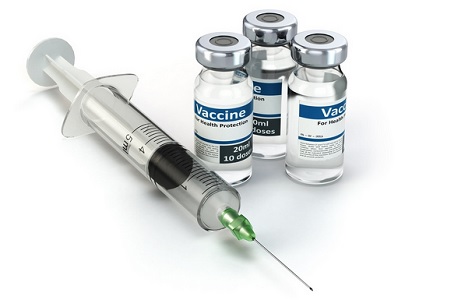 To answer, we need to add more pieces to this puzzle. Most vaccines still used today are prepared using the original CPV-2, even though it has effectively disappeared. The only two pharmaceutical companies producing a vaccine containing the “new” CPV-2b strain are Virbac and Fort Dodge. There are still no vaccines prepared with the “Bari” strain, CPV-2c, the most widespread in Italy.
Although the original CPV-2 no longer circulates, many veterinarians continue to administer vaccines prepared with this “old” strain simply because the mutations that have occurred over the years have not completely transformed the virus, which remains fairly similar to the original. It is clear, however, that the differences between CPV-2 and its three variants are certainly greater than those between CPV-2b and CPV-2c. For this reason, a vaccine prepared with CPV-2b is more suitable (although it is not the most widespread in Italy) than the “classic” one.
But why does the virus continue to circulate?
There may be many reasons. Let’s examine the main ones:
-
Persistence in the environment: the virus is extremely resistant, even to heat and common detergents used to clean environments, while it is sensitive to certain disinfectants, such as bleach. The problem is especially evident in breeding facilities or kennels, which are unsurprisingly the places most affected by parvovirosis, because often normal cleaning operations cannot completely eliminate the virus, which hides in gaps between tiles, protected by small remnants of feces. Thus, as soon as puppies or unvaccinated animals are introduced, they may become infected;
-
Vaccines that are not fully protective: we have just described this “limitation” of vaccines in detail: they do not include the Italian CPV-2c strain. Therefore, the protection provided by vaccines prepared with CPV-2 or CPV-2b will never be complete, although CPV-2b is certainly the best, but not the most widely used;
-
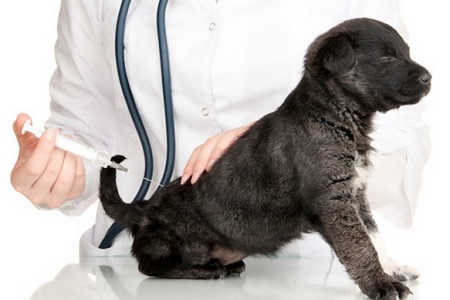
Incorrect administration of vaccines: this is a very delicate issue, because unfortunately many veterinarians still do not understand the importance of following an impeccable vaccination protocol against such a critical virus. The limitation of vaccines in puppies generally concerns what is known as “interference from maternal antibodies”. Let’s simplify the concept. Mother’s milk contains many antibodies, produced by the immune system following vaccinations or infections. Their function is to “memorize” the enemies they have encountered and circulate through the body like sentries, ready to intervene if they return. Through nursing, many of these antibodies reach the puppy and protect it. The problem, however, is that they do not last forever, but gradually decrease as the weeks pass, so after 5–6 weeks from birth, the puppy may be exposed to viruses and bacteria circulating in the environment. At this point one might think, “Perfect, then let’s vaccinate the puppy at 5 weeks!” Unfortunately, it is not that simple, because there is a period in which the mother’s antibodies are insufficient to protect the puppy from infections, but can still “block” the virus contained in the vaccine, causing it to lose effectiveness. At the same time, if we vaccinated too late, the puppy could catch the virus circulating in the environment. This interval is called the “immunity gap” and is approximately placed around the 5th–8th week of the puppy’s age. Therefore, in principle, vaccination should be possible around the 8th week. However, the interval is not fixed and depends on several factors, such as how much milk the puppy drank and how many antibodies were present in the mother’s milk. Some puppies may therefore be ready for vaccination before the 8th week, and others later. The veterinarian, fully aware of this issue, can perform a simple test at 1 month of age, the maternal-antibody titer, which provides an indication of where to place the “immunity gap” and predicts when the puppy will be ready for vaccination.
In light of all this information, we can therefore understand how the “new” strain is not actually a recent threat, but probably merely the result of poor information and management of a problem such as parvovirosis.