
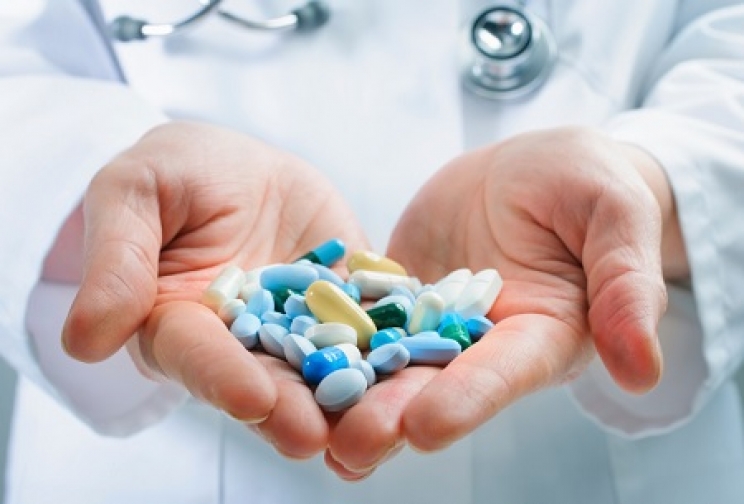
In recent days, sensational news has arrived from Northeastern University in Boston, where a team of researchers led by Kim Lewis discovered a new antibiotic capable of neutralizing some of the most resistant bacteria in nature.
We are talking mainly about the infamous Mycobacterium tuberculosis, responsible for tuberculosis, but also Clostridium difficile and Staphylococcus aureus.
What all these bacteria have in common is not only their danger to our bodies and those of our animals, but also the fact that over the years they have become increasingly less sensitive to most known antibiotics.
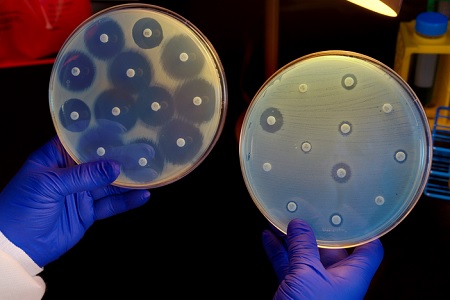 This mechanism is known as “antibiotic resistance” and develops whenever a bacterium manages to “hide” from an antibiotic.
Let us examine this concept more closely.
Bacteria are covered by an external structure made up of various components, including small proteins and fats.
Most antibiotics act precisely on the proteins that make up the bacteria’s outer covering, causing them to lose their protective coating and tend to die.
As antibiotics are administered repeatedly, bacteria, whose main goal is to survive and reproduce, try to find a way to neutralize their action.
This is exactly how they eliminate the proteins that make up their outer covering, replacing them with other, different proteins that therefore cannot be recognized and damaged by antibiotics.
Kim Lewis’s innovative discovery acts precisely on this mechanism. The new antibiotic, called teixobactin, acts not on the proteins forming the bacteria’s outer structure, but on fats, which are more difficult to replace.
This undoubtedly helps drastically reduce the risk that bacteria will once again develop antibiotic resistance.
Another important factor is that, until now, some infections could not be cured definitively because specific antibiotics for the responsible bacteria were lacking.
Thanks to this new discovery, it has instead been possible to create a specific and targeted drug, especially because an innovative system was developed to search for and study bacteria.
In the laboratory, bacteria are normally collected from the air, the body or other surfaces and placed in special containers together with substances that can nourish them and ensure their growth and reproduction.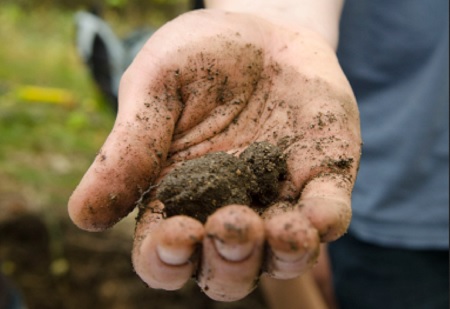
Only in this way can researchers analyze their structure and develop specific drugs.
Unfortunately, some of these most dangerous bacteria are found only in soil, together with an endless variety of different microorganisms. For this reason, it is very difficult to isolate a single type, collect it and analyze it.
The Northeastern University study in Boston, however, succeeded in devising an innovative system for collecting bacteria. Special tools were used to allow bacteria to be isolated and grown directly in the soil.
Only then was it possible to analyze them in the most appropriate way, identifying their weak points on which the new antibiotic would need to act in a targeted manner.
The new drug will now have to undergo more thorough testing, so it will still be several years before it can be used in human and veterinary medicine.
In any case, it is believed that thanks to these studies we will soon have even more innovative molecules available to treat many other infectious diseases.