
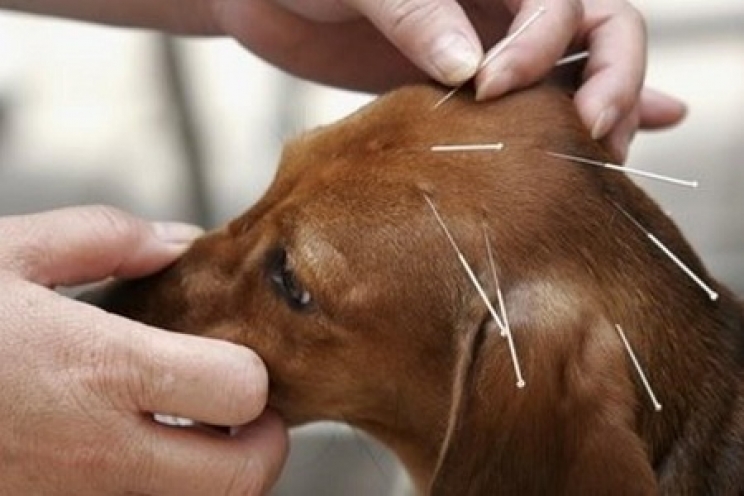
In recent years, more and more people have chosen to turn to alternative medicine, entrusting their health to homeopathy, naturopathy and even acupuncture. If in many cases these remedies prove effective in healing the human body and mind, they may probably also be useful for our four-legged friends. We are talking in particular about acupuncture for dogs and cats. How does this remedy work, and for what problems or diseases can it be used?
What is acupuncture?
Acupuncture belongs to the category of “alternative” or “non-conventional medicine”. In reality, Eastern peoples practiced this method of healing as early as antiquity, more than 5,000 years ago. Over the years, acupuncture has repeatedly been criticized even in its homeland, despite its widespread use in treating the most varied disorders. Its success was definitively recognized in 1991 by the World Health Organization, which imposed precise regulation of the techniques and protocols to be followed, effectively transforming it into one of the most widely used remedies of traditional Chinese medicine.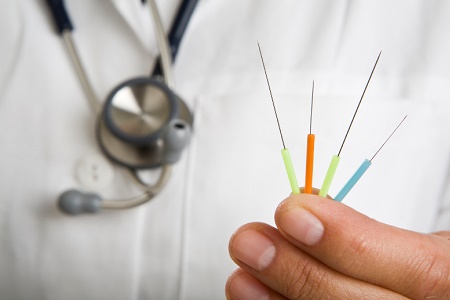
Explaining how acupuncture works is not easy. However, we can gain a fairly general understanding of the principles behind this remedy.
According to Eastern culture, the entire world is regulated by pure energy, which is absolutely essential for making our bodies move and function. In particular, the energy flowing through the body is called “qi”. Its flow follows predetermined directions, just like a train traveling along railway tracks. In particular, the direction of “qi” depends on the so-called meridians, twelve channels connected to the internal organs.
When energy flows smoothly, without obstacles, our body is healthy and we experience no disorders. Conversely, if “qi” cannot flow freely, it creates energy overloads in some parts of the body, while others become deficient. It is precisely this imbalance that leads to the appearance of pain, disorders and diseases.
The path of the meridians was identified many centuries ago by ancient Eastern physicians, who also found a way to recognize and release blockages in vital energy. The acupuncture technique involves inserting extremely thin needles into very precise points on the skin, which have recently also been identified in animals.
These needles dissolve the blockage in the meridians, restoring the proper flow of energy throughout the body.
Which problems is it suitable for?
Acupuncture may be useful for relieving or even treating many problems, including:
-
Hormonal imbalances, especially of the thyroid or reproductive system;
-
Bone or joint problems (spinal hernias, hip dysplasia and elbow dysplasia, arthritis and osteoarthritis);
-
Skin diseases (infectious or allergic dermatitis, or dermatitis caused by food intolerances);
-
Neurological disorders (paresis, epilepsy, seizures);
-
Gastrointestinal problems (vomiting, constipation, diarrhea);
-
Respiratory or cardiovascular disorders;
-
Behavioral disorders (anxiety, phobia, depression, obsessive-compulsive disorder);
-
Muscle pain;
-
Infertility;
-
Urinary or fecal incontinence.
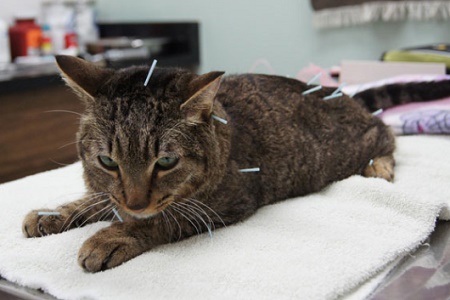 Acupuncture is particularly useful for dogs and cats that cannot undergo surgery or drug therapy, such as elderly animals or those allergic to certain substances.
Sessions should be carried out regularly, with the veterinarian-acupuncturist determining the schedule based on the type and severity of the problem. Normally, during the acute phase, one or two sessions per week should be performed, gradually reducing the frequency as the problem improves. Maintenance sessions may subsequently be requested as needed or once or twice a year.
Acupuncture can be used alone or combined with traditional treatment methods, therefore relying on medication, surgery or physiotherapy.
If it is not performed correctly, acupuncture can cause considerable harm to the animal, so we should always entrust our four-legged friend’s health to a veterinarian experienced in the field, without resorting to do-it-yourself treatment or unqualified self-proclaimed acupuncturists.
Animals’ bodies also differ from ours with regard to needle placement, so we should avoid turning to a human acupuncturist as well.